Dip powder vs acrylic nails: differences, strength, hygiene and removal
Dip vs acrylic compared: chemistry, strength, length, hygiene, allergy and removal, with FDA, AAD and DermNet sources and a decision guide.
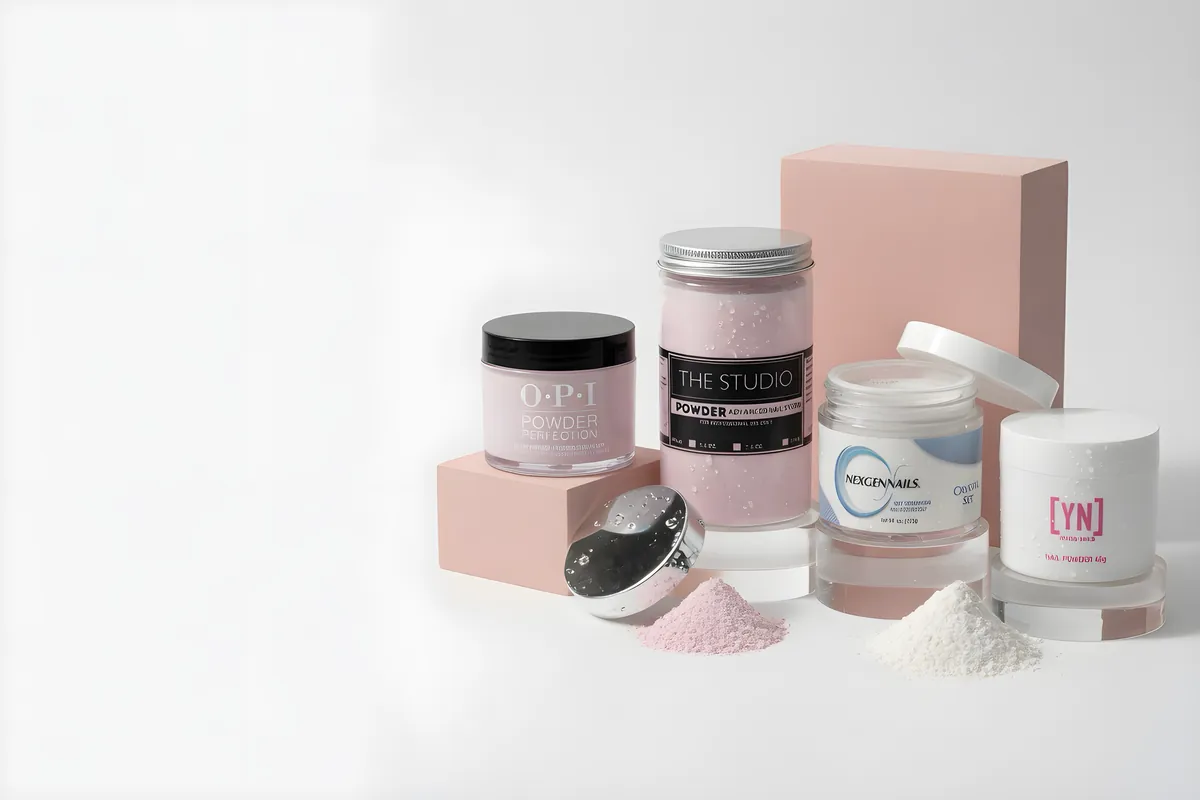
Dip powder and acrylic are both lamp-free powder overlays, but acrylic is sculpted with monomer liquid and a brush bead, while dip is layered with a resin base and an activator. Dip is easier to learn and good for natural nails; acrylic is better for sculpted length.
Same family, different method
Dip and acrylic are close relatives. Both build a hard overlay from a powder and a liquid, neither needs a lamp, and both come off with acetone. The difference is how they get hard.
Acrylic: you load a brush with monomer liquid, pick up a bead of powder and sculpt it onto the nail. The FDA describes artificial nails as mainly acrylic polymers, made by reacting acrylic monomers such as ethyl methacrylate with polymers.
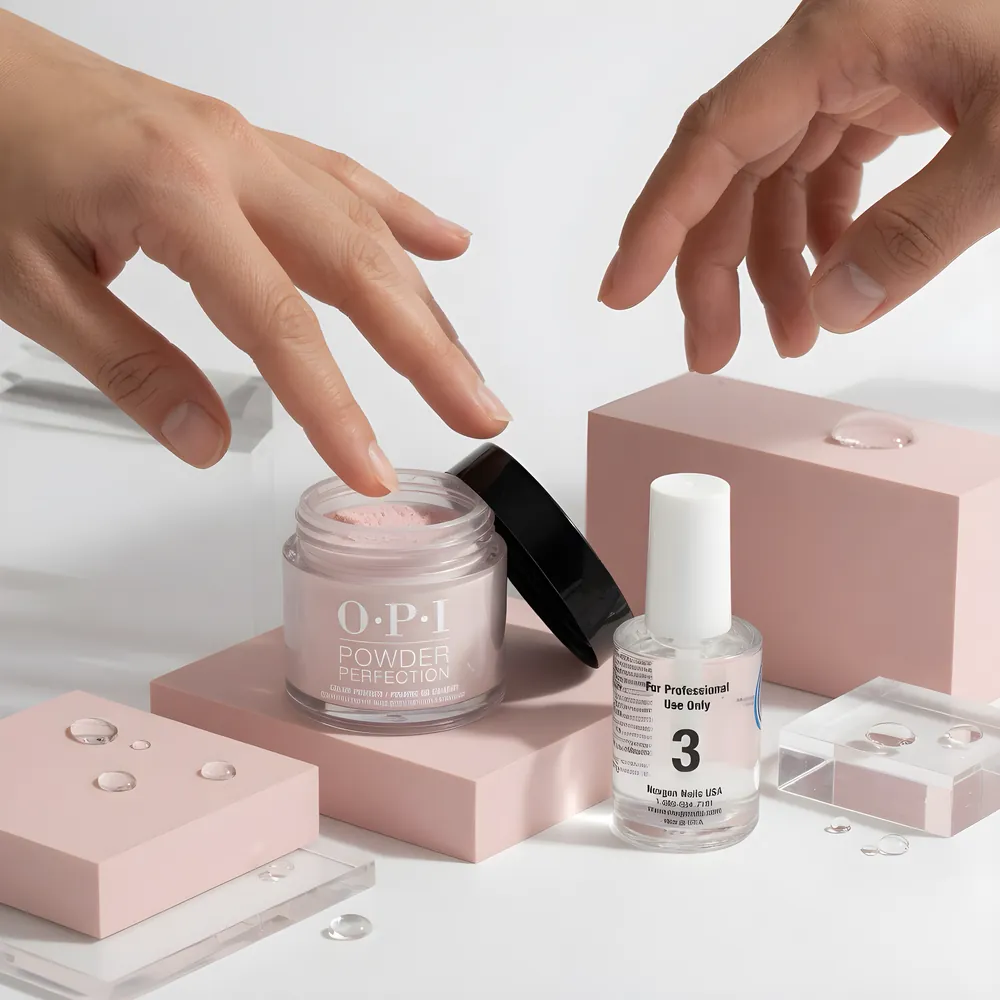
Dip: you brush on a resin base, dip or sprinkle powder onto it, and harden it with an activator. A nail tech exam-prep guide says dip is not the same chemistry as EMA liquid and powder acrylic, describes the base as commonly a cyanoacrylate-type resin, and says never to substitute EMA liquid into dip powder. OPI lists ethyl cyanoacrylate and polymethyl methacrylate in its Powder Perfection top coat.
The practical result: dip is a layered overlay that is quick to learn. Acrylic is a sculpting skill that can build length and shape.
Side-by-side comparison
| Dip powder | Acrylic | |
|---|---|---|
| Liquids | Base, activator, top coat (plus prep or bond in some) | EMA monomer, plus primer or dehydrator |
| Application | Dip, pour or sprinkle onto wet base | Bead of powder on a brush |
| Lamp | No | No |
| Learning curve | Gentle. Thin layers, tap, activate. | Steeper. Bead control takes practice. |
| Length and sculpting | Needs tips or forms. Dip alone adds thickness, not length. | Sculpts length with a form or tip |
| Wear | OPI: 2+ weeks. AAD: up to four weeks chip-free. | Depends on prep and fills |
| Smell | OPI describes its system as odor-free | Monomer smell; ventilation is important |
| Hygiene watch-out | Shared powder jars (pour instead) | Tools and brushes |
| Allergy source | Adhesives (AAD) | Methacrylate monomers (FDA, DermNet) |
| Removal | File, then 100% acetone (AAD) | File bulk, then acetone soak |
Strength, length and shape
Acrylic is the stronger tool for shaping. With a form or tip you can build an apex, a stress area and a precise C-curve. That is why salons use it for long, sculpted sets. Dip adds strength to the natural nail and to a tip, but the exam-prep guide says that for significant length you should use a tip or sculpted system as the manufacturer directs, not keep adding powder dips.
That means dip suits natural nails, short to medium lengths and tips, and acrylic suits sculpted length and fine shaping. On tips, both work. See the dip approach in the dip powder guide and the acrylic approach in the acrylic nails guide.
Maintenance: fills, wear and when to take it off
The wear numbers are the maker's and the dermatologist's, not a promise: OPI states 2+ weeks for Powder Perfection and the AAD says dip can stay chip-free for up to four weeks. In practice, nail growth sets the schedule. When a visible gap opens at the cuticle, the structure is no longer anchored to the nail, and lifting and trapped moisture become likely. Do not ignore a lifted edge on either service. Product that has lifted traps water, and a fresh overlay on top of it fails. Take it off, check the bare nail, and start again.
The AAD advises looking at your bare nails every time color comes off. A lifting nail, swollen or discolored skin, or a thickened nail means stop, leave the nails bare for 2 to 4 weeks, and see a board-certified dermatologist if the problem lasts beyond 4 weeks.
Both can feel thick if over-built. Layers that are too thick, especially at the cuticle, create a rigid structure that cracks. Keep the cuticle zone thin in both.
Hygiene and safety compared
The big dip hygiene issue is shared powder. The AAD says double dipping can spread bacteria and germs, and says to pour powder into a disposable container and throw away what is left, or sprinkle powder from the original container. See is dip powder sanitary.
Acrylic does not dip fingers into a jar, but it has its own watch-outs. The FDA says traces of reactive monomer remain after the nail forms and can cause redness, swelling and pain in people who are sensitized, and that avoiding skin contact is the main way to reduce allergy risk. It also advises good ventilation. In Florida, tools used on more than one client must be disinfected between clients (Fla. Admin. Code 61G5-20.002(3)(c)), whichever service you do.
Allergy applies to both. DermNet notes that acrylate and methacrylate allergy can show up away from the nails and can cause nail lifting. The AAD recommends a one-nail test for first-time dip clients.
Removal and nail health
Both come off with acetone, and both damage nails when removed badly. For dip, the AAD says 100% acetone is required, that it can thin nails over time, and that Dr. Lipner says the damage risk is mainly in removal. File the top layer first, soak, then push off the softened product. Never pry. Step by step: how to remove dip powder at home.
Acrylic removal follows the same pattern of filing the bulk and then soaking. A thick sculpted build needs more filing before the soak than a thin dip overlay.
Heavy buffing to help product stick is a common damage source for both. Cleveland Clinic says heavy buffing and filing can weaken nails and make them more prone to breakage, so buff lightly.
What a first set looks like in each
First dip set. You prep and dehydrate the nail, brush on a thin base, pour or dip the powder at about 45 degrees, tap and dust it off, and repeat to three layers. Then activator, file, second activator and top coat. The unforgiving parts are base thickness and capping the free edge. The wins come quickly because the powder carries the shape, so a first set can look decent on the first try.
First acrylic set. You prep, apply primer if your system calls for it, and then control a bead. The ratio of liquid to powder on the brush decides whether it flows, sits or runs. Too wet and it floods the cuticle. Too dry and it crumbles. That ratio is a feel you build with practice, often on practice hands before live clients. The payoff is more control over shape, length and the stress area.
The OPI professional pages and Kiara Sky's blog both publish dip steps you can follow closely. For acrylic, start with our acrylic nails guide.
Beginner mistakes in each
| Service | Mistake | Result | Fix |
|---|---|---|---|
| Dip | Thick base coat | Lumps and a soft center | Thin base each pass. See lumpy dip fixes |
| Dip | Uncapped free edge | Chipping at the tip | Cap with base, activator and top coat |
| Dip | Dipping into a shared jar | Contamination and a hygiene risk | Pour into a cup and discard |
| Acrylic | Wet bead | Product floods the cuticle and lifts | Wipe excess monomer before picking up powder |
| Acrylic | Skin contact | Irritation and allergy risk (FDA) | Leave a gap at the skin |
| Both | Heavy buffing | Weaker, thinner nails | Buff lightly (Cleveland Clinic) |
| Both | Peeling off lifted product | Layers of nail come with it | File and soak |
If a dip set lifts or cracks, why dip powder chips and lifts walks through the causes.
Which should you choose?
- Short natural nails, strength, easy learning curve: dip.
- Sculpted length, custom shapes, ready to practice bead control: acrylic.
- Want to learn both: start with dip to build prep and structure habits, then add acrylic.
- Want to stock one set of colors for both: AIO powder (see below).
- Allergic or unsure: talk to a dermatologist and try one nail first.
Whichever you choose, buy the full matched system, not just the powder. Dip needs its base, activator and top coat from one brand, and acrylic needs an EMA monomer that suits the powder. A mismatch is a common cause of a poor set and of lifting, whatever the technique, so check the label and the maker's directions before you open the bottle. Test a new product on one nail first.
Shop the dip powders, acrylic powders and monomers.
Where AIO powders fit
AIO (all-in-one) powders are sold to bridge the two. Kiara Sky says its All-in-One powders work for both dip and acrylic, with its dip essentials for dip and its EMA monomer for acrylic. A tech who does both services can stock one color range. Our AIO shelf has Chisel, Le Lilia and DND DIVA lines. Read AIO powder explained before you mix products.
A standard dip powder is made for dip liquids, so do not use it with monomer unless the maker says so. A standard acrylic powder is not a dip powder either. When in doubt, read the jar.
Shop what's in this guide
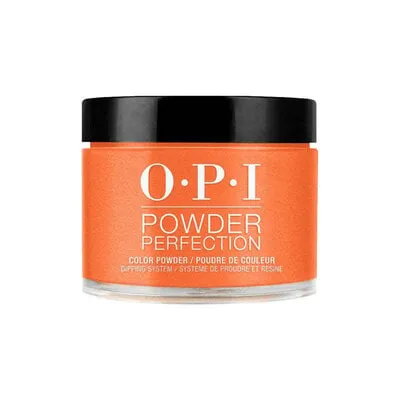
S084 - Dip - Your Zestination Awaits - 1.5 oz
Nails - C34 - Seattle - 2 oz
Dip Powder - White
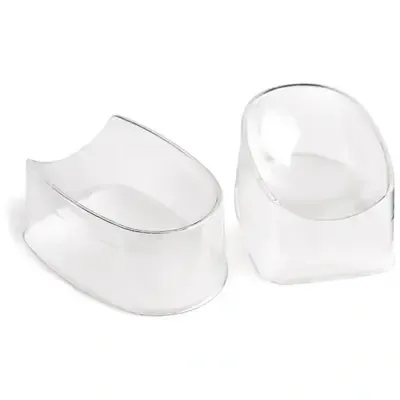
DL - Disposable Dip Trays - 25 Ct - DL-C485
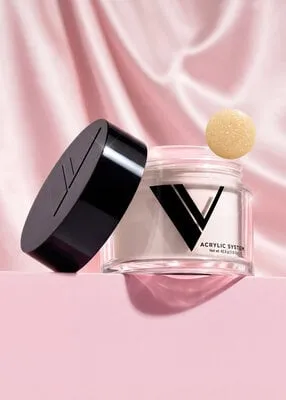
Cover - Forever-ish - 1.5 oz
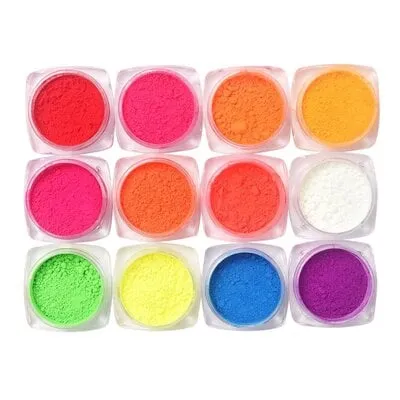
Pigment Powders #1 - 12 ct
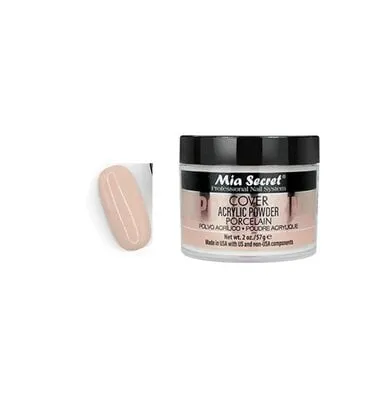
Acrylic Powder - Porcelain - 2.0 oz