How to remove dip powder at home without damaging your nails
File first, then 100% acetone on fingertips only, then push off softened product. Steps, times, mistakes and aftercare with dermatology sources.
File the shiny top coat off first, then soak the nails with 100% acetone on cotton and foil for about 15 minutes, re-wrapping if the product is still firm. Gently push off the softened powder; never peel or scrape, because the damage from dip comes mostly from removal.
Why dip comes off harder than gel
Gel polish is thin and soft enough to dissolve in acetone in about 15 minutes. Dip is a stack of resin and powder, so it is thicker and harder, and acetone has more to work through. The AAD says dip removal requires 100% acetone, and that acetone can peel away nail layers and thin the nail over time. Dr. Lipner, quoted by the AAD, says the risk with dip is mainly in the removal, not in wearing it.
That tells you where to put your care. Wearing dip is fine for most people. Ripping it off, over-filing, or over-soaking is what damages nails. The goal is to remove as much product as possible by filing, let acetone do only what filing could not, and never pry anything that is still stuck.
What you need
- 100% acetone. Regular nail polish remover with low acetone will not work. We carry acetone in 8 oz and 16 oz bottles.
- A 100/180 grit file or coarse buffer. See files and buffers.
- Cotton pads or balls and foil squares (for example Americanails Fast Foils) or reusable soak-off clips such as the DL or Berkeley clips we carry.
- A cuticle pusher with a soft or rounded edge.
- Cuticle oil and a hand cream for afterward. Browse cuticle oils.
- A small glass bowl if you prefer the fingertip-soak method.
Techs removing dip on clients with an e-file can use fine bits from bits and bands, but a hand file is safer for anyone still learning.
Step 1: file the top coat and most of the bulk
Acetone cannot get through an intact sealed top coat. Break the surface first.
- Clip the free edge short if it extends past the fingertip.
- File the top layer with a 100/180 grit file. Work in one direction from cuticle to tip instead of sawing back and forth. You want the shine fully gone and the color layers visibly thinner.
- Stop before you reach the natural nail. The goal is to thin the product, not to file the nail plate down. When you can see a different texture or the nail bed looks close, stop.
- Brush the dust off.
The Washington State exam-prep guide for nail techs gives the same principle: break the sealed surface, soak until the coating slides off, then stop.
Step 2: acetone on the fingertips only
The AAD gives two methods for gel polish removal, and both work for dip. Soak only your fingertips in acetone, not your whole hand. Or soak cotton balls in acetone, place them on the nails and wrap each with a small piece of foil. The AAD's wait for the foil method is about 15 minutes.
- Apply a rich oil or petroleum jelly to the skin around the nail to protect it. Keep it off the nail itself.
- Soak a cotton pad in acetone, place it directly on the nail and wrap tightly in foil.
- Wait about 15 minutes. Dip is thicker than gel, so add time if the powder is still firm. Re-wrap and wait a few more minutes rather than scraping.
- Unwrap one finger at a time. The product should look cracked and soft.
Step 3: push off gently, never scrape
Use a soft pusher at a flat angle and push from the cuticle toward the free edge. The softened product should lift in sheets. If it does not slide off with light pressure, it is not ready. Wrap again and give it more time.
The Washington guide gives the same rule: do not pry a still-bonded coating, because it tears the nail plate. If a thin layer of color remains after pushing, a gentle pass with a 180 grit buffer is better than a second long soak.
Wipe the nail with acetone on a cotton pad to remove residue, then wash your hands with soap and water.
Step 4: recovery and what to do next
- Apply cuticle oil to the nail bed and surrounding skin. The AAD recommends oil or petroleum jelly for dry cuticles and for brittle nails from gel removal.
- Moisturize several times a day for the first week.
- Give your nails a break. The AAD suggests waiting a month after removing color before the next gel or dip set; regular polish is fine meanwhile. For gel, it also suggests a break of one to two weeks or longer.
- Check the bare nail. Lifting, swollen or discolored skin, or a thickened nail are signs to hold off on any enhancement for 2 to 4 weeks and to see a dermatologist if they persist beyond 4 weeks.
Skin first, then nails
Acetone is a solvent, so it dries both nail and skin. Wash your hands with soap and water right after removal to get acetone off. Then oil first and cream second: oil sinks into the nail plate and cuticle, cream holds moisture on the skin. For the next few days, avoid long hot showers and dish water without gloves, since a freshly stripped nail soaks up water and splits easily.
If the nail feels thin and bendy, that is the layers that acetone and filing took off. File it very lightly, if at all, and wear plain polish or a strengthening base while it thickens. Do not rush back into a thick set to hide it.
Planning your next set? Use our dip powder guide for the full steps, and consider fills instead of full removal if your nails are healthy and the dip has simply grown out.
For nail techs: removing dip on clients
The technique is the same as at home, with a few professional points.
- Use fresh abrasives. The Washington guide says porous files and buffers used on dip are single-use unless the manufacturer approved them for disinfection. Florida's salon rule, Fla. Admin. Code 61G5-20.002(3)(c), says a brush or other tool may not be used on multiple patrons without disinfecting it, and (3)(d) requires a hospital-level or EPA-approved disinfectant used per the manufacturer's directions. Stock disposable files so you never have to guess. See our files and buffers and disinfectants.
- Look before you file. Check every nail for lifting, discoloration, swelling or a thickened plate. The Washington guide says never fill over moisture or suspected fungus, and that colored powder is not an antifungal. Send the client to a doctor if you see signs.
- Light pressure and short passes. Whether with a hand file or an e-file, keep the tool moving and stop before the natural nail. Taking off the last thin layer with a fine buffer is safer than chasing it with a coarse bit.
- Protect the skin. Wrap the nail, not the finger. The less acetone touches skin, the less irritation the client reports afterward.
- Do not rush a stubborn nail. If one finger resists, re-wrap that finger and move on to the next. A second soak is faster than a repair.
What a good removal looks like, minute by minute
| Stage | What you do | What you should see |
|---|---|---|
| Prep | Clip the free edge, file the top coat | Dull, matte surface with visible color layers thinned |
| Wrap | Skin protectant, acetone pad, foil | Cold, wet pad against the nail with no gaps at the sides |
| About 15 minutes | Check one finger | Product looks cracked and crinkled at the edges (AAD's wait for foil method) |
| Push | Soft pusher from cuticle to tip | Soft product slides off in flakes. Firm product means re-wrap. |
| Finish | Light buff, wipe, wash, oil | Clean plate with no sticky residue |
If a nail does not look cracked at the first check, do not poke at it. Re-wrap and wait. Impatience is the cause of most scraped nail plates.
Common removal mistakes
| Mistake | What happens | Do this instead |
|---|---|---|
| Soaking without filing | Acetone sits on the sealed top coat and nothing happens, so people soak longer and dry out skin | File the top layer first |
| Using non-acetone remover | Product does not soften | Use 100% acetone |
| Soaking the whole hand | Dries skin around the nail | Fingertips only or foil wraps |
| Scraping with a metal tool | Pulls up nail plate layers | Soft pusher, light pressure, more soak time |
| Peeling at a lifted edge | Takes layers of the nail with it | Soak off. A lifted edge should be filed and wrapped, not pulled. |
| Re-dipping right away | No recovery time | Wait a month before the next dip or gel set, per the AAD |
Shop what's in this guide
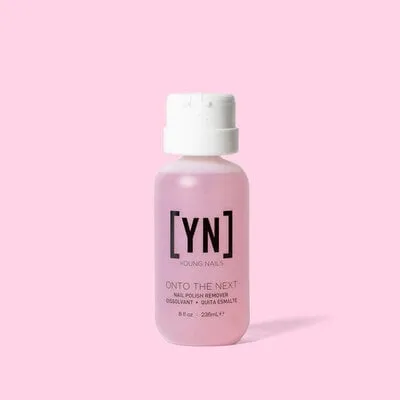
Onto The Next - 8 oz
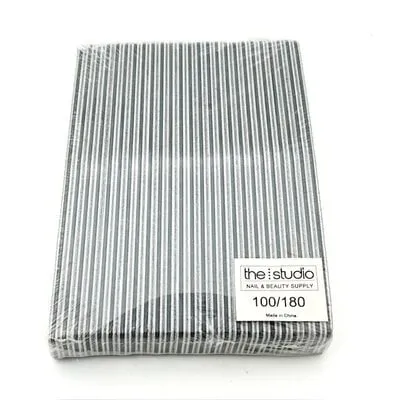
Files - Oval - 100/180 - Zebra/ Black - 25 Count
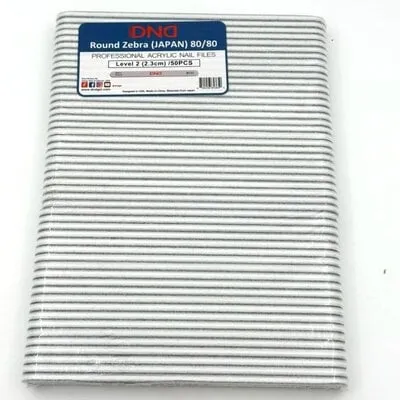
Nail Files - Round - 80/80 - Zebra - Japan - 50 count
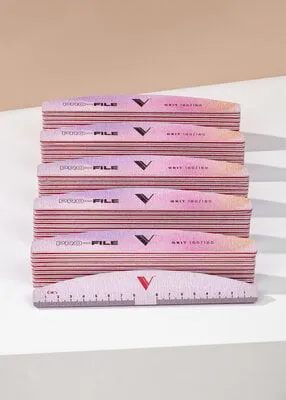
Files - 180/180 - Pink Halfmoon - 50 ct
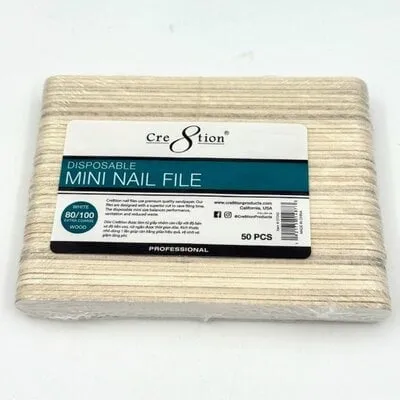
Mini Nail File - 80/100 - 50 count
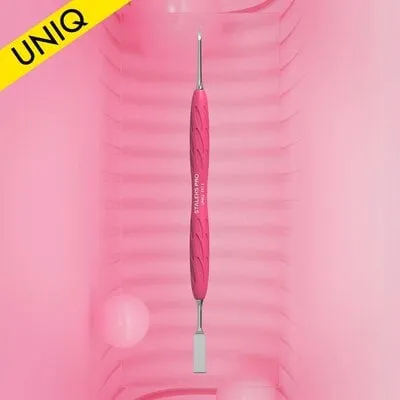
Manicure Pusher Gummy w/ Silicon Handle - Uniq 11 - Type 1 - PQ-11-1
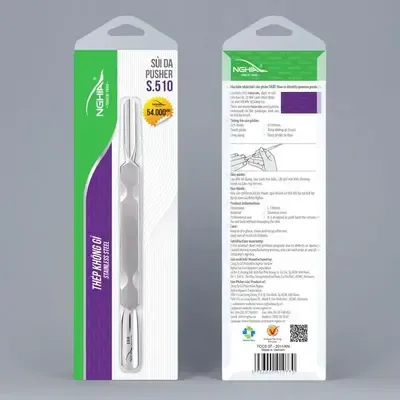
Pusher - S 510
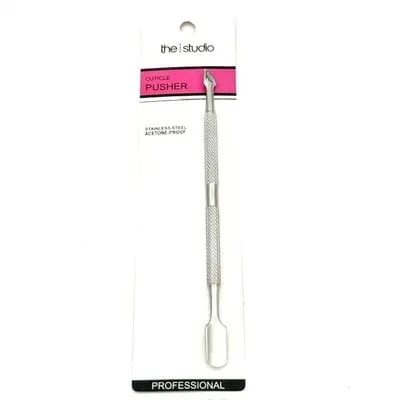
Cuticle Pusher - 02
Questions we get at the counter
How long does it take to remove dip powder?
Can you remove dip powder without acetone?
Can I remove dip powder with a drill?
Is it OK to peel off dip powder?
How do I repair nails after dip?
Sources
- Dip powder manicure: what to know, American Academy of Dermatology
- Gel manicures: how to protect your nails and skin, American Academy of Dermatology
- Powder dip systems, nail technician study guide (Washington State rules)
- Fla. Admin. Code R. 61G5-20.002 Salon Requirements, Cornell LII
- Nail care products, U.S. Food and Drug Administration