How to become a nail tech in Florida (2026): hours, cost and steps
Florida nail specialist registration: 180 school hours, the DBPR application, working while pending, real school costs and renewal, with official sources.
In Florida you become a registered nail specialist by completing at least 180 hours in a nail specialty program at a Florida school of cosmetology, then submitting the registration application and fees to the DBPR. The DBPR's FAQ describes no state exam for nail specialists (the exam it describes is for full cosmetologists), and the registration renews every two years for $45 plus 10 hours of continuing education.
The official answer: 180 hours, then a DBPR registration
Florida does not call nail techs "licensed nail technicians." The state calls them registered nail specialists, and the Department of Business and Professional Regulation (DBPR) issues the registration. The DBPR's Board of Cosmetology FAQ puts the path in two sentences: enroll in a nail specialty program offered by a Florida school of cosmetology, complete a minimum of 180 hours, then submit the registration application and fees.
The 180 figure is also in the law. Section 477.0201(1)(b) of the Florida Statutes sets 180 hours of training for the manicuring and pedicuring specialties, 220 hours for facials, and 400 hours for all specialties together. Age comes from the same section: you must be at least 16 or hold a high school diploma.
The DBPR FAQ pages we read do not describe a state exam for nail specialists. The written and practical exam on the DBPR pages applies to the full cosmetology license. If you see "exam" in a nail-specialist guide on a school or blog site, check it against the DBPR before you plan around it.
Nail specialist, full specialist or cosmetologist: which one do you want?
Before you pay for school, decide how wide you want your scope to be. Florida has three common routes for someone who works on hands and feet.
| Credential | School hours | What it covers | Good fit if |
|---|---|---|---|
| Nail specialist | 180 (DBPR FAQ, s. 477.0201) | Manicuring and pedicuring, including adding or extending nails | You only want to do nails and want the shortest route |
| Full specialist | 400 (180 nail + 220 facial, per the DBPR FAQ) | Nails plus facials | You want nails and skin care (waxing and facials) under one registration |
| Cosmetologist | 1,200 (s. 477.019) | Hair, skin and nails; no separate nail registration needed | You want hair too, or the widest range of salon jobs |
Two details from the DBPR FAQ are worth knowing. First, a licensed cosmetologist does not need a separate nail or facial specialist registration. Second, if you hold both a nail specialist and a facial specialist registration in Florida, you can get a full specialist registration.
That means starting with the 180-hour nail program is not a dead end. The hours are a stepping stone, and you can add the facial program later.
The steps, in order
- Confirm you qualify. You must be 16 or older, or have a high school diploma (s. 477.0201(1)(a)). Palm Beach State College lists 16 as its minimum age for its nails program.
- Choose a Florida school of cosmetology with a nail specialty program. The DBPR requires the program to be offered by a Florida cosmetology school. Compare hours of operation, start dates and what the tuition includes.
- Finish all 180 hours. Your school tracks the hours and reports them. Keep your own copy of your transcript, because you will hand a copy to the salon owner if you work while the application is pending.
- Sort out the HIV/AIDS course for the application. The DBPR's FAQ says the Board accepts HIV/AIDS courses given by the Florida Department of Health or other state health departments for an initial application, as long as the completion certificate shows at least four credit hours. Ask your school whether this is built into the program and what the application will ask for before you buy a separate course.
- Submit the registration application and fees to the DBPR. The FAQ says "the applicable fees" and does not list a dollar amount for the initial application. Look up the current amount in the DBPR application, not in a blog.
- Work under supervision while it is pending, if you qualify. See the next section for the exact conditions.
- Get your registration, then verify it shows as active. Display it where your salon requires it and keep the renewal date in your calendar.
Can you work while your registration is pending?
Yes, with conditions. The DBPR FAQ says that once you have completed all school hours and submitted the application and fees, you may practice under a registered specialist in a licensed salon while the registration is pending.
- Give the salon owner copies of your application and your school transcripts before you start.
- The supervising specialist must be physically present at all times. That is the DBPR's definition of "under the supervision."
- If the DBPR says your application is deficient, stop working immediately and tell the salon owner.
- This exception does not apply to endorsement applicants. If you are moving from another state, you need the Florida registration before you practice.
What nail school costs in South Florida, and a starting budget
The DBPR sets hours, not tuition, so costs vary by school. We opened two public technical programs near our stores to give you real, published numbers.
| School | Program | Published cost | Notes |
|---|---|---|---|
| Palm Beach State College (Lake Worth, Belle Glade) | Nails Technician, 180 clock hours, 2 to 3 months | About $1,500 for Florida residents | The college adds that additional fees and course materials apply. Daytime and evening options. |
| Sheridan Technical College (Hollywood, Broward) | Nails Specialist, 2025-26 program sheet | About $1,348 for Florida residents | $598 tuition and registration, $650 books and supplies, $100 industry credentials. The sheet says the total is approximate. |
Read those carefully. The Sheridan total includes $650 for books and supplies, while Palm Beach State says fees and materials come on top of its tuition figure. When you compare schools, ask for the full written cost, including the kit, uniform, state application fee and any credential fee. Sheridan also states that in-state tuition requires 12 consecutive months of Florida residency before the first day of term, so a recent move can change the price.
Private cosmetology schools set their own prices. Ask each one for a written total and a kit list before you sign anything.
A realistic timeline and starting budget
The numbers below mix published school figures with the categories you should plan for. We leave blank anything the DBPR or a school has not published, rather than guess.
| Stage | Typical time | What to budget | Source for the number |
|---|---|---|---|
| Pick a school and enroll | Days to a few weeks | Registration and orientation fees vary | School sheets (Sheridan lists $20 registration and a $20 student activity fee) |
| Complete 180 hours | 2 to 3 months at Palm Beach State College's schedule | About $1,348 to $1,500 and up, depending on school | Sheridan sheet; Palm Beach State program page |
| HIV/AIDS certificate, if your school does not include it | Course length varies; certificate must show at least four credit hours | Depends on provider | DBPR cosmetology FAQ |
| DBPR application and fees | Submit as soon as hours are complete | Amount is on the DBPR application, not published in the FAQ | DBPR cosmetology FAQ |
| Personal tools and products | Buy gradually | Your choice; see the kit list | Your own plan |
| First renewal | October 31, odd or even year depending on your group | $45 plus the cost of 10 CE hours | DBPR professional regulation FAQ |
Plan your cash flow for a gap. School is paid up front or in installments, the application fee is paid when you file, and your first paycheck or first booked client arrives after that. If you can, save two to three months of living costs before you start, because the first weeks of a new career rarely fill the book. That is a planning habit, not a DBPR rule.
One practical point: keep your school receipts and transcript in a folder, paper or digital. You will use them for the application, for the salon owner if you work while pending, and for any later endorsement or reactivation.
Online programs, and moving from another state
Not entirely, as far as the DBPR's own wording goes. The Board says you must enroll in a nail specialty program offered by a Florida school of cosmetology and finish the hours there. A Gel-X, acrylic or lash certificate from a brand's website is training, not state registration, and it does not count toward the 180 hours.
Some schools mix classroom days with online instruction. If a school advertises a hybrid schedule, ask two things: how many of the 180 hours are hands-on in the building, and whether the school reports all of them to the DBPR as program hours. Online continuing education is a different matter. Once you are registered, you can complete your renewal hours online through a board-approved provider (see our renewal guide).
Already licensed in another state?
The DBPR calls this licensure by endorsement. Your current, active registration or license in the other state must have requirements equal to or greater than Florida's, which means at least 180 school hours for nails. Apprenticeship licensees and out-of-country registrants are not eligible. A Florida school can grant credit for all, some or none of your prior training if you fall short.
Plan your timing around one rule: endorsement applicants must have the Florida registration in hand before they practice. The working-while-pending exception is not available to you.
After you are registered: renewal, scope and your first kit
Your registration renews on October 31. The DBPR splits licensees into two groups, one expiring in odd years and one in even years. The renewal fee is $45, and you must finish 10 hours of board-approved continuing education before the expiration date. The DBPR emails a notice 90 days before expiration. Our renewal and CE breakdown covers the hours line by line.
One more habit to build from day one: check your status. After your registration is issued, search your name on the DBPR license lookup and confirm it shows as active, with the right expiration date. Salon owners and clients can run the same search, and a record that does not match what you tell them causes avoidable trouble.
Your registration also defines what you may do for pay. Section 477.013 defines manicuring to include adding or extending nails and applying artificial nails, except nails applied solely with a simple adhesive. In plain terms, Gel-X, acrylic, builder gel and polygel are all in scope for a registered nail specialist. Read our guide on working without a license if a friend is thinking of skipping the paperwork.
When school ends, you will need your own tools. We put together a beginner nail tech kit list that separates what school requires from what you can add later, and our beginner and student kits page has ready-made options. If you want to see products before you buy, visit any of our four South Florida stores.
How to choose a nail school: 10 questions to ask before you pay
Every school can say it teaches 180 hours. What differs is how those hours are spent, what you leave with and what it really costs. Take this list to every tour and write down the answers, because you will compare them later.
- Is the nail specialty program offered by a Florida school of cosmetology? That is the DBPR's condition. Ask the school to confirm it in writing.
- What is the all-in price? Tuition, registration, books, kit, uniform, credential fees and any payment-plan charge. Compare it with the published figures above.
- How many of the 180 hours are hands-on? Time on a real hand, whether a mannequin hand or a live model, is what builds speed. Ask how many live-model hours are included.
- Which systems do you teach? Acrylic, gel polish, hard gel or builder gel, soft gel tips, dip powder and e-file technique are different skills. A client who asks for a full set of Gel-X or a rubber-base fill should not be your first time trying it.
- Is sanitation taught to the standard the inspector will use? Florida salon rule 61G5-20.002 spells out disinfection, storage and pedicure-tub procedures. A good program drills them. Our plain-English guide to the rule shows what you should already know by graduation.
- Does the school help with the DBPR paperwork? Ask who submits your hours and what you must file yourself, including the HIV/AIDS certificate.
- What are the class times? Palm Beach State College lists daytime and evening options. If you work, evening classes may stretch the calendar even though the hours are the same.
- What is the kit, and is it required? Some schools require a specific kit. If so, ask what is in it so you do not buy duplicates later. Our kit list helps you compare.
- What do graduates do next? Ask where recent graduates work, and whether the school has relationships with local salons. Do not accept vague answers or unsourced job-placement percentages.
- What happens if you miss class? Hours are hours. Ask about make-up days and what the school does if you must pause.
Your first year after registration, and the mistakes to skip
Registration gets you through the door. What happens next is up to you, and a few early decisions shape your income more than your hourly speed does.
Employee, commission or booth renter
Most new techs start in a salon where the owner provides the space, clients and supplies. As you build a following, you may move to renting your own station. The DBPR says the Board does not regulate booth renting, so contracts, taxes and local permits are your responsibility. Read our booth rental guide before you sign a lease.
Decide what you will be known for
Techs who specialize earn repeat business faster. Gel-X and soft gel extensions, builder gel overlays, sculpted acrylic and natural nail care for older clients are different ways to stand out. Choose one or two systems, get consistent, and add more as your income allows.
Price from the start
Beginners tend to underprice to fill the book. That works for a few weeks, then becomes a trap because regulars resist raises. Use our pricing method to set prices that cover your time and products from day one.
Treat sanitation as part of your brand
Clients can tell when a station is clean, and inspectors can tell when it is not. Set up a disinfecting container, closed storage and a routine on your first day. Our disinfectants and sterilizers section has the containers and solutions.
Know whether this is the right career for you
Nail work is physical. The Bureau of Labor Statistics notes long periods of sitting and chemical exposure, and schedules that often include evenings and weekends. Our career guide lays out the national pay and outlook numbers so you can decide with open eyes.
Common mistakes that cost new techs time and money
| Mistake | Why it hurts | Do this instead |
|---|---|---|
| Trusting a number from a third-party site | You see 180, 240 or other hours depending on the site; only the DBPR and the statute decide | Check the DBPR FAQ and section 477.0201 before you enroll |
| Starting to work before the application is filed | The pending-work exception starts only after all hours are done and the application and fees are submitted | File first, give the owner your papers, then work under supervision |
| Comparing schools by tuition alone | Kits, fees and credentials change the total by hundreds of dollars | Ask for a written all-in total |
| Skipping the renewal calendar | CE and the fee are due before midnight on October 31 of your group's year | Set a reminder for August and complete CE early |
| Buying a huge kit before you know your style | You tie up cash in systems you may never use | Buy the basics, then add products as your clients ask for them |
Shop what's in this guide
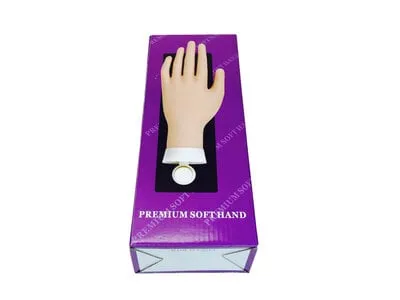
Premium Soft Practice Hand w/ Stand - Purple Box
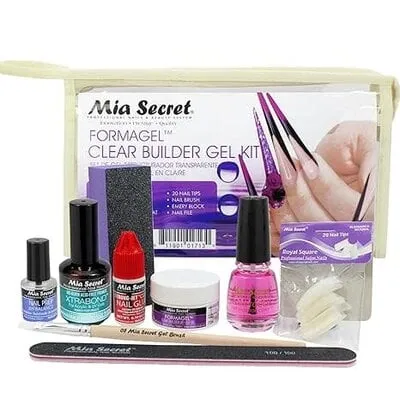
Formagel - Clear Builder Gel Kit
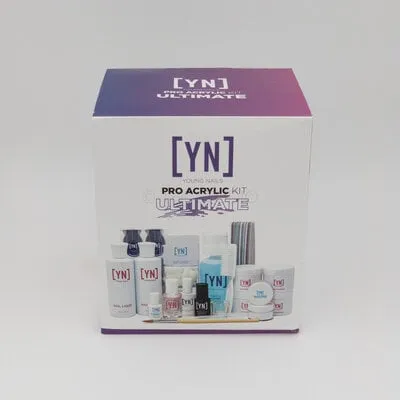
Pro Acrylic Kit - Ultimate
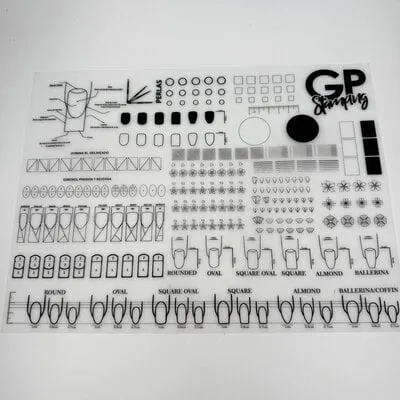
GP Stamping - Silicone Nail Training Mat
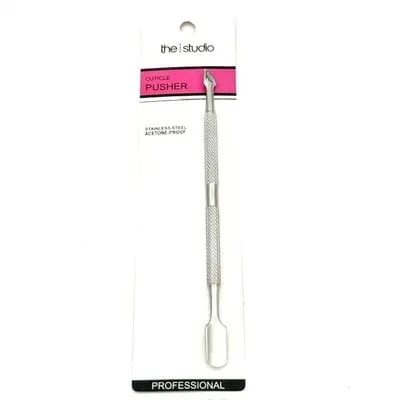
Cuticle Pusher - 02
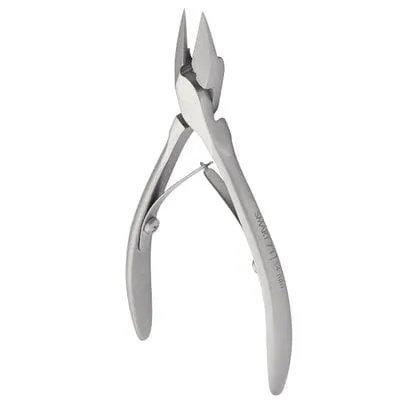
Pro Nippers for Ingrown Toenails - Smart 71 - 14mm - NS-71-14
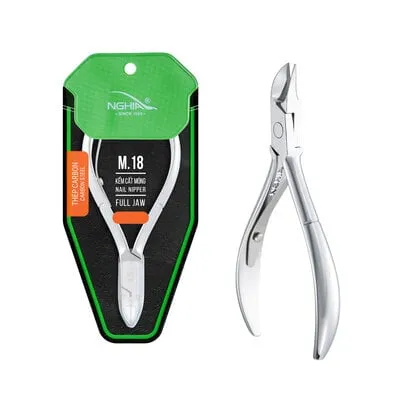
Nail Nipper - M.18 - Full Jaw
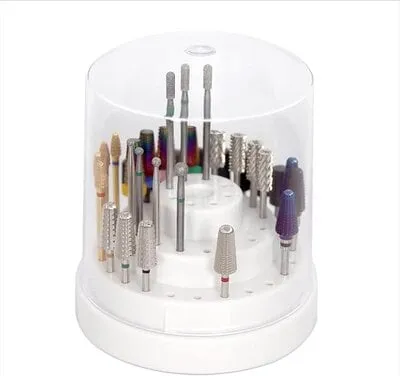
Carbide Nail Drill Bit Holder - 48 Holes - Small - White
Questions we get at the counter
How many hours do you need to be a nail tech in Florida?
Do you have to pass a state exam to be a nail specialist in Florida?
How long does it take to become a nail tech in Florida?
How much does nail tech school cost in Florida?
Can I work as a nail tech while my Florida registration is pending?
How often does a Florida nail specialist registration renew?
Sources
- Board of Cosmetology FAQ, Florida DBPR
- Professional Regulation FAQ (renewal, CE, fees), Florida DBPR
- Section 477.0201, Specialty registration, Florida Statutes
- Section 477.013, Definitions, Florida Statutes
- Section 477.0265, Prohibited acts, Florida Statutes
- Nails Technician program, Palm Beach State College
- Nails Specialty program sheet 2025-26, Sheridan Technical College