Nail tech booth rental vs commission in Florida: contracts, taxes and break-even
Booth rental or commission for a Florida nail tech: what the DBPR and IRS say, a break-even formula, a contract checklist and red flags.

In Florida the Board of Cosmetology says it does not regulate booth renting, so your agreement and local rules decide it, but you still need an active nail specialist registration and the salon needs its license. The IRS decides contractor versus employee by behavioral control, financial control and the type of relationship, not by what the contract is called. Rent a booth when your regulars cover the fixed fee with room to spare.
What Florida says about booth renting
The Board of Cosmetology FAQ on the DBPR website has one entry on the subject. Asked about booth renters and independent contractors in a salon, it says the Board does not regulate booth renting and tells you to contact your local permitting department. That is an important sentence in both directions.
- The state does not write your lease. Rent, term, supply rules and what happens if either side leaves are all between you and the owner.
- The licensing rules still apply. Booth renting does not change who may perform nail services. Section 477.0265 lists as prohibited acts practicing a specialty without an active registration, allowing unlicensed people to perform services in a licensed salon and operating an unlicensed salon. A booth renter needs a current nail specialist registration or cosmetology license, and the space needs a salon license.
- The sanitation rules still apply. Rule 61G5-20.002 applies to the salon, whoever owns each chair. Your station must meet the disinfection, storage and ventilation rules. See our sanitation guide.
- Local rules matter. Ask your city and county whether you need your own local business tax receipt as a self-employed operator. Palm Beach County, for example, says anyone running a business or selling services in the county needs one, including sole proprietorships.
Booth rental, commission and employee: side by side
| Employee | Commission | Booth rental | |
|---|---|---|---|
| You pay the salon | Nothing | A percentage of each service, set by the agreement | A fixed fee per week or month |
| Who sets prices | Salon | Usually salon | You (this matters for IRS purposes) |
| Who gets clients | Salon | Salon, plus your own | You bring and keep your own |
| Who buys supplies | Salon | Often salon, sometimes you | You |
| Income when slow | Hourly/salary continues | Falls with your bookings | Falls, and the rent is still due |
| Taxes | Employer withholds | Depends on how you are classified | You handle self-employment taxes |
| Best for | New techs | Techs building a book | Techs with steady regulars |
The labels in this table are only a starting point. A contract can say "renter" while the day-to-day arrangement looks like employment, and the law looks at the arrangement. That is the part owners and techs most often get wrong.
The IRS test: your contract label does not decide
The IRS says the business must weigh all the facts and makes the initial determination of whether a worker is an employee or an independent contractor. The evidence falls into three categories:
- Behavioral control: does the company control, or have the right to control, what you do and how you do it?
- Financial control: who controls the business side, such as how you are paid, whether expenses are reimbursed and who provides tools and supplies?
- Type of relationship: written contracts, benefits such as insurance or vacation pay, whether the relationship is ongoing and whether the work is a key part of the business.
No single factor settles it. If either the business or the worker is unsure, either can file Form SS-8 with the IRS to request a determination, which the IRS says may take at least six months.
In a nail salon, this has practical consequences. A real booth renter usually sets her own prices and hours, keeps her own client list, buys her own supplies and can work elsewhere. If an owner dictates your schedule, your menu and your prices and takes a cut, while calling you a "renter," that mismatch is the kind of thing the IRS factors address. Talk to an accountant before you sign, especially about how your income will be reported and how you pay self-employment tax.
The break-even math
Before you rent a booth, compare it with what you earn on commission. The formula for the number of clients you need each week to cover the rent:
Break-even clients per week = weekly fixed costs ÷ profit per client (after product cost and fees)
Example with placeholder numbers:
| Line | Example |
|---|---|
| Average ticket | $60 |
| Product and payment-fee cost per client | $9 |
| Profit per client before rent | $51 |
| Weekly booth fee | $250 |
| Other weekly fixed costs (insurance, software, marketing, education) | $50 |
| Weekly fixed costs | $300 |
| Break-even clients per week | $300 ÷ $51 = 5.9, so 6 clients |
Now compare that with commission. If a salon keeps 40% of a $60 ticket ($24) and supplies product, you keep $36 per client with no fixed costs. At 20 clients a week, commission pays you $720. Booth rental at the same 20 clients pays 20 × $51 − $300 = $720. The two models tie at 20 clients in this example, and rental pulls ahead as you book more. Run the math with your own ticket, product cost and the real offer you have on the table. Do not use our numbers for your decision.
Use our pricing method to set the ticket and product cost honestly, since an underpriced menu can make rent look worse than it is.
Contract checklist: what to settle in writing
- Fee and due date: amount, whether weekly or monthly, late fees, what happens when you take a vacation.
- Term and exit: start date, length, how either side ends it and how much notice is required.
- What the rent includes: station, chair, utilities, Wi-Fi, laundry, shared supplies, front desk, parking.
- Your credentials: you provide a copy of your active DBPR registration; the owner shows the salon license.
- Prices and hours: confirm you set your own prices and schedule, or the arrangement may not be a rental at all.
- Clients and records: your clients are yours, with contact lists, booking and payment kept by you.
- Supplies and retail: who buys supplies, whether you may sell retail, and whether any product rules apply (for example, no MMA, which Florida prohibits).
- Sanitation duties: who cleans what. You are responsible for your station, tools and disinfecting jar. The salon is responsible for tubs, common areas and the license. Write down who keeps the pedicure log if you do pedicures.
- Insurance: what coverage the salon holds, and what you need to carry yourself.
- Payments: how you take card payments, who owns the account and where tips go.
- Dispute process: what happens if the salon closes or loses its license.
Ask the owner a few direct questions before you negotiate: How many techs work here and how many stations are open? What did the last renter leave for, if anyone did? Is the salon license current and displayed? When was the last DBPR inspection, and was anything cited? Who handles the pedicure log and the tub cleaning on shared equipment? A confident owner answers these easily. Hesitation tells you something too.
Have an attorney read the final document. An hour of review costs a fraction of one month of a bad lease.
Red flags before you sign
| Red flag | Why it matters |
|---|---|
| The owner will not show a salon license | Operating an unlicensed salon is a prohibited act under section 477.0265 |
| Other techs in the shop have no visible registration | Allowing unlicensed people to perform services in a licensed salon is also prohibited |
| You must follow the salon's price list and schedule | Looks like employment, not rental |
| Rent is far above comparable shops with no added value | Fixed costs set your break-even |
| No disinfection routine or pedicure log | Inspection risk that you share |
| Verbal agreements only | Nothing to refer to in a dispute |
| Pressure to sign today | A fair deal can wait a week |
When a deal is clean, you gain control. Your name is on the chair, the client list is yours, and you decide what you charge. When it is not clean, you carry the rent and the risk without any of that control, so walk away and keep looking.
Setting up your own station
When you rent a booth, you equip it yourself. The core list is in our beginner kit guide, and the full station-by-station version is in the inventory checklist. The essentials for a rented station:
- Two sets of nippers and pushers so one is always disinfected
- A covered disinfecting jar with EPA-registered disinfectant and closed storage for clean tools: disinfectants
- A table dust collector: dust collectors
- A lamp matched to your products: gel lamps
- Gloves, masks and table liners
- Your systems and color range, built gradually
- A portable cart or case if you travel between locations: carts and cases
Visit any of our four stores to compare tools before you commit to a full setup. And before you rent anything, make sure your registration is active and your renewal is current. Our renewal guide explains the dates.
Shop what's in this guide

Glass - Liquid Cup With Stainless Steel Lid - Clear - LC122
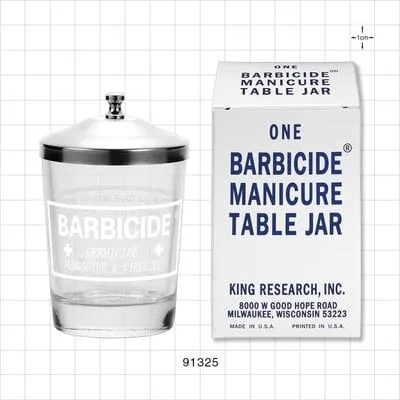
Manicure Table Jar - Small
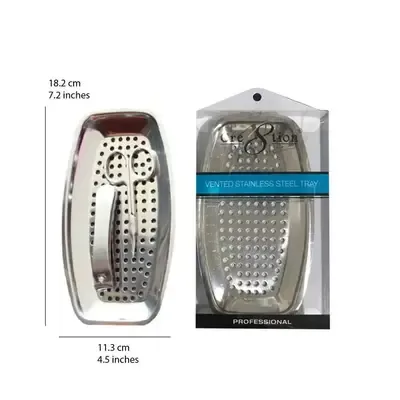
Vented Stainless Steel Tray - Large
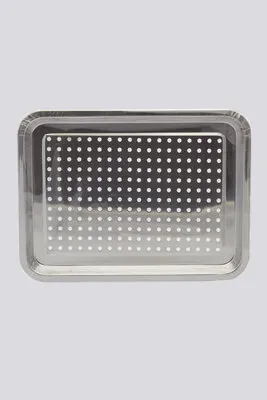
Sterilizer Utility Tray - 14"x10.5" - Stainless Steel
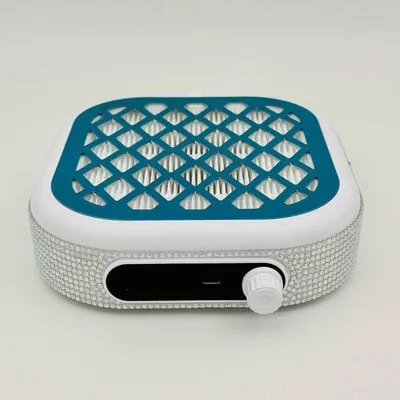
NAD - Nail Dust Collector - 30W - White AB Rhinestone
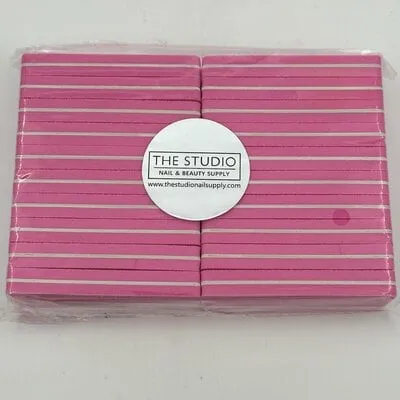
Small File Buffer - 100/180 - Pink - 20 ct
 Sale
Beyond Pro Nail Dust Collector - Teal