How to open a nail salon in Florida: licenses, rules and checklist
Steps to open a nail salon in Florida: DBPR salon license, county and city tax receipts, licensed techs, space and sanitation rules, cost worksheet.
To open a nail salon in Florida you need a salon license from the DBPR (you can open as soon as it is issued, and an unannounced inspection follows within about 90 days), a local business tax receipt from your county and often your city, a space that meets Rule 61G5-20.002, and a registered nail specialist at every chair. The DBPR salon license is not transferable between owners or locations.
The checklist at a glance
Opening a nail salon in Florida means satisfying three layers of government: the state (DBPR), the county or city (business tax receipt and zoning), and the federal tax system. The table puts the steps in the order that usually works.
| # | Step | Who handles it | Key point |
|---|---|---|---|
| 1 | Choose a location that works for a salon | You, the landlord, the city | Zoning and building rules apply; confirm before you sign a lease |
| 2 | Set up the business entity and tax IDs | You, state and IRS | Talk to an accountant for the right structure |
| 3 | Apply for the DBPR salon license | DBPR | Application and fee; open when the license is issued |
| 4 | Get local business tax receipts | County Tax Collector, and city if inside a municipality | Per location; state license copy often required |
| 5 | Make sure every tech is registered | Each tech, with the DBPR | Employing an unlicensed tech is a prohibited act |
| 6 | Build out to the sanitation and space rule | You | Rule 61G5-20.002 |
| 7 | Stock the stations | You | See our inventory checklist |
| 8 | Prepare for the inspection | You | Unannounced, within about 90 days |
We are a supply store, not lawyers or accountants. This guide follows the DBPR's published pages and the statute. Use it to know what questions to ask, then confirm details with the DBPR, your tax collector and your city.
The state salon license (DBPR)
Section 477.025 of the Florida Statutes says no cosmetology or specialty salon may operate without a department license. A salon that only does nails is a specialty salon under section 477.013(8): a place of business where one or more of the specialties (manicuring, pedicuring, facials) is practiced.
The DBPR's Board of Cosmetology FAQ explains how it works:
- Apply and pay the application fee. The FAQ does not state the amount. Check the current figure on the DBPR application.
- You may open when you receive the license. You do not wait for the inspection.
- An inspector visits unannounced within approximately 90 days after licensure.
- The license is not transferable. A change in salon name, address or ownership requires a new application and fee. If you buy an existing salon, plan for a new license in your name.
The sections after this one describe what the inspector will look at. Do not treat the 90 days as a grace period for fixing problems. You are open to the public from day one, and the rule applies from day one.
Local business tax receipts, zoning and your city
The state license does not replace local paperwork. Florida counties and cities issue local business tax receipts.
- Palm Beach County: anyone running a business or selling goods or services in the county must have one, including home-based and sole-proprietorship businesses. The county notes it is in addition to licenses required by law and subject to zoning and other regulations.
- Miami-Dade County: receipts are issued per place of business and per business classification, run on a fiscal year from October 1 through September 30, and a business inside a municipality needs both a city receipt and a county receipt. Regulated businesses, such as cosmetologists, must show a copy of their active state license when applying.
- Broward County and other cities: check the Broward County Tax Collector and your city. Cities often add their own receipt and may require zoning approval first, such as a certificate of use.
Our tip is to call the city before you sign a lease. Ask three questions: Is this address zoned for a personal-services business? What approvals come first, zoning or the receipt? Does the city want a copy of each operator's state registration? Answers vary by city, and a wrong guess can cost you rent while you wait.
The county pages also cover timing. Palm Beach County lists 1 to 3 business days for online, drop box and service center payments, and 10 to 15 business days by mail.
Staffing: every chair needs a registered tech
The salon license covers the business. People still need their own credentials. Every nail tech who works in your salon must hold an active nail specialist registration (or a cosmetology license). Section 477.0265 makes it a prohibited act to employ a person who lacks a valid, active license or registration, and a prohibited act to allow unlicensed people to perform services in a licensed salon. A violation is a second-degree misdemeanor.
Make license verification part of your hiring checklist: look up the person on the DBPR license search, note the status and expiration date, and keep a copy of the record in the employee file. Put each expiration date in your calendar, because a tech whose registration lapses can no longer work.
New graduates are a good source of talent, and the DBPR allows them to work while their registration is pending if they finished all hours, submitted the application and fees, and work under a registered specialist who is physically present in a licensed salon. Get copies of their application and transcripts before they start. Our guide on becoming a nail tech covers the process they went through.
If techs will rent stations instead of working as employees, read our booth rental guide first, since a booth renter still must be registered, and the way you structure the relationship matters for taxes.
Space and sanitation rules to build around
Rule 61G5-20.002 sets requirements that affect your floor plan and your lease. The big ones for a nail salon:
- Floor space: at least 100 square feet, with no more than one cosmetologist or specialist at that minimum, and 50 additional square feet for each additional one. A six-station nail room therefore needs more than a hundred square feet.
- Separate ventilated area for nail extensions. Acrylic, gel extensions and sculpting must be done in a separate, adequately ventilated area.
- Restroom access: at least one toilet and one sink with running water on the premises or in the same building within 300 feet.
- Handwashing: a sink or lavatory with hot and cold running water in a specialty salon.
- No pets, except service animals and fish in closed aquariums.
- Local building and fire codes for the life of the salon.
- Permanent wall and separate entrance if another business or a residence shares the space.
Sanitation is covered in detail in our guide to 61G5-20.002 and the pedicure tub log guide. In short, you need a covered disinfecting jar at each station, EPA-registered hospital-grade disinfectant, closed storage for clean tools, and a logged cleaning routine for every pedicure tub.
For ventilation gear, see our dust collectors. NIOSH recommends local exhaust at each table in addition to good general ventilation.
What it costs: build your own worksheet
You will see articles with a single "cost to open a nail salon" number. We do not trust those, because the biggest costs (rent, build-out, equipment level) vary enormously by city and by concept. The DBPR also does not publish the salon application fee in its FAQ. Build your own number from these buckets.
| Bucket | What goes in it | Where the real number comes from |
|---|---|---|
| Lease and deposits | First month, security deposit, any triple-net charges | Your landlord's written offer |
| Build-out and permits | Walls, plumbing, ventilation, lighting, permits | Contractor quotes and your city |
| State and local fees | DBPR salon application, county and city tax receipts | DBPR application and your tax collector |
| Furniture and equipment | Manicure tables, chairs, pedicure stations, lamps, carts | Supplier quotes |
| Opening inventory | Tools, disinfectants, files, liquids, gels, powders, color | A station-by-station list: see below |
| Insurance and legal | Liability, workers' compensation as required, accountant | Broker and accountant quotes |
| Marketing | Sign, website, listings, launch offers | Your plan |
| Cash cushion | Several months of rent, payroll and supplies before you break even | Your own break-even math |
Do the inventory bucket early. A station-by-station plan prevents the common mistake of buying every color on the wall and too few basics. Our opening inventory checklist walks through it, and you can see the products at any of our four stores.
If a home setup is the starting point, the DBPR says a licensed cosmetology salon can operate from a home if it has a permanent wall separating it from the living quarters, its own entrance, and a separate toilet and lavatory, with a salon application and fee.
Be ready for the inspection
The initial inspection is unannounced. Prepare as if it were tomorrow.
- Salon license and each tech's registration displayed or on hand
- Covered wet disinfection containers filled with fresh, labeled disinfectant at every station
- Disinfectant labels showing EPA registration
- Closed cabinet or container for clean tools, with no pens, money or mail inside
- Pedicure log in the pedicure area, filled out
- Nail extensions done in the separate ventilated area
- Restroom stocked and clean
- Linens in closed containers
- Product containers that prevent contamination, with spatulas for creams
An inspector is not looking to catch you. Most issues are fixable if you understand the rule. The salons that run into trouble are the ones that read the rule for the first time after the inspection letter arrives.
Shop what's in this guide

Glass Jar W/ Silver Lid - 1.3 oz
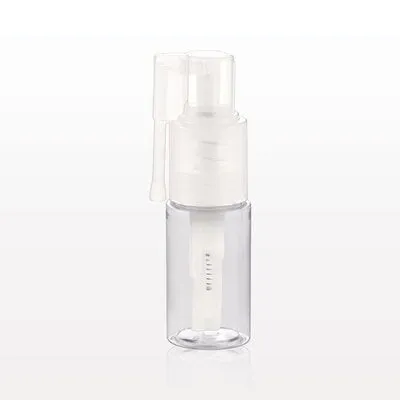
Powder Spray Bottle - Small - 8.5cm x 2.5cm - 14ml

The Beauty Ledger - Pink
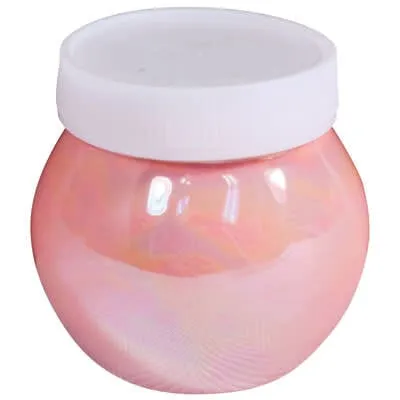
DL - Porcelain Jar w Lid - Pink - 30 mL - DL C525

Glass - Liquid Cup With Stainless Steel Lid - Clear - LC122
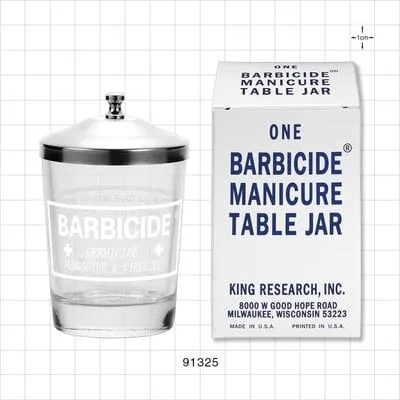
Manicure Table Jar - Small
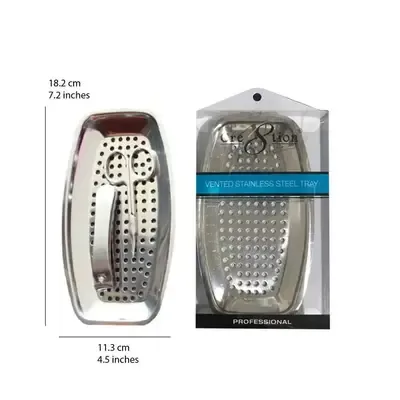
Vented Stainless Steel Tray - Large
Sterilizer Utility Tray - 14"x10.5" - Stainless Steel
Questions we get at the counter
Do I need a license to open a nail salon in Florida?
How much does it cost to open a nail salon in Florida?
Can I open a nail salon without a license in Florida?
When does the DBPR inspect a new salon?
Do I need a business tax receipt as well as a DBPR license?
Can I transfer a salon license when I buy a salon?
Sources
- Board of Cosmetology FAQ, Florida DBPR
- Rule 61G5-20.002, Salon Requirements, Florida Administrative Code
- Section 477.0265, Prohibited acts, Florida Statutes
- Local Business Tax Receipt, Palm Beach County Tax Collector
- Local Business Tax Receipt, Miami-Dade Tax Collector
- Nail Technicians: Workplace Safety and Health, CDC/NIOSH