Florida nail license renewal: fee, deadline and the 10 CE hours
Renew your Florida nail specialist registration: $45 fee, October 31 deadline, the 10 CE hours line by line, inactive status and how to avoid mistakes.
Florida nail specialists renew every two years on October 31 for a $45 fee, after completing 10 hours of board-approved continuing education. Rule 61G5-32.001 splits those hours into 1 hour of HIV/AIDS and communicable diseases, 3 hours of sanitation and sterilization, 0.5 hour of OSHA, 0.5 hour of workers' compensation, 2 hours of laws and rules, 1 hour of chemical makeup, 1 hour of environmental issues and a 1-hour elective.
Renewal basics: fee, date and which year is yours
The DBPR renews cosmetologists, nail specialists, facial specialists and full specialists on the same terms. The renewal fee for all four is $45, and you must finish 10 hours of continuing education (CE) from a board-approved provider before the registration expires.
Registrations expire on October 31, in two groups. Group 1 expires on October 31 of odd years, and Group 2 expires on October 31 of even years. The DBPR FAQ does not say which group a given nail specialist falls into, so look at the expiration date on your own record. Your registration is valid for two years, so you will see that date repeat every other October.
Everything must be done before midnight Eastern Standard Time on the expiration date. The DBPR emails a renewal notice 90 days before expiration, so the email address on your record matters. Update it if you changed it.
Also be careful with renewal emails. The DBPR home page warns about scam emails impersonating the agency. Start renewal from the DBPR website you type in yourself (myfloridalicense.com), not from a link in a message.
The 10 CE hours, line by line
The statute caps what the Board can require at 10 hours every two years (section 477.019(7)). Rule 61G5-32.001 then divides those 10 hours by subject. You need all of these, not just any 10 hours.
| Subject | Hours | What it usually means for a nail tech |
|---|---|---|
| HIV/AIDS and communicable diseases | 1 | Bloodborne pathogens, exposure and what to do when a client bleeds |
| Sanitation and sterilization | 3 | Cleaning, disinfecting and sterilizing tools; pedicure equipment; salon rules |
| OSHA regulations | 0.5 | Workplace chemical and safety rules |
| Florida workers' compensation | 0.5 | Employer and employee obligations |
| State and federal laws and rules, including Chapter 477 | 2 | What the statute and Board rules require of you and your salon |
| Chemical makeup of hair, skin and nails | 1 | How your products work and where the risks are |
| Environmental issues | 1 | Waste, ventilation and chemical handling |
| Elective on a related subject approved by the Board | 1 | Your choice among approved courses |
| Total | 10 |
The same 10-hour requirement applies to all licensed cosmetologists and registered specialists. Sections 477.019(7)(a) lists the subject families the courses must cover: HIV/AIDS, OSHA, workers' compensation, state and federal laws and rules, chemical makeup of hair, skin and nails, and environmental issues.
Choosing a provider, and what counts as an hour
The DBPR FAQ is blunt: all continuing education courses must be completed from a board-approved CE provider. That has one practical consequence. A free HIV/AIDS course from the Florida Department of Health may be accepted for an initial application, but the FAQ says it does not count for renewal CE unless the Department of Health is a board-approved provider.
Before you pay for a course, check three things:
- The provider is board-approved. Providers must apply to the Board and pay a $250 application fee under Rule 61G5-32.001, and their approval runs through May 31 of odd-numbered years. The DBPR site lets you search for a continuing education course.
- The course covers the subject you need. A package that advertises "10 hours" should map to the table above, including the 3 hours of sanitation.
- The format is allowed. Home study, video and conference courses need prior Board approval. Home study exams require a 75% passing score. One hour of credit equals 50 minutes of instruction.
Providers report attendee lists to the Department electronically within 30 business days of course completion. That is why some licensees see their hours recorded after a short delay. Do not wait until October to learn that your hours are not in the system yet.
How to renew, in order
- Find your expiration date. Look up your record on the DBPR license search and note the date and your group.
- Take the 10 hours from a board-approved provider, covering every subject in the table.
- Confirm the hours posted. Check your DBPR account for the credit. If it is missing after a few weeks, contact the provider first.
- Pay the $45 renewal fee and submit renewal before midnight EST on the expiration date.
- Print or save the renewed record and share the new expiration date with your salon owner.
Do this at least a month before the deadline. A server outage, a provider delay or a mismatched name on a certificate is easy to fix with 30 days to spare and a crisis with 30 minutes.
If your registration expires, you cannot lawfully practice. Section 477.0265 prohibits practicing a specialty without an active registration, so an expired record is not just an administrative problem. For late-renewal consequences and any penalty fees, ask the DBPR directly, because those amounts are not in the FAQ pages we read.
Renewal problems and fixes
| Problem | Likely cause | Fix |
|---|---|---|
| I never got the renewal email | Old email on file, or the message went to spam | Update your contact details in your DBPR account, and renew from the DBPR site without waiting for the email |
| My CE hours do not show | The provider has up to 30 business days to submit the attendee list | Contact the provider with your certificate, then the DBPR if the hours still do not post |
| The course I took was rejected | The provider was not board-approved, or the subject did not match | Check provider status first, then take a replacement course that covers the missing subject |
| I took a Department of Health HIV/AIDS course | Health department courses are not renewal CE unless the provider is board-approved | Take the 1 HIV/AIDS hour from an approved provider |
| I am not sure which year I renew | Two groups, odd and even years | Read the expiration date on your DBPR record |
| My name on the certificate differs from my record | Name change or typo at enrollment | Ask the provider to correct it before they report hours |
One habit prevents most of these: take your CE in spring or summer, save every certificate, and renew when the DBPR notice arrives 90 days before expiration. That leaves months, not days, to fix a surprise.
Inactive status, coming back, and moving to Florida
If you are leaving the industry for a while, you can ask the DBPR to change your registration from active to inactive. The processing fee is $5 and the request is in writing. An inactive registration does not let you practice, but it keeps your record.
To come back, you request a change from inactive to active. The FAQ lists a $50 processing fee plus 10 hours of board-approved CE for the biennium before the reactivation. In other words, plan to take a full set of CE before you return to work, and plan for the fee.
The DBPR also handles related requests: a license certification costs $25, and a salon license cannot be transferred. If the salon name, address or ownership changes, the salon owner needs a new salon application and fee. We cover that in our guide to opening a salon.
Moving to Florida, or from another state
New to the state and already registered elsewhere? The route is licensure by endorsement. Your current, active registration or license must have requirements equal to or greater than Florida's, which means 180 school hours for nail specialists. Apprenticeship licensees and out-of-country registrants are not eligible. You also cannot use the working-while-pending exception, so you need the Florida registration before you practice.
If you are still in school or planning to be, our complete path from school to registration covers the 180 hours, costs and the application.
Make the CE hours useful for your station
Ten hours is a small amount of time, but three of those hours are on sanitation and sterilization, and that is where inspectors focus. Use the course as a prompt to check your own setup against Florida's salon rule. Our plain-English guide to rule 61G5-20.002 turns the rule into a checklist, and the pedicure tub log guide shows exactly what to write down.
If your disinfecting jar is cloudy, your cabinet is open or you are not sure your disinfectant label meets the rule, fix it this week. We carry disinfectants and sterilizers, including Barbicide jars and solutions, at all four stores.
Use the 1-hour elective on something that makes you money, such as a product-chemistry or technique topic the Board has approved. Ask the provider which electives qualify before you register.
Shop what's in this guide
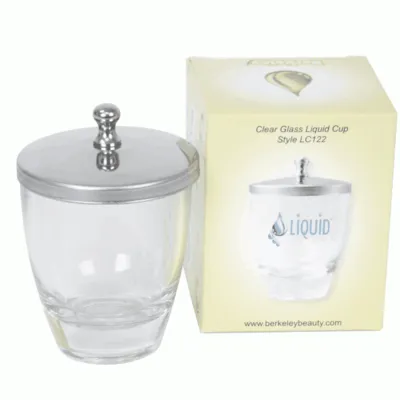
Glass - Liquid Cup With Stainless Steel Lid - Clear - LC122
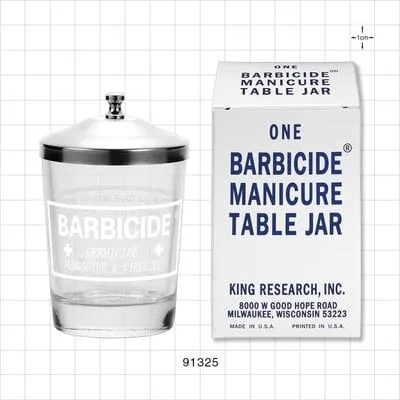
Manicure Table Jar - Small
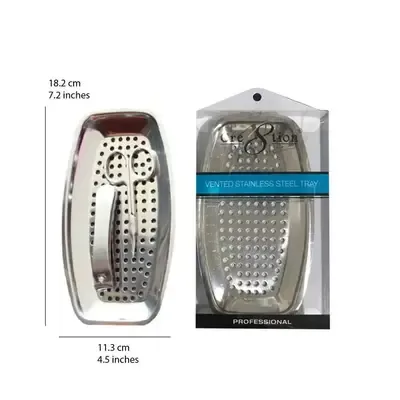
Vented Stainless Steel Tray - Large
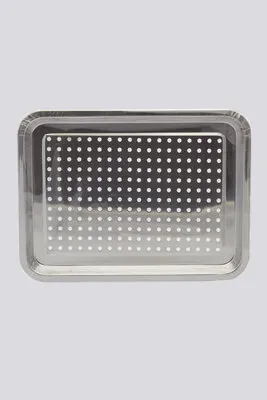
Sterilizer Utility Tray - 14"x10.5" - Stainless Steel
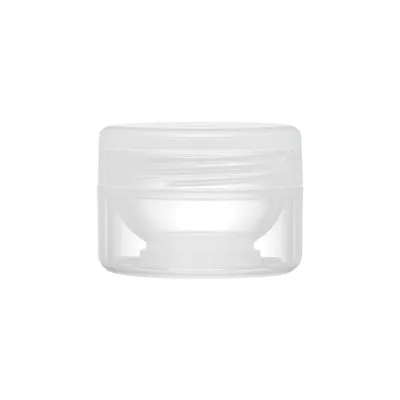
Double Walled Jar - Small - 25 ml .85 oz - FSC363
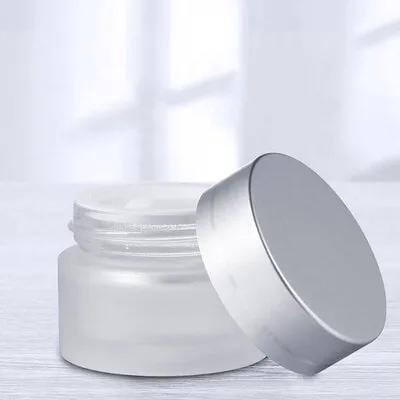
Glass Jar W/ Silver Lid - 1.3 oz
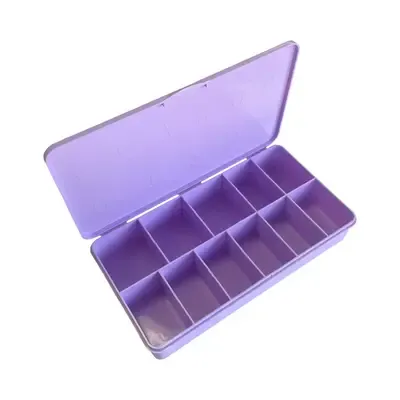
Empty Nail Tip Box - Purple