Florida nail salon sanitation rules in plain English (61G5-20.002)
What Florida rule 61G5-20.002 requires: clean then disinfect tools, closed storage, ventilated nail area, pedicure tub steps and an inspection checklist.
Florida rule 61G5-20.002 requires salons to clean tools with soap and water, fully immerse them in a covered container of EPA-registered hospital-grade disinfectant, store them in a clean closed cabinet or container, do nail extensions in a separate ventilated area, and follow a timed, logged cleaning routine for pedicure equipment. It also sets minimum floor space and bathroom access.
The rule in one paragraph
Florida's salon sanitation requirements sit in Rule 61G5-20.002 of the Florida Administrative Code, "Salon Requirements," made under the cosmetology chapter (Chapter 477, Florida Statutes). The version we read shows its most recent amendment effective November 9, 2017. The rule applies to full salons and specialty salons alike, regardless of size or number of operators. A one-chair nail studio follows the same sanitation steps as a 20-chair salon.
The DBPR inspects salons, and its Board of Cosmetology FAQ says an inspector visits unannounced for the initial inspection within approximately 90 days after the salon license is issued. You may open once you receive the license. You do not wait for the inspection, so your setup needs to be right on day one.
Clean, disinfect, sterilize: the three words the rule defines
People use these words interchangeably. The rule does not.
| Term | Rule definition (in plain English) | Example |
|---|---|---|
| Clean | Remove visible debris from a surface, such as washing with soap and water | Scrub nipper jaws under running water |
| Disinfect | Use a chemical to destroy potential pathogens | Immerse cleaned metal tools in disinfectant for the label's contact time |
| Sterilize | The complete destruction of all microbial life, commonly with heat and/or pressure | An autoclave cycle |
| Wet disinfection container | A covered tub or jar large enough to fully immerse items | A lidded jar of disinfectant on your table |
The practical order is always clean first, then disinfect. Disinfectant cannot work through skin cells, gel residue or product buildup, so a dirty tool dropped into a jar is not a disinfected tool.
Tools and implements: what to do between clients
Subsection (3) covers operating requirements. For the tools on your table, it comes down to these rules:
- Never use a tool on more than one client without disinfecting it. That includes brushes, files, pushers, nippers and any other article. Keep enough tools to allow adequate disinfection, which means owning more than one set.
- Clean with soap and water first.
- Fully immerse in a hospital-level or EPA-approved disinfectant in a covered wet disinfection container large enough for full immersion. Metallic instruments are immersed. For instruments with cutting edges, the rule text we read lists wiping with disinfectant, and it says implements may be immersed. Ask the DBPR how an inspector expects nippers to be handled if you are unsure.
- Use the right disinfectant. For tools that have not touched blood or body fluids, the label must show EPA registration as a hospital-grade bacterial, virucidal and fungicidal disinfectant. For tools that have contacted blood or body fluids, the label must show EPA registration as a disinfectant under 29 C.F.R. 1910.1030.
- Mix and use disinfectants exactly per the manufacturer's directions. Concentration and contact time are on the label.
- Do not carry combs or instruments in your pockets.
The rule does not list porous items, but standard practice is to treat files and buffer blocks that cannot be properly cleaned and disinfected as single-client items: throw them out or give them to the client. We carry files and buffers in bulk counts for that reason.
Storage, UV boxes and towels
After cleaning and disinfecting, the rule requires articles to be stored in a clean, closed cabinet or container until use. Keep undisinfected items, such as pens, pencils, money, paper and mail, out of that container.
On UV boxes: the rule says ultraviolet irradiation may be used to store articles after they have been cleaned and disinfected. It does not say a UV box replaces disinfection. A drawer with a UV light is a storage option, not a way to skip the jar.
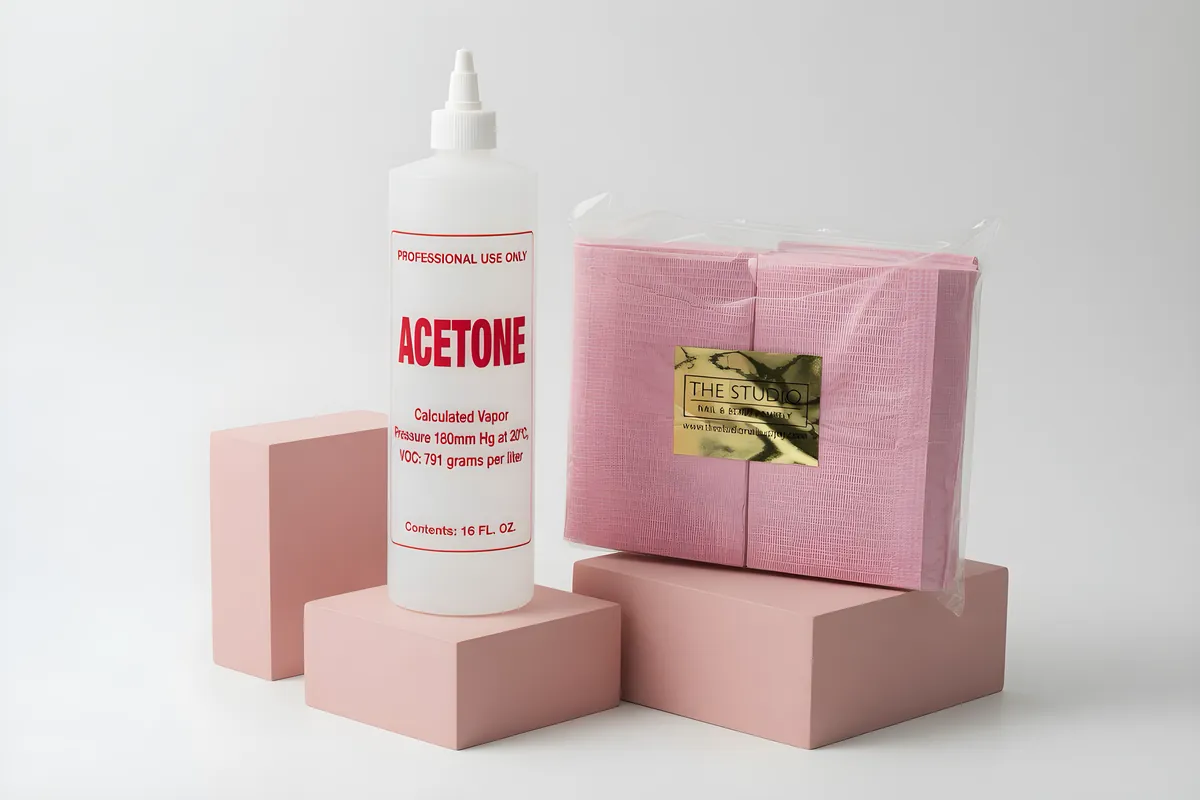
Linens follow a similar closed-container logic. Clean linens go in a closed, dustproof cabinet. Soiled linens go in a closed receptacle, or in open containers only if fully separated from service areas. Many nail techs use disposable table liners to simplify this, such as our towels and liners.
Creams and lotions need protection too. Use containers that prevent contamination of unused product, and remove creams with a spatula rather than dipping fingers.
Ventilation and nail extensions
Subsection (2)(c)1 says the salon must be well ventilated, and it adds a specific line for nail work: nail extension or sculpturing services must be performed in a separate, adequately ventilated area. It also requires walls, ceilings, furniture and equipment to be clean and dust-free, and hair to go into a covered waste receptacle.
The rule does not name equipment, so it does not tell you to buy a particular dust collector or exhaust system. CDC/NIOSH advice for nail salons points to combining general room ventilation with local exhaust at each table, such as downdraft tables or portable units that filter or vent air. Our dust collectors are one low-cost way to capture filing dust at the source.
Also keep chemical containers closed and use dispenser bottles with small openings, both NIOSH recommendations. They reduce what ends up in the air you breathe all day.
Pedicure equipment: the timed routine
Subsection (3)(g) applies to any equipment that holds water: sinks, bowls, basins, pipe-less spas and whirlpool spas. It has four steps and a record requirement.
| When | What the rule says |
|---|---|
| After every client | Clean with low-foaming soap or detergent and water to remove debris, then disinfect with an EPA-registered hospital-grade bactericidal, fungicidal, virucidal and pseudomonacidal disinfectant, used per the label, for at least 10 minutes. Pipe-free spas: remove the foot plate, clean and rinse below it, wipe dry. |
| End of each day of use | Disinfect filter screens, remove debris from screen and inlet, clean with low-foaming soap and water, fully immerse screen, jet or foot plate in disinfectant, then flush the system with warm water and low-foaming soap for 5 minutes, rinse and drain. Then fill with clean water and the correct amount of disinfectant, circulate for 10 minutes, turn off and leave in the basin for 6 to 10 hours. Drain and flush before reuse. |
| Weekly | After the end-of-day steps, fill with water containing one teaspoon of 5.25% bleach per gallon, circulate for 5 to 10 minutes, let sit for at least 6 hours, drain and flush before use. |
| Always | Keep a log in the pedicure area listing the dates and times of all cleaning and disinfection procedures, available on request to a consumer or DBPR inspector. |
For a step-by-step version with a sample log, read our pedicure tub cleaning log guide.
The risk is real. A CDC study of 18 California nail salons found mycobacteria in 29 of 30 whirlpool footbaths sampled (97%), and half of operators reported never cleaning behind the recirculation screen. That is a California survey from 2000, not a Florida inspection, but it explains why Florida's rule is so specific about screens and soak times.
The building basics inspectors also check
- Floor space: at least 100 square feet. At minimum space, the salon may employ no more than one cosmetologist or specialist, and each additional one needs another 50 square feet.
- Toilet and lavatory: on the premises or in the same building within 300 feet, with at least one toilet and one sink with running water, toilet tissue, soap, hand-drying means and a waste receptacle. Clean, in good repair, well lit and ventilated.
- Handwashing sink: specialty salons need a sink or lavatory with hot and cold running water.
- Animals: none, except service animals and fish in closed aquariums.
- Codes: comply with all local building and fire codes for the life of the salon.
- Sharing space: a salon cannot operate in the same licensed space as another business or a cosmetology school. If it adjoins one, it needs permanent separating walls and separate, distinctly marked entrances.
- Home salons: allowed with a permanent wall and a separate entrance, with toilet facilities that are accessed from the salon, not from the living quarters.
Inspection-ready checklist
Print this and tape it inside your cabinet. Every item traces to the rule above.
- Disinfection jar is covered, fully immerses tools and has fresh solution mixed per the label
- Disinfectant label shows EPA registration as hospital-grade bactericidal, virucidal and fungicidal
- Tools are cleaned with soap and water before they go into the jar
- Enough tool sets so no tool is used on two clients without disinfection
- Disinfected tools are stored in a clean, closed cabinet or container
- No pens, money or mail stored with clean tools
- Single-use files and buffers thrown away or sent home with the client
- Clean linens in a closed cabinet, soiled linens in a closed receptacle
- Nail extensions done in a separate, ventilated area
- Pedicure tubs: 10-minute disinfection after every client, end-of-day soak of 6 to 10 hours, weekly bleach step, log filled out
- Toilet facilities clean, stocked and within 300 feet
- Floor space meets 100 square feet plus 50 per extra operator
Need to stock the setup? Start with disinfectants and sterilizers and containers, jars and storage. For a full opening list, read our salon inventory checklist and the opening guide.
Shop what's in this guide
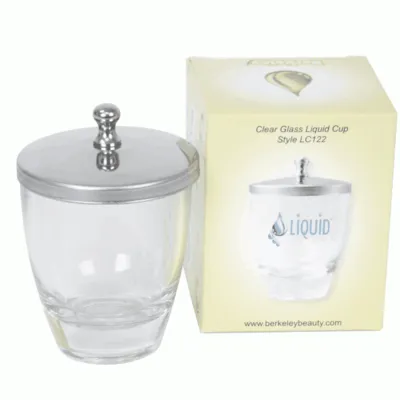
Glass - Liquid Cup With Stainless Steel Lid - Clear - LC122
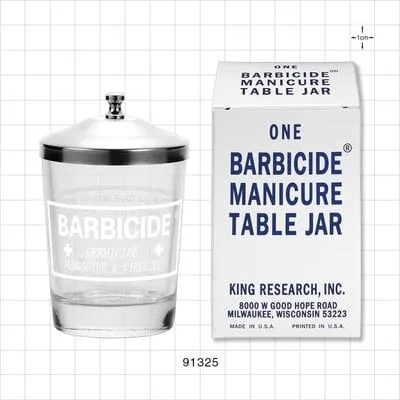
Manicure Table Jar - Small
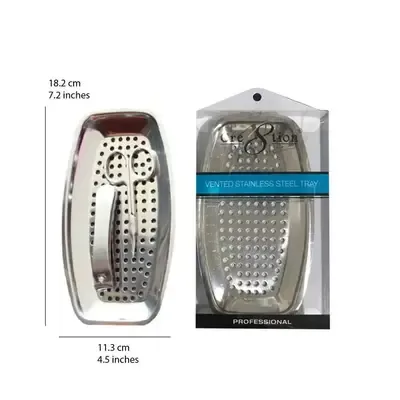
Vented Stainless Steel Tray - Large
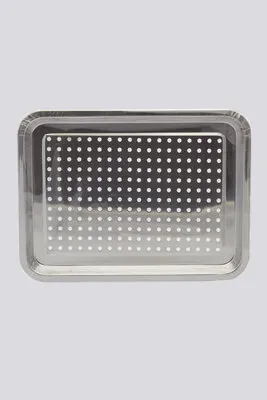
Sterilizer Utility Tray - 14"x10.5" - Stainless Steel
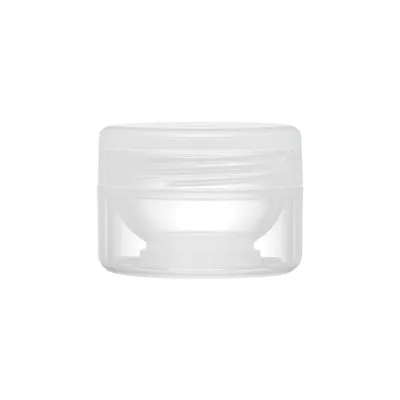
Double Walled Jar - Small - 25 ml .85 oz - FSC363
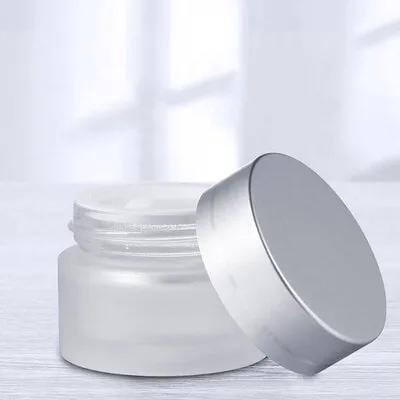
Glass Jar W/ Silver Lid - 1.3 oz
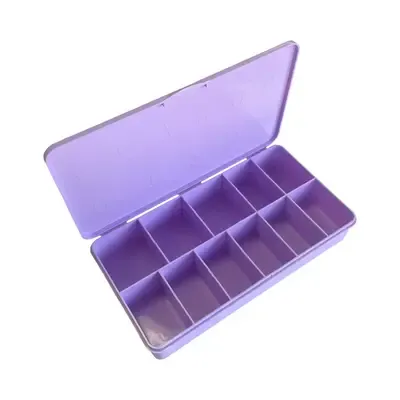
Empty Nail Tip Box - Purple