How to price nail services: a method that covers your time and product
Price Gel-X, acrylic, gel and fills from the bottom up: product cost, your hourly target, overhead and fees, checked against real U.S. price ranges.
Price each service from the bottom up: your time at the hourly rate you need, plus product cost per set, plus your share of overhead, then divide by what is left after payment fees. Then check it against local salons. U.S. benchmark ranges (Zenoti, 2024 data) are about $35 to $60 for gel, $45 to $75 for an acrylic full set and $25 to $40 for a fill.
The formula: price = (time + product + overhead) / (1 - fees)
Most new techs price by looking at the salon down the street. That is a useful check, but it is the wrong starting point, because that salon may have different rent, different speed and a different client base. Start with your own numbers.
For every service, write down four things:
- Time cost: the real chair time (including prep, removal of old product, clean-up and the conversation at the end) multiplied by the hourly rate you need to earn.
- Product cost: what the set actually uses: tips or forms, gel or powder, primer, files, wipes, gloves, disposable liners, and the share of the bit and base coat you use.
- Overhead share: your portion of rent or booth fee, utilities, insurance, software, marketing, education and equipment that wears out, such as lamp bulbs, bits and brushes.
- Payment fees: the percentage your card processor keeps. Check your own rate on your statement.
Then:
Price = (time cost + product cost + overhead share) ÷ (1 − fee rate)
The division by (1 minus the fee rate) matters because fees come out of the price, not on top of it. If your processor keeps 3% (an example rate, use your own), you divide by 0.97.
A worked example with example numbers
The numbers below are placeholders to show the math. Replace each one with your own. Do not use them as a price list.
| Line | Example | How to get your real number |
|---|---|---|
| Chair time for a full set of soft gel extensions | 2 hours | Time yourself on five real clients, from sit-down to payment, and average |
| Hourly rate you need | $30 | Start from the take-home you need per year, divide by billable hours (see next section) |
| Time cost | $60 | 2 h × $30 |
| Product cost | $6 | Add up what a set uses; divide the cost of each bottle by sets per bottle |
| Overhead share | $8 | Monthly overhead ÷ expected sets per month |
| Subtotal | $74 | |
| Fee rate | 3% | Your processor statement |
| Price | $76.29, round to $76 or $78 | $74 ÷ 0.97 |
Compare this against the rule of thumb from Zenoti's pricing guide, which says product cost is typically 10% to 15% of the service price. A $6 product cost at 10 to 15% would imply a price of $40 to $60. That difference is a warning that your time rate or your overhead is doing most of the work. If the market in your city will not pay $76, you have three options: get faster, lower your hourly target, or lower your overhead.
Where the hourly rate comes from
You cannot bill 40 hours a week. Part of the week goes to cleaning, restocking, cancellations, gaps between clients and education. A more honest way to set your rate is this:
- Pick the annual take-home you want before personal taxes.
- Add your yearly business costs: booth rent or salon share, supplies not tied to one service, insurance, license renewal and CE, marketing and software.
- Estimate your billable hours per year: days you work × booked hours per day × weeks per year. Be conservative.
- Divide (take-home + costs) by billable hours.
For context, the U.S. Bureau of Labor Statistics reports that manicurists and pedicurists had a median pay of $17.19 per hour in May 2025, with the lowest 10% earning under $13.90 and the highest 10% over $24.10. The BLS says its wage data excludes self-employed workers (23% of the occupation). Use these figures to sanity-check, not to set your price. If you pay your own taxes and equipment, you need to charge more than the hourly wage of an employee.
Market benchmarks to check against
Once your math is done, compare. Zenoti's nail salon pricing guide, based on its U.S. customer data from 2024, lists these ranges:
| Service | Benchmark range (Zenoti, 2024 data) |
|---|---|
| Basic manicure | $25 to $45 |
| Gel manicure or gel nails | $35 to $60 |
| Acrylic full set | $45 to $75 |
| Fill | $25 to $40 |
| Basic pedicure | $30 to $40 |
| Gel pedicure | $40 to $50 |
The same guide says prices rose about 12% in 2024. These are national averages, so South Florida prices differ by neighborhood. The guide gives no benchmark for Gel-X in particular, and we did not find a reliable published one, so price Gel-X by time and product using the formula above, then check your local competitors yourself. Look at three to five salons or techs in your area that offer the same service at a similar skill level.
When you compare, compare the same thing: length, shape, finish and what is included. A "full set" that includes a design, a cuticle service and a massage is not the same product as a plain set.
Lower your product cost without lowering quality
If your formula says you cannot afford the market price, look at product cost and waste before you cut your pay.
- Measure usage. Count how many sets you get from one bottle of gel, one jar of acrylic powder or one box of tips. Divide the price by that count.
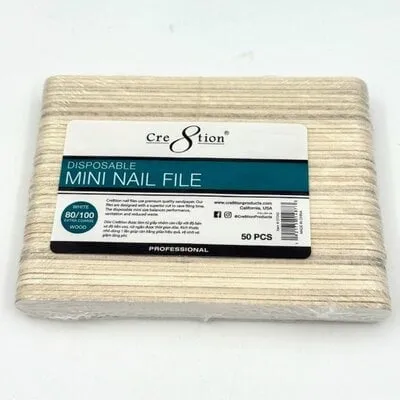
- Buy by the pack for things you use daily: files, wipes, gloves and liners cost less per piece in bulk. Browse files and buffers, gloves and masks and Gel-X supplies at our stores.
- Reduce overfill and flooding. Thin coats use less product and wear better.
- Standardize your set. The same prep and finish products on every client save decisions and stock.
Do not switch to an unknown product just because it is cheap. The wrong product leads to lifting, redos and complaints, which cost more than any savings. For help picking a starter set of products, read our beginner kit list.
Pricing mistakes and fixes
| Mistake | Why it happens | Fix |
|---|---|---|
| Copying the cheapest salon | Fear of losing clients | Compare to salons at your skill level and speed, not the lowest price in town |
| Forgetting removal and dead time | Timing only the "good" part of the appointment | Time five full appointments and use the average |
| Pricing fills at the same rate as a new set | Menu built by product, not time | Price by time block, with a fill rate that matches the real minutes |
| Unlimited free art | Generous habit that grows | Set a simple art tier: included accents, then priced levels |
| No fee or no-show policy | Awkward to bring up | State it at booking; many techs collect a deposit |
| Never reviewing prices | Hard conversation | Put a yearly review in your calendar |
One habit fixes most of this: once a quarter, write your actual income for the quarter, divide by your actual hours at work, and compare it with the hourly rate you set. If the two numbers are far apart, the menu is the problem, not your effort.
Raising prices without losing clients
Most techs wait too long and then raise by too much. A few rules help.
- Raise on a schedule, such as once a year or when your costs rise. Zenoti recommends reviewing prices annually or when operating costs rise.
- Tell people in advance. Two to four weeks is typical. Put it on your booking page and say it at the end of an appointment.
- Frame it as the new menu, not an apology. "Starting on the first, full sets are $X" is clearer than a long explanation.
- Add new services at new prices instead of raising old ones when you can. Zenoti suggests adding new-priced services rather than raising existing ones.
- Expect some clients to leave. If your calendar is full and you are tired, a small loss at a higher price can be a better week.
Your price also depends on how you work: employee, commission or booth renter. Our booth rental guide shows how station fees change your overhead line. And if you are weighing the career as a whole, read is nail tech a good career.
Shop what's in this guide
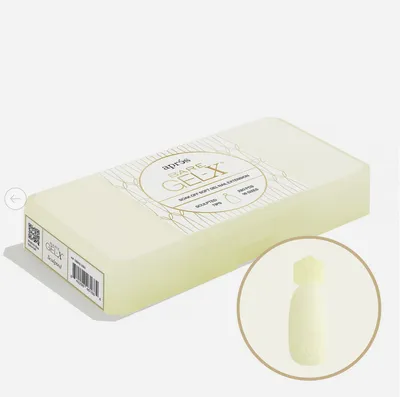
Bare Gel - X Tip Box - Sculpted
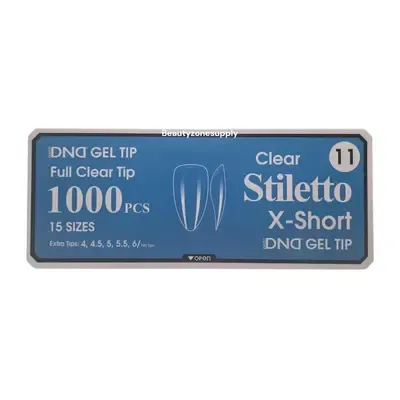
Gel Tips - Full Stiletto X-Short
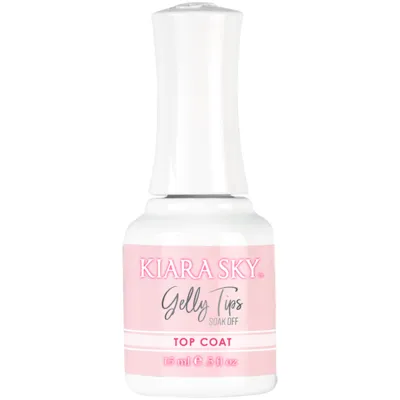
Gelly Tips - 4 Top Coat Non Wipe - 0.5 oz
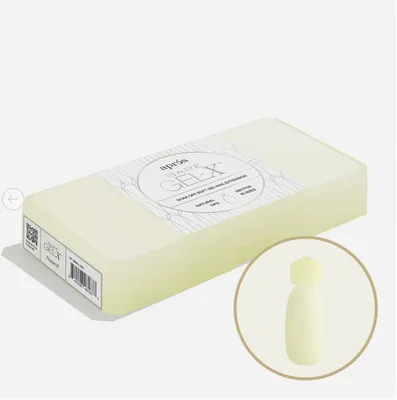
Bare Gel - X Tip Box - Natural
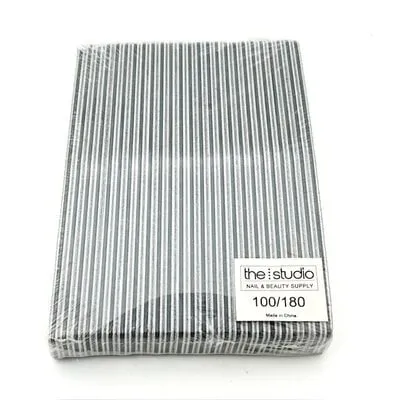
Files - Oval - 100/180 - Zebra/ Black - 25 Count
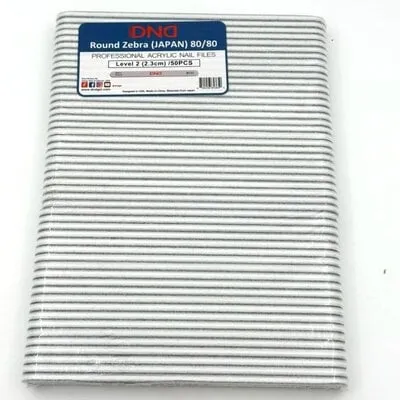
Nail Files - Round - 80/80 - Zebra - Japan - 50 count
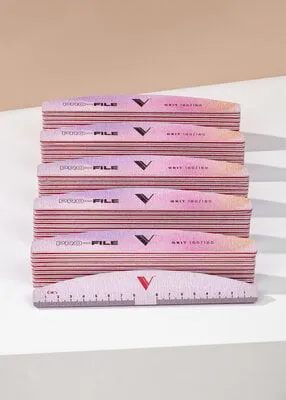
Files - 180/180 - Pink Halfmoon - 50 ct