Nail File Grit Chart: Which Grit for Natural Nails, Acrylic and Gel
A plain nail file grit chart: what 80, 100, 180, 240 and finer grits do, which to use on natural nails vs enhancements, and how to read dual-grit files.
Lower grit numbers are coarser. Use 80 to 100 grit only on acrylic and hard gel, 180 grit to refine and blend enhancements, and 240 grit (or finer) on natural nails. Never use anything coarser than 180 on a natural nail, and use 400 grit and above to smooth and buff before polish.
How grit numbers work
Grit is the size of the abrasive particles on a file or buffer, written as a number. The lower the number, the larger the particles and the coarser the file. A 80 grit file is rough sandpaper. A 400 grit buffer is soft and fine.
That one idea explains the whole chart: coarse files remove a lot of material fast, and fine files remove very little and leave a smoother surface. You pick the grit by what you are filing (natural nail or product) and by the stage of the job (shaping, refining or finishing).
Many nail files are dual-grit, with a different grit on each side. A 100/180 file has a 100 grit side and a 180 grit side. The Studio and Apres sell 100/180 files and buffers, and 80/100 files in many shapes. Always read both numbers, because the side you grab matters.
The nail file grit chart
| Grit | How it feels | Use it for | Never use it on |
|---|---|---|---|
| 80 | Very coarse | Fast shortening and bulk shaping of acrylic or hard gel | Natural nails |
| 100 | Coarse | Shaping and shortening acrylic, gel and tips | Natural nails |
| 150 | Medium-coarse | General shaping and blending of enhancements, and a common grit for diamond bits | Thin or damaged natural nails |
| 180 | Medium | Refining and contouring enhancements, blending product into the natural nail, removing the shine from gel polish. Used on some natural nails for shaping | Weak or thin natural nails |
| 240 | Fine | Shaping and smoothing natural nails, smoothing edges, prep for polish | (Safe on natural nails) |
| 400 to 600 | Very fine | Smoothing and refining the surface, finishing touches, a smooth base for polish | (Safe, but removes little) |
| 1000 to 4000 | Ultra-fine | Buffing and shining the natural nail | (Safe) |
The row for 150 comes from Young Nails, which lists its diamond cuticle and natural-nail prep bits at 150 grit. The other rows follow the published guidance of a nail supplier: 80 to 100 grit are very coarse and best for artificial nails, 180 is a medium grit for shaping and contouring artificial nails, 240 is ideal for natural nails, 400 to 600 are fine grits for smoothing, and 1000 to 4000 are ultra-fine grits for buffing and shine.
Sources differ on 180. Some suppliers call it the best all-round grit for natural nails, and others treat it as an enhancement grit. If you are unsure, use 240 on a natural nail. It is the safest choice.
Which grit for natural nails
For natural nails use 180 at the coarsest, and 240 if the nails are thin, weak, peeling or damaged. The risk with a coarser file is not a single bad stroke, it is the repeated friction and heat that make the plate split into layers.
- Shaping the free edge: 240 grit, held flat, with short strokes in one direction from the sides toward the center. Sawing back and forth tears the layers of the nail apart.
- Smoothing ridges: a 240 grit buffer or a finer one (400 or higher), with light pressure.
- Prep before polish: a light pass with a fine buffer to remove shine, then dust off.
- Shine without polish: a high-grit buffer, in the 1000 to 4000 range.
Which grit for acrylic, gel and Gel-X
With enhancements, use the coarsest grit that does the job, then step to finer ones to remove scratches.
- Reduce length and bulk with 80 to 100 grit. Work the product, keeping the file off the natural nail.
- Refine the shape with 150 to 180 grit. This evens out the sidewalls, apex and curve.
- Smooth with 240 grit or a fine buffer. Removes the scratch marks from the coarse file.
- Finish with 400 and above if you want a smooth, shiny base, or before gel polish or top coat.
Skipping steps leaves deep scratch lines that gel polish or top coat will show. For soft gel tips such as Gel-X, the same idea applies, but use a lighter touch on the tip: soft gel tips are thinner than acrylic, and an aggressive file can thin them quickly. Read our Gel-X guide for prep steps.
New to acrylic? Start with our acrylic nails guide.
Dual-grit files, shapes and materials
- 100/180 dual-grit: the most versatile file for enhancements. Use the 100 side for bulk and the 180 side for refining. Our files and buffers include many 100/180 options.
- 80/80 or 100/100 jumbo files: same grit on both sides for fast shaping. Typically sold in multi-packs.
- Mini files (80/80 or 100/100): small, single-use files good for tight areas, tips and cuticle-side shaping, and often used once per client.
- Buffer blocks and four-way buffers: several grits on one block, from smoothing to shine.
- Shapes: straight, oval, half-moon, banana and zebra-pattern files all use the same grit logic. Shape affects reach, not abrasiveness.
- Washable or reusable files (glass or metal) need cleaning and disinfecting, which is why many pros use foam-core files as single-use items.
Disposable files and buffers have a foam or paper core. These are porous and cannot be reliably disinfected, so use them on one client only and then throw them away. Florida's salon rule requires implements used on more than one patron to be disinfected, so a file that cannot be disinfected should not be reused across clients. See how to clean nail drill bits for the cleaning steps for metal tools.
Grit on e-file bits and sanding bands
The same idea carries over to machine bits, with a few differences.
- Sanding bands use paper grit numbers like 80, 100, 120 and 240. We carry bands from 80 grit (coarse) to 240 (fine), including mini bands in fine #240.
- Diamond bits use grit numbers like files. Young Nails lists its natural-nail prep bits at 150 grit.
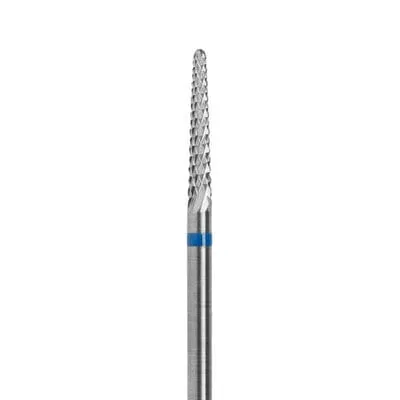
- Carbide bits are graded by the size of the flutes, from XXF (double extra fine) to XXC (double extra coarse). Deep, large flutes are coarser. Because the bit cuts with teeth, not particles, there is no equivalent to a file grit number.
Choose the bit grit the same way you choose a file: coarse for bulk on enhancements, fine for finishing and anywhere near the skin. See the full e-file bits guide.
Quick picks by service
| Service | Start with | Finish with |
|---|---|---|
| Natural nail manicure | 240 | 400 to 600 buffer, then 1000+ for shine |
| Thin or weak natural nails | 240 or finer, very light | Fine buffer |
| Acrylic fill or rebalance | 100, then 180 | 240, then a buffer |
| New acrylic set (shape and length) | 80 or 100 | 180, then 240 |
| Hard gel or builder gel | 100, then 180 | 240, then a buffer |
| Soft gel tips (Gel-X) | 180 on the tip, light touch | 240 or finer |
| Remove shine before gel polish | 180 or 240 buffer, light | Dust off and prep |
| Smooth ridges on natural nails | 240 buffer | 400+ buffer |
How to handle and store files
- Keep files and buffers dry and flat. Moisture breaks down the adhesive on many files.
- Brush dust off with a dust brush so a clogged file does not skip and heat the nail.
- Replace a file as soon as the grit feels smooth. A worn file makes you press harder.
- Label the grit with a marker if the print wears off.
- Store clean files in a closed container, away from used ones.
Common grit mistakes
- Using the 100 side on a natural nail "just to shape it." This is the fastest way to thin and split a natural plate. Turn the file over to the 180 side, or better, use 240.
- Jumping from coarse to buffer. Skipping the middle grits leaves deep scratches that show through polish and gel. Step down in order: coarse, medium, fine, buffer.
- Sawing back and forth. Short strokes in one direction cause less friction and fewer split layers than a rapid back-and-forth.
- Filing the top of the nail with a coarse file. Use the coarse side only on product, and keep it off the natural nail plate and the skin.
- Using a worn file. When the surface feels smooth, the file is no longer the grit on the label. Replace it.
- Sharing one file between clients. A porous file cannot be disinfected. Use a new one for each client or use a washable file and disinfect it between clients.
If you want a quick summary: natural nails get 240 or finer, enhancements start at 100 and finish at 240 or finer, and every step gets lighter as the grit gets finer.
Shop what's in this guide
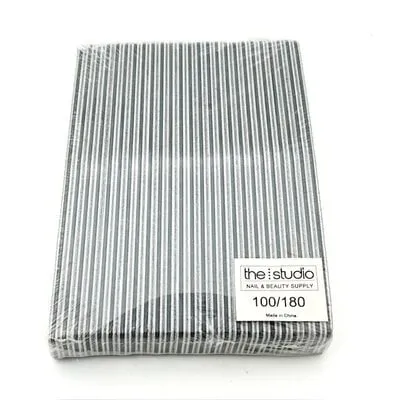
Files - Oval - 100/180 - Zebra/ Black - 25 Count
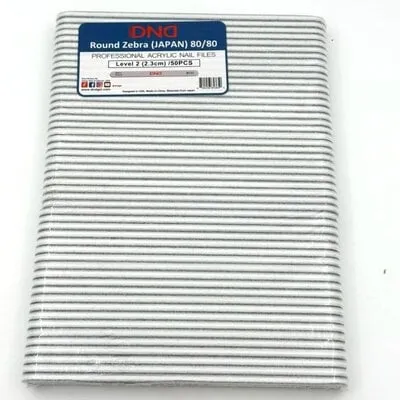
Nail Files - Round - 80/80 - Zebra - Japan - 50 count
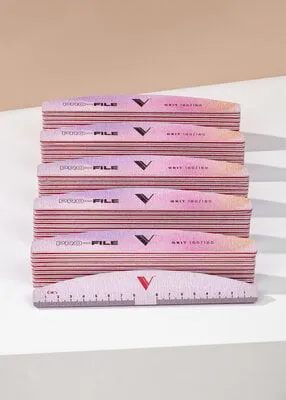
Files - 180/180 - Pink Halfmoon - 50 ct
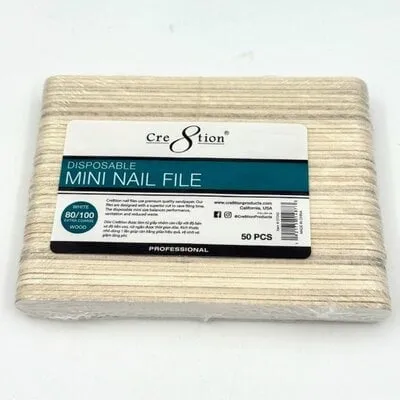
Mini Nail File - 80/100 - 50 count
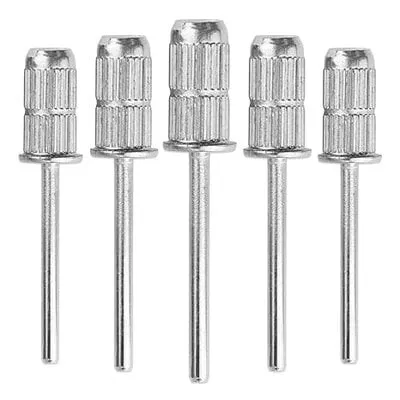
Bit - Mandrel - Silver - 3/32
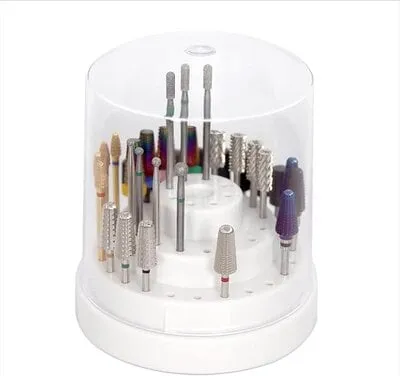
Carbide Nail Drill Bit Holder - 48 Holes - Small - White
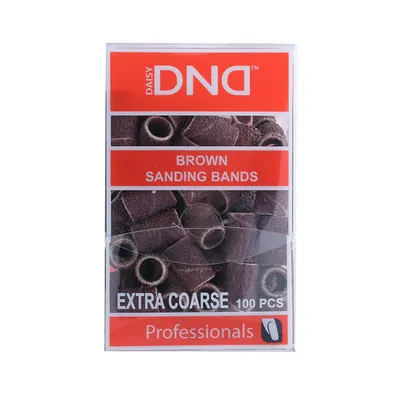
Brown Sanding Bands - Extra Coarse - 100 pcs