How to Clean and Disinfect Nail Drill Bits (Florida Salon Rules)
Step-by-step cleaning and disinfecting of carbide, diamond and ceramic nail drill bits, what Florida rule 61G5-20.002 requires, and what to throw away.
Clean the bit first by brushing out debris and washing it with soap and water. Then fully immerse it in an EPA-registered hospital-level disinfectant for the contact time printed on the label, dry it, and store it in a closed, clean container. Florida salon rule 61G5-20.002 requires that order: clean, immerse in an approved disinfectant, store closed.
Clean, disinfect and sterilize are three different things
These words get mixed up, and mixing them up is how bits end up half-clean.
- Cleaning removes visible dust, product and skin debris with a brush, soap and water. It does not kill germs, but it is the step that lets the next one work.
- Disinfecting uses a chemical to destroy potential pathogens on a clean surface. This is what Florida requires between clients. The rule defines a "wet disinfection container" as a tub or jar with a lid, filled with disinfectant and large enough for all items to be completely immersed.
- Sterilizing destroys all microbial life, usually with an autoclave or similar equipment. Florida's salon rule does not require it for nail implements, and not every bit or handpiece part tolerates the heat.
The rule that governs Florida salons is Rule 61G5-20.002 of the Florida Administrative Code. It states that the use of a brush, comb or other article on more than one patron without being disinfected is prohibited, and that each salon must have sufficient implements to allow adequate disinfecting. In practice, that means owning enough bits to rotate: one set in the client's service, another in the disinfectant, and a third clean and dry.
Step by step: clean and disinfect a metal bit
- Brush off dry debris right after the service. Use a stiff bit brush (nylon or brass) and brush in the direction of the flutes. A packed bit will not disinfect, because product blocks the liquid. We stock carbide bit brushes and bit cleaners for this.
- Wash with soap and water. The rule says to "first, clean articles with soap and water." Scrub into the flutes with the brush, then rinse. If the bit has gel or acrylic residue baked on, remove it mechanically first. Do not soak a bit in acetone as your only cleaning step: it loosens product but does not disinfect.
- Dry or shake off excess water. Diluting your disinfectant with water drips weakens it.
- Immerse completely. Put the bit in a covered container of EPA-registered, hospital-level disinfectant so the whole bit is under the liquid, including the shank.
- Time it. Use the contact time on the disinfectant label. Florida's rule says disinfectants must be mixed and used according to the manufacturer's directions. As one example, the EPA-stamped Barbicide label (EPA Reg. No. 954-11) says to thoroughly clean tools first and then immerse completely for 10 minutes, or longer if local authorities require it. Check your own product's label, because different products have different times.
- Rinse and dry. The Barbicide label says to rinse the tools to remove the disinfectant after immersion and dry before use. Lay bits on a clean towel or let them air-dry.
- Store them clean and closed. Rule 61G5-20.002(3)(e) requires articles to be stored "in a clean, closed cabinet or container until used" and not to be kept with undisinfected items such as pens, money or paper. A lidded bit holder works.
Mix the disinfectant as the label directs. The same Barbicide label, for example, says fresh solution must be prepared daily, or more often if the solution becomes diluted or soiled. We cover solution care in how to use Barbicide on nail tools.
What to do for each type of bit
| Bit type | How to clean | Disinfect? | Notes |
|---|---|---|---|
| Carbide (steel body) | Brush the flutes, wash, rinse | Yes, full immersion | Non-porous. Educator Katie Barnes says carbide can be cleaned, disinfected and sterilized |
| Diamond-coated | Brush gently, wash, rinse | Yes, full immersion | Do not scrub hard enough to dislodge the coating. Check for worn spots |
| Ceramic | Brush, wash, rinse | Yes, full immersion | Coated ceramic can chip. Replace chipped bits |
| Mandrel (metal) | Remove the band, wash, rinse | Yes | Throw the band away |
| Sanding band | Not cleaned | No. Discard | Paper abrasive is porous and cannot be disinfected. Bands should be replaced after every client |
| Rubber or silicone mandrel, buffers, files | Not cleaned | No. Discard | Porous. Treat as single-use for the client |
Why discard porous items? A disinfectant label like Barbicide's lists "non-porous" hard-surfaced tools. A paper band or foam buffer absorbs liquid and skin cells and cannot be reliably disinfected, so treat it as single-use. Florida's rule does not list disposables by name, so if you have a doubt about a specific item, ask the Florida DBPR Board of Cosmetology.
Don't forget the handpiece and the machine
The bit is the part that touches the client, but the handpiece sits in your hand and near the nail. Wipe it down between clients. Young Nails says never to clean your e-file with acetone, which can damage plastic and finish. Use an alcohol-based cleanser on the motor, handpiece and cord to remove dust, oils and contaminants. Check your handpiece's manual for which parts can be wiped and which can never be immersed. Never put the handpiece or the motor in a disinfectant bath.
Keep a lidded jar or tray of disinfectant for bits only, so bits do not share space with nippers or pushers. That way you can track which ones are done.
If you cut skin or draw blood
Florida's rule has a stricter standard for tools that touch blood or body fluids. The disinfectant label must show EPA registration as a disinfectant in accordance with 29 C.F.R. 1910.1030, the federal bloodborne pathogens standard. Check your disinfectant's label to see whether it lists that use. If you are not sure, a nick means the bit should be cleaned and disinfected with a product that covers it before it is used again, and a single-use band or file should be discarded.
Always wear gloves and have a bandage and a sealed waste bin within reach. If a client has a cut, an infection or an unusual rash near the nail, stop the service and suggest they see a doctor.
When a bit is worn out
Cleaning cannot fix a bit that has reached the end of its life. Replace it if:
- It cuts poorly even at the right speed and you press harder to compensate.
- The flutes or diamond coating look smooth or worn.
- It wobbles in the handpiece, or the shank looks bent.
- It has rust, pitting, chipped ceramic or burrs that catch skin.
- Flutes stay clogged after brushing and washing.
Pitted metal is also hard to clean. Residue in the pits can shield germs from the disinfectant. Our e-file bits guide covers which bits to own first.
Set up a simple bit routine at your station
A routine takes the thinking out of it. Here is a layout that works for a small salon or a home studio.
- Dirty tray: used bits go here right after the service, flute side up.
- Wash zone: brush and soap and water, then rinse and shake dry.
- Disinfectant jar: covered, labeled with the mix date, with a basket or tray so bits do not sit loose.
- Clean holder: a closed bit box that only ever holds disinfected, dry bits. We stock disinfecting jars and trays and bit holders in several sizes.
- A written note of when you changed the solution. Florida requires a log for pedicure equipment disinfection, and it is a good habit to keep one for implements too.
Buy enough bits to rotate so you never have to rush the disinfection time. A 10-minute wait feels long in the middle of a day, which is why people skip it, and why a spare set pays for itself.
Shortcuts that do not count as disinfecting
- Wiping with a cotton pad and alcohol. This may remove some dust but does not meet the Florida requirement for an EPA-registered hospital-level disinfectant, used according to its label.
- Dipping the bit for a few seconds. The contact time on the label is the time the surface has to stay wet. For the Barbicide label, that is 10 minutes of complete immersion.
- Using the same cloudy solution all week. The Barbicide label calls for fresh solution daily or sooner if diluted or soiled.
- Leaving bits in the disinfectant overnight. A supplier's tool-care guide warns that prolonged soaking can damage metal.
- Storing disinfected bits in an open tray next to used ones. Rule 61G5-20.002(3)(e) requires a clean, closed container.
- Relying on a UV cabinet as the disinfecting step. The Florida rule allows UV irradiation for storing articles after they have been cleansed and disinfected, not as a replacement for disinfecting.
If a client asks how you disinfect your bits, you should be able to say three things: you cleaned them, you immersed them in an EPA-registered hospital-level disinfectant for the label's full time, and you keep them in a closed container.
Troubleshooting dirty and damaged bits
| Problem | Cause | Fix |
|---|---|---|
| Gel or acrylic packed in the flutes | Not brushed between uses | Brush with a bit brush, and soak briefly in acetone only to loosen product, then wash with soap and water and disinfect |
| Rust or brown spots on a bit | Stored wet, or soaked too long | Dry thoroughly after every disinfection. Replace the bit if it is pitted |
| Diamond coating wearing off | Age or hard scrubbing | Replace. Do not scrub with a metal brush |
| White film on bits after drying | Disinfectant residue not rinsed | Rinse with clean water as the label directs, then dry |
| Bits stick together in the holder | Stored damp | Dry fully. Use a holder with air flow if it has one |
| Chipped ceramic bit | Dropped or coating failure | Replace. Chips can catch skin |
Shop what's in this guide
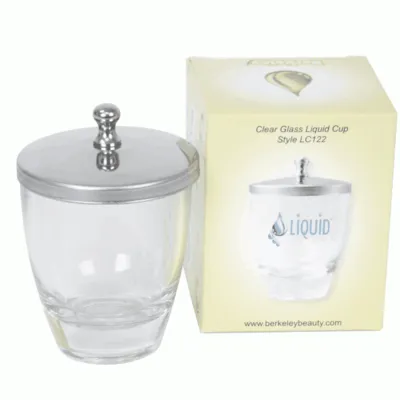
Glass - Liquid Cup With Stainless Steel Lid - Clear - LC122
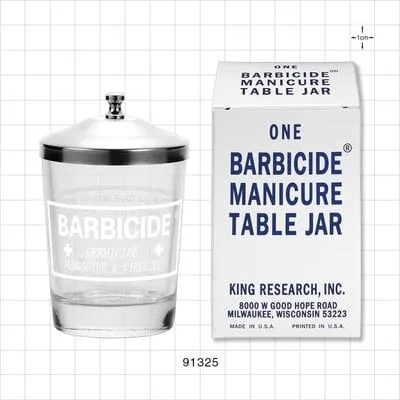
Manicure Table Jar - Small
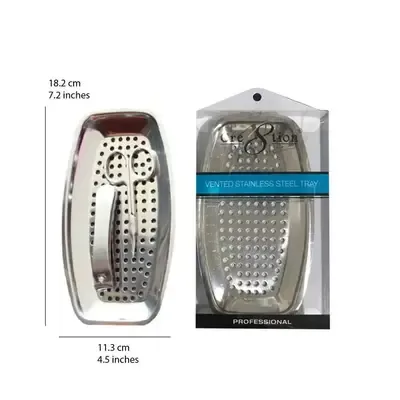
Vented Stainless Steel Tray - Large
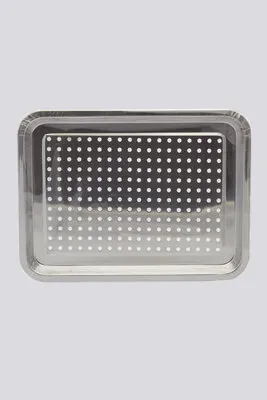
Sterilizer Utility Tray - 14"x10.5" - Stainless Steel
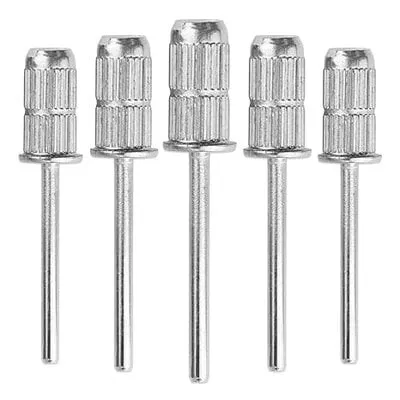
Bit - Mandrel - Silver - 3/32
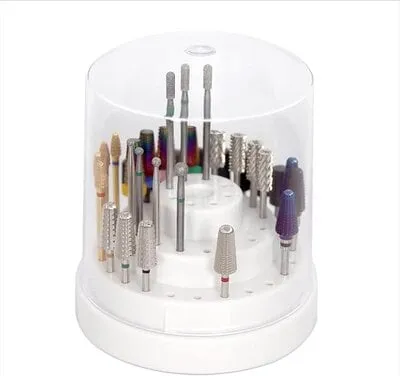
Carbide Nail Drill Bit Holder - 48 Holes - Small - White
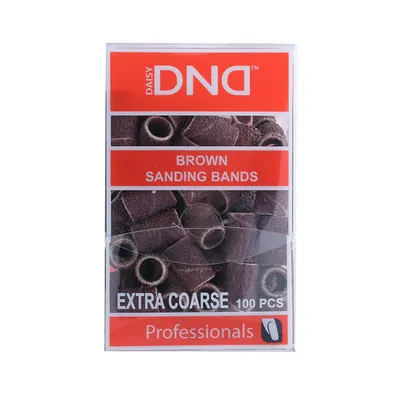
Brown Sanding Bands - Extra Coarse - 100 pcs
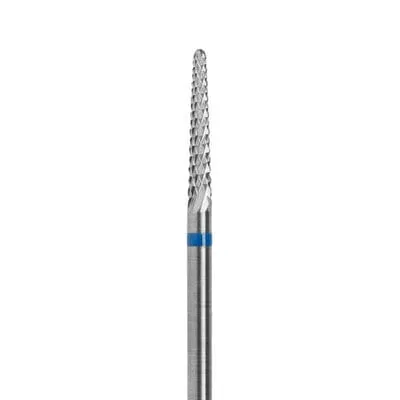
ProBit Nail Drill Bit - Cone - Blue - M - 119
Questions we get at the counter
Can I clean nail drill bits with alcohol?
Can I clean drill bits with acetone?
How long do bits need to soak in disinfectant?
Can I autoclave nail drill bits?
Do I need to disinfect sanding bands?
How should I store clean bits?
Sources
- Fla. Admin. Code R. 61G5-20.002, Salon Requirements
- Barbicide EPA Master Label, EPA Reg. No. 954-11 (8/13/2021 label), U.S. EPA
- The Ultimate Nail E-File Guide: Essential Bits and How to Use Them, Young Nails
- What's the difference between diamond, carbide and silicone e-file bits, Scratch Magazine (Katie Barnes)
- Florida DBPR Cosmetology FAQ