Cuticle Nippers: How to Choose, Use and Sharpen Them Safely
Pick the right jaw size, use nippers only on dead skin, disinfect them the Florida way, and know when and how to sharpen. A practical guide for techs.
Use cuticle nippers only on lifted dead skin and hangnails, taking small bites with the jaw nearly flat to the nail. The American Academy of Dermatology advises against cutting the living cuticle, because it protects against infection. Clean, disinfect and oil your nippers after every client, and have them professionally sharpened when they fold tissue or a thin plastic bag instead of cutting it.
Dead skin vs the living cuticle
This is the single most important idea in the guide. Two different things sit at the base of the nail.
- The cuticle is the thin, living seal of skin that attaches the skin fold to the nail plate. Its job is to keep water, bacteria and fungus out of the nail matrix, the place where the nail grows.
- Eponychium and loose dead skin (often also called cuticle by clients) is the dry, flaky tissue and the white film that sticks to the nail plate. Hangnails are tags of dead or torn skin at the sides of the nail.
The American Academy of Dermatology says not to remove or cut your cuticles, and warns that pushing or cutting them can lead to inflammation and infection. That is the position to work from. Nippers are for lifted, loose dead skin and hangnails, and nothing attached to living tissue.
Many clients ask for a "clean" cuticle and some salons trim more. As the provider, you decide what is safe. A good conversation is: "I'll remove the loose dry skin and any hangnails, and I'll leave the live cuticle alone so it keeps protecting your nail."
How to choose cuticle nippers
Cuticle nippers differ in jaw size, jaw shape, spring, steel and handle. Pick for the work you do most.
| Choice | What it changes | Good for |
|---|---|---|
| Jaw size (for example 3, 5, 7 or 12 to 16 mm) | How much skin you cut in one bite and how much control you have | Smaller jaws (3 to 5 mm) for precision and tight sidewalls. Bigger jaws (7 mm and up, full jaw) for speed on a larger area |
| Full jaw vs half jaw | Full jaw has a longer cutting edge. Half jaw has a shorter edge for fine work | Full jaw for broad clean-up. Half jaw for detail around the nail fold |
| Single spring vs double spring | How firmly the handles open back up and how it feels in the hand | Personal preference. Try both |
| Steel | High-grade stainless steel keeps an edge longer and resists rust. Stainless-cobalt costs more and holds an edge even longer, according to one supplier. Nickel plated is cheaper but needs more careful drying and oiling | Daily professional use: stainless or better |
| Handle shape and grip | Affects hand fatigue over a long day | Hold them. Many techs prefer a light, balanced pair |
Look for blades that meet cleanly with no gaps, a smooth open and close action, and no burrs on the edge. Staleks says its blades should be free of damage or burrs and the nippers should cut smoothly rather than pinch or tear skin.
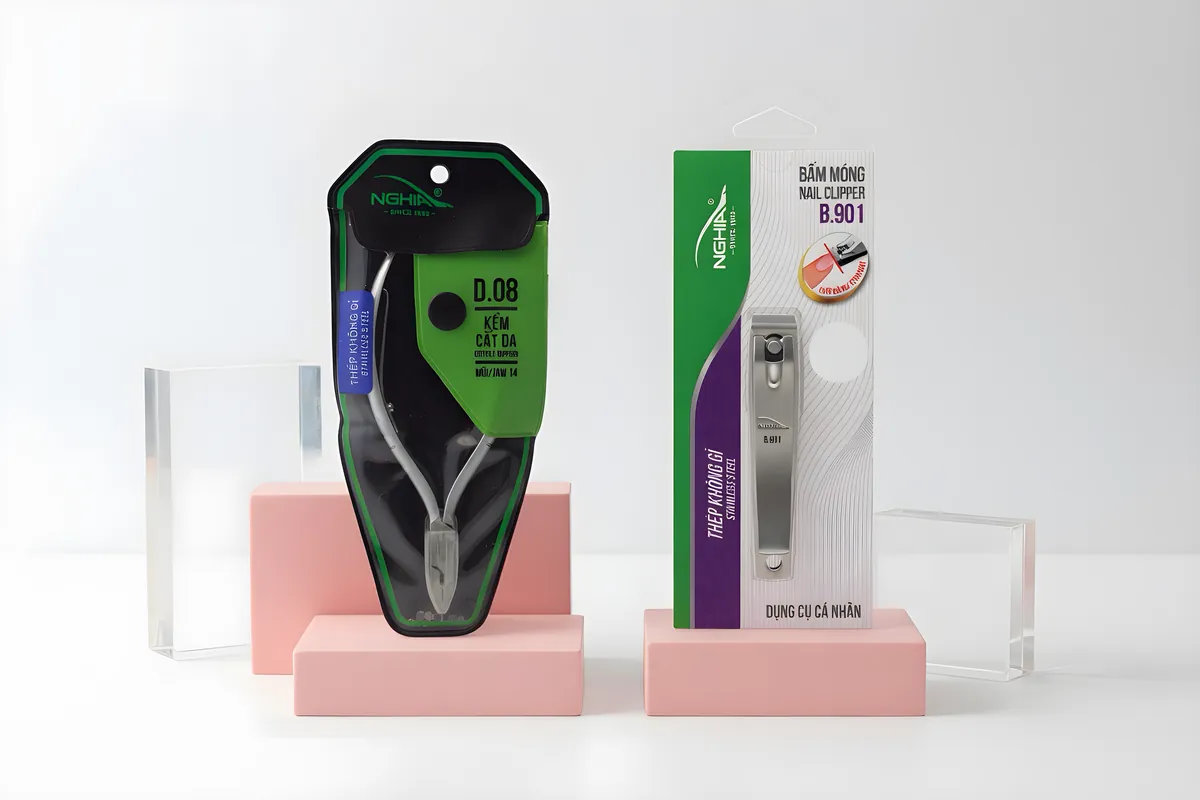
We carry Staleks, Nghia, My Nippers and Pink Mask cuticle nippers in half jaw and full jaw styles. Browse the full nippers and scissors collection.
Technique: how to use nippers safely
- Soften first. After cleaning the hands, apply cuticle remover or warm water, and use a pusher with very light pressure only to lift loose dead skin off the nail plate. The AAD's advice is stricter (it says not to let anyone push or cut your cuticles), so never force the living cuticle back. Softening makes it easy to see where the live cuticle ends. Our pushers and cuticle removers are made for this step.
- Look before you cut. Find skin that is already lifted or white and dry. Leave anything that is attached and pink.
- Support the finger with your free hand so it cannot move.
- Keep the jaw close to flat to the nail, with the blade tips at the edge of the lifted skin, not pointing down into the fold.
- Take small bites. Cut a little at a time, and let go of the handles between bites. Long drags or big bites tear skin.
- Never pull. If the skin does not release with a gentle snip, it is not ready. Pulling creates a tear that can bleed or get infected.
- Stop at the first sign of tenderness. Wipe, moisturize and move on.
- Finish with cuticle oil. It softens skin and helps prevent new hangnails.
For toenails, the same rules apply. Use clean, disinfected nippers, avoid cutting live skin and watch for ingrown nails, fungus and diabetes-related risks. Refer clients with those concerns to a doctor.
If you draw blood, stop, glove up, apply pressure and treat the nippers as contaminated, which means cleaning and then disinfecting with a product whose label covers blood contact before reuse. Florida's rule requires that standard for implements that have touched blood or body fluids.
Cleaning and disinfecting nippers in Florida
Nippers are metallic instruments with a cutting edge. Florida salon rule 61G5-20.002 says you must disinfect an implement before using it on another patron. The method listed for salons is to clean articles with soap and water first, then use a hospital-level or EPA-approved disinfectant, mixed and used according to the manufacturer's directions. For metallic instruments, immersion is the method named. For instruments with a cutting edge, the rule allows wiping with an approved disinfectant.
Our recommendation for nippers is immersion, with a few cautions about metal care:
- Scrub debris from the jaw and the hinge with a soft brush and warm soapy water. Open and close the nippers while you do it.
- Rinse and dry thoroughly with a lint-free towel.
- Immerse completely in your disinfectant for the label's contact time. For example, the EPA-stamped Barbicide label (Reg. No. 954-11) says 10 minutes for pre-cleaned tools, then rinse and dry. See how to use Barbicide on nail tools.
- Rinse off the disinfectant and dry completely. Don't leave nippers soaking overnight. A supplier's guide notes that prolonged soaking can damage the metal and dull blades, and that most manufacturers discourage storing tools in disinfectant.
- Put a drop of instrument oil on the hinge and work it in. Wipe off the excess.
- Store in a clean, closed container, as the rule requires, with the tips protected.
Own enough pairs to rotate. One pair in use, one in the jar, one clean and ready is a common set-up in a busy salon. Our disinfectants and sterilizers include jars and trays sized for implements.
Troubleshooting
| Symptom | Cause | Fix |
|---|---|---|
| Nippers fold or tear skin | Dull blades, or too much skin in the jaw | Run the plastic-bag test. Take smaller bites. Send for sharpening |
| Stiff or gritty action | Dry or dirty hinge | Clean the hinge, work in a drop of instrument oil |
| Blades don't meet cleanly | Misaligned after a drop, or worn | Professional repair, or replace |
| Rust spots | Put away wet, or soaked too long | Dry thoroughly. Replace if pitting is deep |
| Hand fatigue | Handle or spring not right for your hand | Try a different spring or grip |
| Client bleeds often | Cutting live cuticle, or dull nippers | Cut only lifted dead skin. Review technique and sharpness |
When not to use nippers at all
Good techs skip the nippers in several situations. Referring a client is part of the job.
- The skin around the nail is red, swollen, warm or painful. This can be a sign of infection. Do not cut near it, and suggest the client see a doctor.
- There is a visible cut, open sore or bleeding. Avoid the area and protect it.
- The client has diabetes or poor circulation. Even small cuts can heal slowly, so refer them to a medical professional for nail and foot care.
- The nail has a fungus or an unusual color or texture. Do not service it. Refer the client to a doctor or board-certified dermatologist, as the American Academy of Dermatology advises for unusual nail changes.
- The cuticle is attached and healthy. If you cannot lift the skin with a light touch, it is not dead skin.
- You have dull nippers. Fix the tool first, then continue.
Nippers or cuticle scissors?
Both cut dead skin, and many techs use both. The choice is about control and the shape of the job.
| Nippers | Cuticle scissors | |
|---|---|---|
| Cutting action | Two jaws close like pincers and snip a small bite | Two curved blades pass each other like small scissors |
| Best for | Lifted skin around the nail fold, hangnails at the sidewalls | Fine, precise trimming of a hangnail or a thin tag |
| Learning curve | Takes practice to keep the jaw flat and avoid big bites | Easy to control with a light grip, but harder to do broad clean-up |
| Care | Clean the hinge, oil, sharpen | Clean, oil the pivot, sharpen |
We carry both in our nippers and scissors range, including Staleks cuticle scissors and Pink Mask micro scissors.
Shop what's in this guide
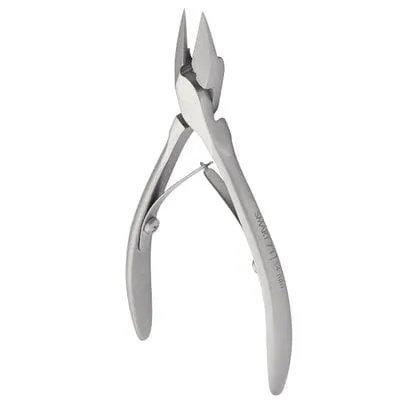
Pro Nippers for Ingrown Toenails - Smart 71 - 14mm - NS-71-14
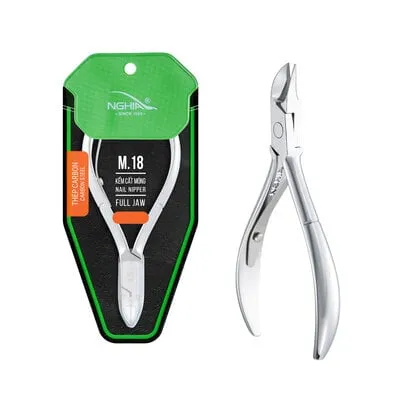
Nail Nipper - M.18 - Full Jaw
 Sale
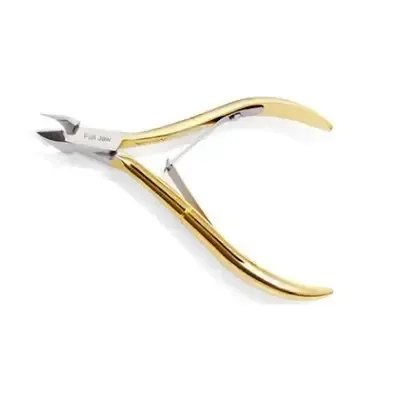
- Cuticle Nipper - Gold - Full Jaw
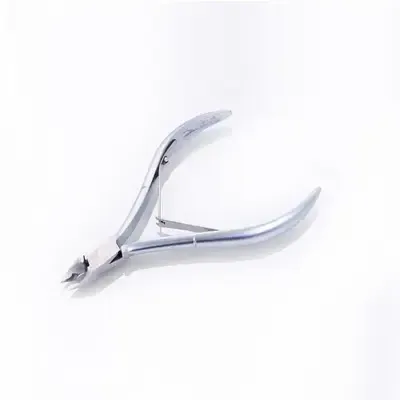
N-06 - Jaw 16
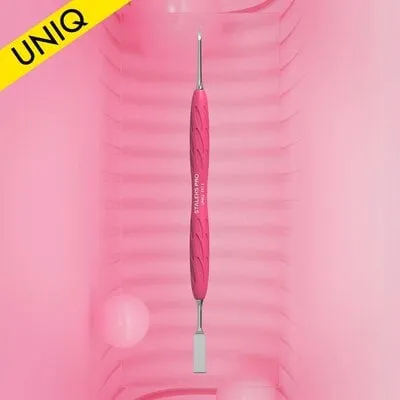
Manicure Pusher Gummy w/ Silicon Handle - Uniq 11 - Type 1 - PQ-11-1
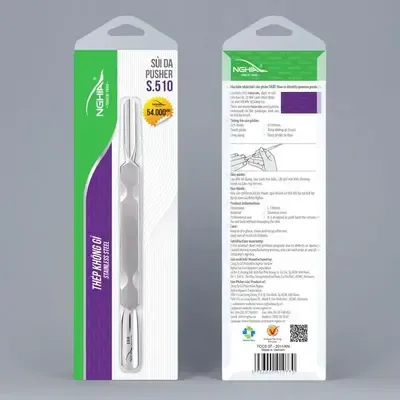
Pusher - S 510
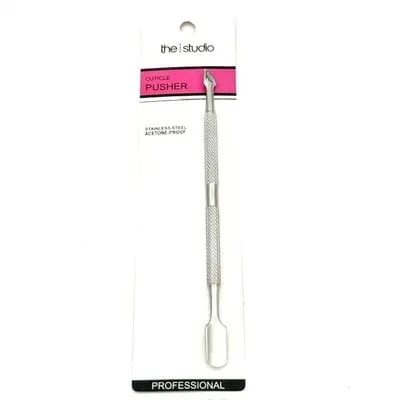
Cuticle Pusher - 02
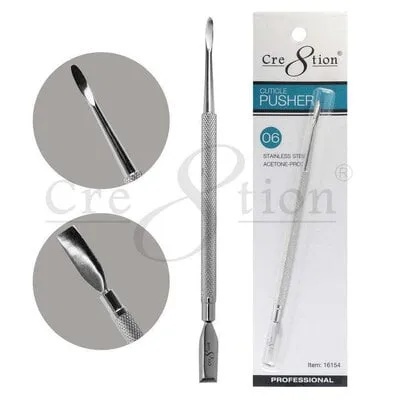
Cuticle Pusher - 06 - 16154
Questions we get at the counter
Should nail techs cut cuticles?
What size cuticle nippers should I buy?
How do I know my cuticle nippers are dull?
Can I sharpen cuticle nippers at home?
How should I disinfect cuticle nippers in Florida?
Can I use cuticle nippers on toenails?
Sources
- 11 tips for healthy nails, American Academy of Dermatology
- Gel manicures: tips for healthy nails, American Academy of Dermatology
- Fla. Admin. Code R. 61G5-20.002, Salon Requirements
- How To Maintain The Sharpness Of Professional Cuticle Nippers, Pure Spa Direct
- Barbicide EPA Master Label, EPA Reg. No. 954-11, U.S. EPA