Gel-X vs builder gel: which one to use, and when
Gel-X is a soft gel tip for fast length. Builder gel strengthens your own nail. Compare strength, time, removal and fills, and learn when to combine them.
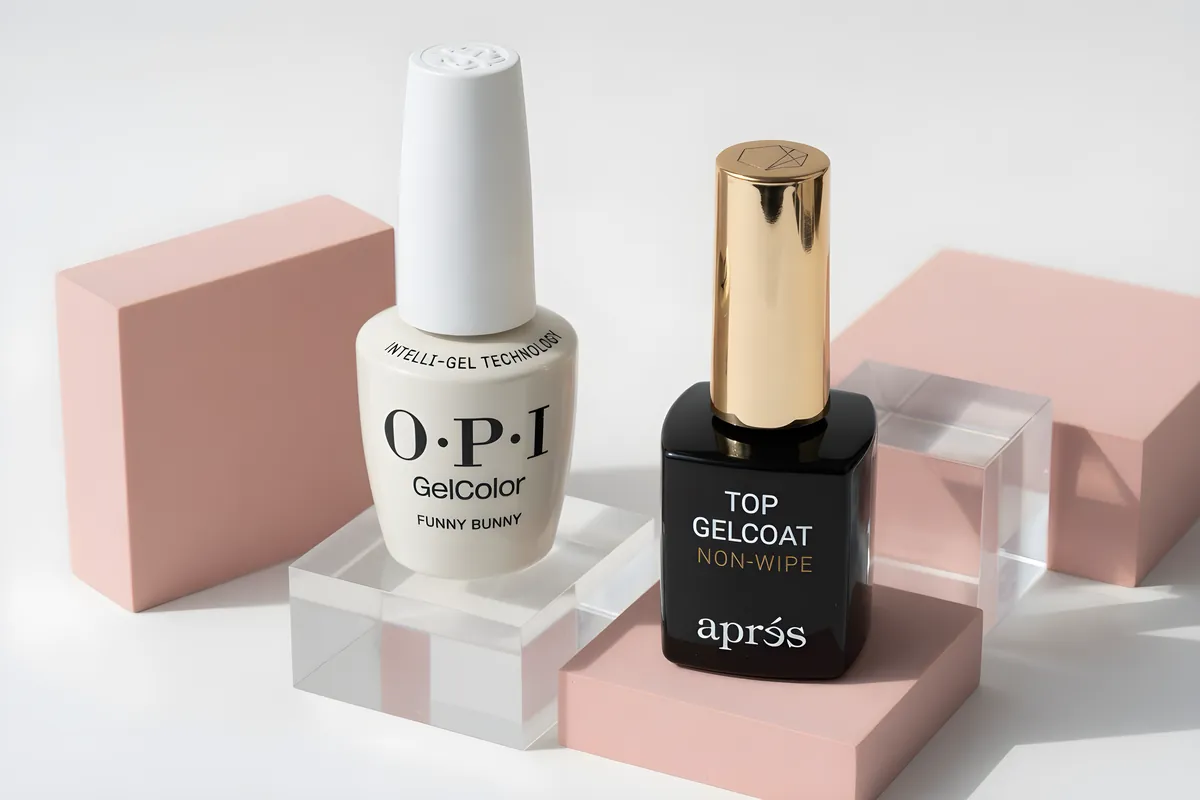
Gel-X is a pre-shaped soft gel tip that adds length quickly, while builder gel is a thick gel brushed onto the nail to add strength and structure. Pick Gel-X when you want length without sculpting. Pick builder gel when you want strong natural-length nails or a base you can fill. Many techs use both: Gel-X tips for length, then a layer of builder over the top.
The one-line difference
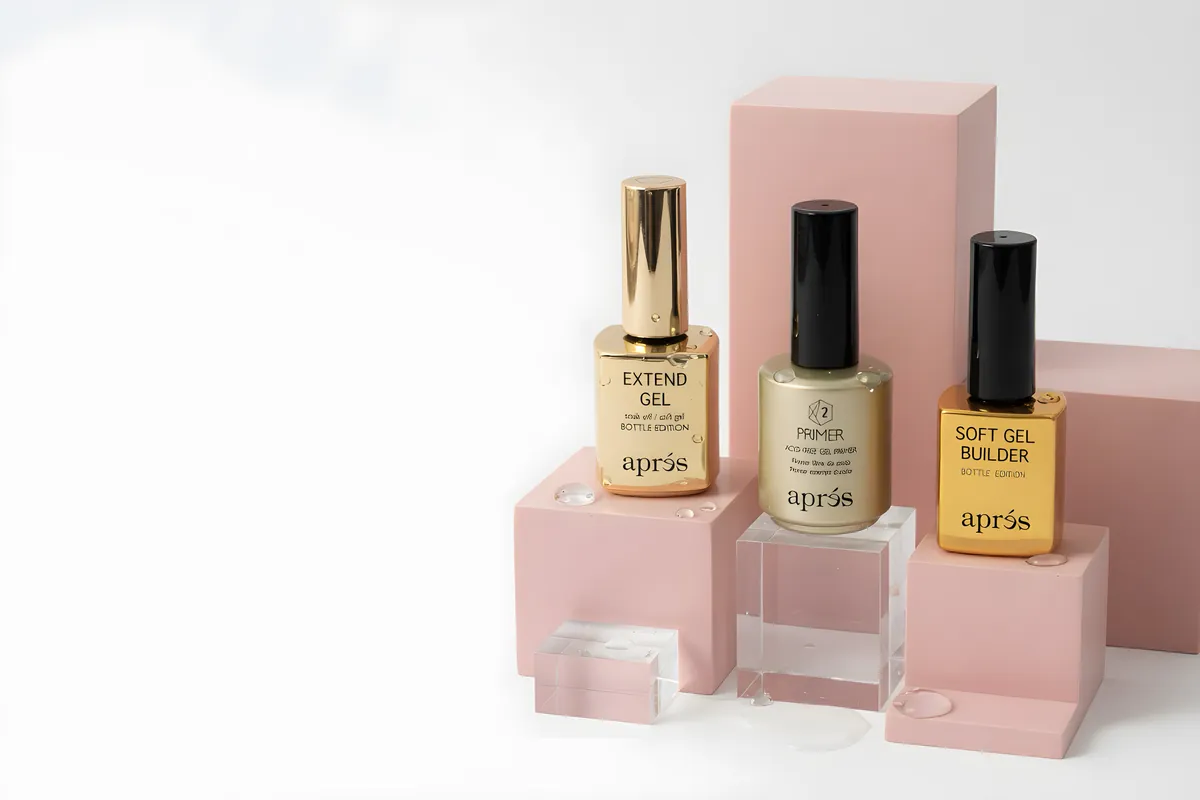
Gel-X is a tip. Builder gel is a material. Gel-X (by Apres) gives you a ready-made shape and length that you glue on with Extend Gel and cure. Builder gel is a thick, pigmented or clear gel you apply with a brush, layer by layer, to reinforce a natural nail or to build over a tip or a form.
That means they solve different problems. Gel-X is about length and speed. Builder is about structure and thickness. The names get mixed up because both are gels and both cure in a lamp. But comparing them is a bit like comparing a plank to wood glue. You can use either alone, and you can use them together.
Side by side
| Gel-X | Builder gel | |
|---|---|---|
| What it is | Pre-shaped soft gel tip plus Extend Gel adhesive | Thick gel brushed on, in a jar, a bottle or a pot |
| Main job | Add length fast | Add strength and an even surface |
| Skill needed | Sizing and prep | Control of thickness, apex and product placement |
| Length | Yes, from the tip | Natural length, or longer over forms or tips |
| Cure | Flash cure each tip, then full cure (Apres: 30 s LED / 60 s UV for the full hand) | Follow the product, often in layers |
| Removal | Soaks off in acetone | Soft builder soaks off. Hard builder is filed off. |
| Maintenance | Usually removed and redone (Apres: set lasts 3 to 4 weeks) | Can be filled as the nail grows |
Apres describes Gel-X as lighter and more flexible than acrylic and hard gel in its own durability article. That is a brand claim, and the comparison is fair as a general guide, but your result depends mostly on prep, not just on the product.
What "builder gel" means on a label
Builder gel is a family, and the label matters. Two things change how it behaves:
- Soft (soak-off) vs hard. Soft builder, such as Apres Soft Builder Gel, comes off in acetone like Gel-X. Hard builder is more rigid and is removed by filing it down. Check the jar or the brand page before you promise a client an acetone soak.
- Container and thickness. The same idea comes in a pot or jar (thicker) and in a bottle with a brush (easier to self-level). Pink Mask, for example, sells both builder gel in a bottle and builder gel in a pot.
For a closer look, read hard gel vs soft gel and builder gel in a bottle vs pot. Browse our full builder and solid gels.
Which one is gentler on the natural nail?
Neither is automatically gentler. Damage comes from how you prep and how you take it off. Over-filing the natural plate during prep, peeling a set off, and picking at lifted edges hurt nails with any system.
The American Academy of Dermatology gives the same rules for any gel service: soak only the fingertips in acetone, or use acetone cotton wrapped in foil for about 15 minutes, never pick at gel, and rest your nails for one to two weeks or longer between sets, using moisturizer on nails and cuticles several times a day. Apres adds one number for Gel-X: if removal damages the natural nail, rest the nails for about a month.
Think about the client, too. A client who bites or breaks nails often needs length and strength together, so tips with a builder overlay make sense. A client who just wants a clean, short, shiny nail that survives a month does best with a thin builder overlay and regular fills. A client with a history of reactions should get a patch-test conversation and a HEMA-free product before anything else.
One real difference: removal. Gel-X and soft builder are soaked, so you remove the product with chemistry and little filing. Hard builder has to be filed, which takes skill so you do not cut into the nail underneath.
Allergy is the same story for both. HEMA and other acrylates are used in many nail gels. A 2025 study in Contact Dermatitis found 147 of 7,133 patients (2.1 percent) tested between 2019 and 2023 were positive to 2-HEMA, and artificial nails were the main source of exposure. If you have had a reaction, look at our HEMA and TPO free products, including Apres Extend Gel Sensitive 2.0 (HEMA free), and ask a dermatologist before you continue.
Which one to pick
Pick Gel-X if...
- You want length today and do not want to sculpt on forms.
- You want the same shape on all ten fingers, fast.
- You are a newer tech and want a more predictable way to add length. Tips remove a lot of the freehand work.
- You like a soak-off system with no filing of product.
Start with the Gel-X step by step guide.
Pick builder gel if...
- You want strong natural-length nails with an even surface and want to fill them as they grow.
- Your client has weak or bendy nails and needs an overlay for support.
- You want to sculpt a shape that no tip shape matches.
- You want to build over a tip or a form for extra strength.
What the appointment looks like for each
The workflows are different enough that it helps to see them in order.
Gel-X set:
- Prep the nail: cuticle, buff, dehydrate, prime.
- Size all ten tips and lay them out.
- Etch the inside of each tip.
- Apply a thin line of Extend Gel, roll the tip on at 45 degrees, flash cure.
- Full cure, clean up excess, shape, color, top coat.
Builder gel overlay or fill:
- Prep the nail the same way, plus a bonder or base if the brand calls for one.
- Apply a thin slip layer and cure.
- Place a bead of builder at the center, push it toward the cuticle and the free edge without flooding the skin, and cure.
- Check the profile from the side, add a little product where the nail needs structure, cure again.
- Shape with a file or e-file, color, top coat.
The Gel-X set has fewer decisions, which is why it suits beginners. The builder service has more decisions at the brush, which is why advanced techs like it: you shape the nail instead of choosing from a box of shapes. Neither is "better." They answer different questions.
What you need to stock for each
For Gel-X: tips in the shape and sizes you use (see Gel-X), Extend Gel, pH Bonder, Primer, Prep, a top coat, a lamp, files and a buffer. Because tips run in sizes, a busy tech buys the common sizes in bulk. Refill bags help when a few sizes run out.
For builder gel: the builder itself in the shades you use (clear, pink, nude, cover), a base or bonder as the brand directs, a gel brush, files, a buffer, a dust brush and a top coat. If you work with an e-file, add bits for shaping. Stores like ours carry several lines, including Pink Mask, ibd, Mia Secret, The Gel Bottle, Luminary and our own The Studio hard builder, so you can match the gel to your lamp and your habits.
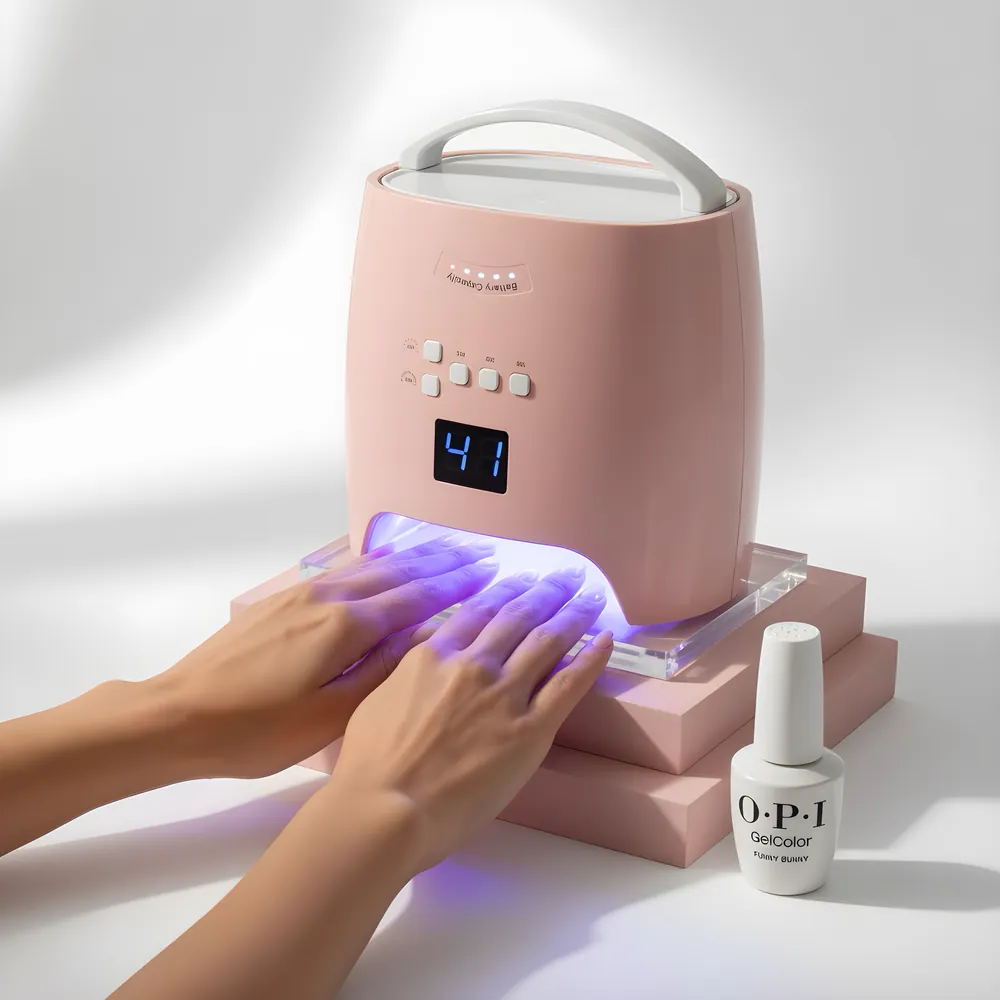
Whichever you choose, use a lamp that is correct for the gel. NailKnowledge points out that gels respond best to a given wavelength, and that lamps lose output as bulbs age, so under-curing can look like a product problem when it is a lamp problem. See gel lamps.
Mistakes that happen when you mix them
- Too much product on a tip. A thick builder layer makes the set heavy and bulky at the cuticle. Keep it thin and build only where you need structure.
- Skipping a cure. Gel can feel hard on the surface and still be soft underneath. Under-cured gel causes lifting and can contribute to skin sensitization.
- Not buffing between systems. If you apply builder over a cured Gel-X tip, the surface must be lightly buffed and wiped so the layers bond.
- Flooding the cuticle. This is the most common cause of early lifting in both systems. Leave a hair of space.
- Assuming everything soaks off. Gel-X and soft builder do. Hard builder does not. Know which one is on the nail before you start the removal.
Using both together
This is the combination many techs end up using. Apply Gel-X tips with Extend Gel and cure them. Then brush a thin layer of builder over the whole nail, add a small apex, cure, and shape. The tip gives you the length, the builder gives you the strength and a seamless surface. Another common pairing is a layer of rubber base or builder on the natural nail under the tip for extra support.
Keep the layers thin. A thick layer of builder on top of a tip adds weight and bulk, and the nail should still look natural at the cuticle. Cure each layer fully. A good test is to look at the nail from the side when the set is done: the line from cuticle to free edge should rise gently to a small peak over the stress area and then run straight, with no lump at the tip seam. If you can see the edge of the tip under the builder, file the seam smooth before the top coat.
Economics matter too. Gel-X tips are a per-set cost you cannot reuse, while a jar or bottle of builder covers many services. A tech who does mostly short, strong natural nails will often get more from builder, and a tech who sells length every day will want tips in stock. See how to build the apex.
Shop what's in this guide
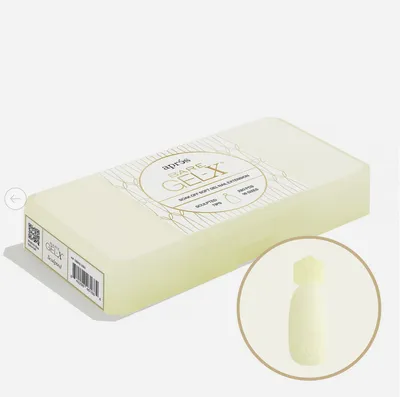
Bare Gel - X Tip Box - Sculpted
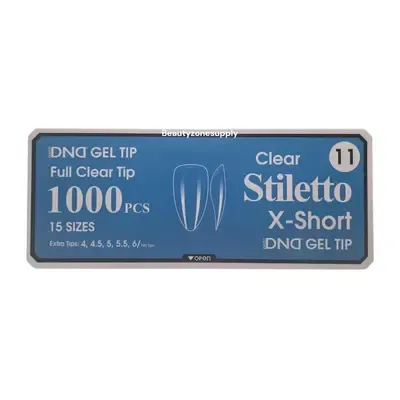
Gel Tips - Full Stiletto X-Short
Gelly Tips - 4 Top Coat Non Wipe - 0.5 oz
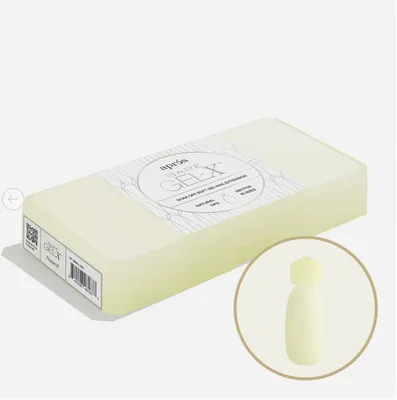
Bare Gel - X Tip Box - Natural
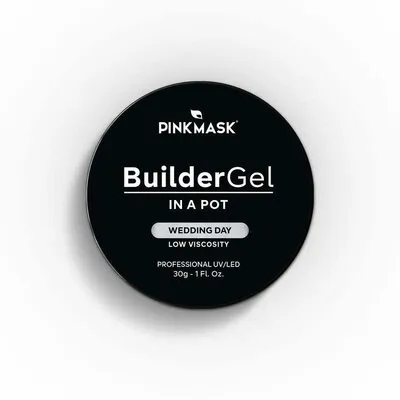
Builder Gel in a Pot - Wedding Day
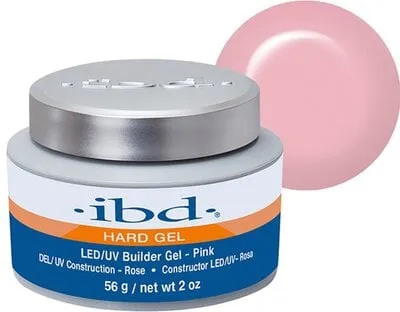
Hard Builder Gel - Pink - 2 oz
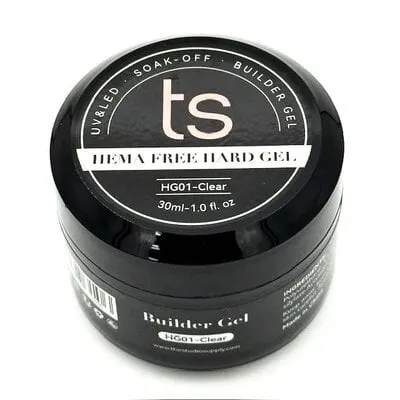
Hema Free Hard Builder Gel - HG01 Clear - 30ml
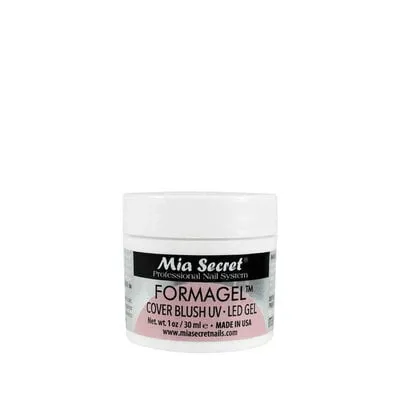
Formagel Builder Gel - Cover Tan - 1 oz
Questions we get at the counter
Is Gel-X the same as builder gel?
Is Gel-X stronger than builder gel?
Can you put builder gel over Gel-X?
Which lasts longer, Gel-X or builder gel?
Does builder gel soak off?
Sources
- Apres Nail: Gel-X Durability, Separating Fact from Fiction
- Apres Nail Help Center: How long does a Gel-X set last?
- American Academy of Dermatology: Gel manicures, tips for healthy nails
- Contact Dermatitis (2025): The Italian Trend of Contact Allergy to 2-Hydroxyethyl Methacrylate
- NailKnowledge: Gel polish curing, lamp compatibility and common issues