Best Nail Drill (E-File) for Beginners: What to Look For
How to choose your first nail drill: exact speed control, smooth low-speed running, forward and reverse, weight, cord or cordless, and the bits to buy.
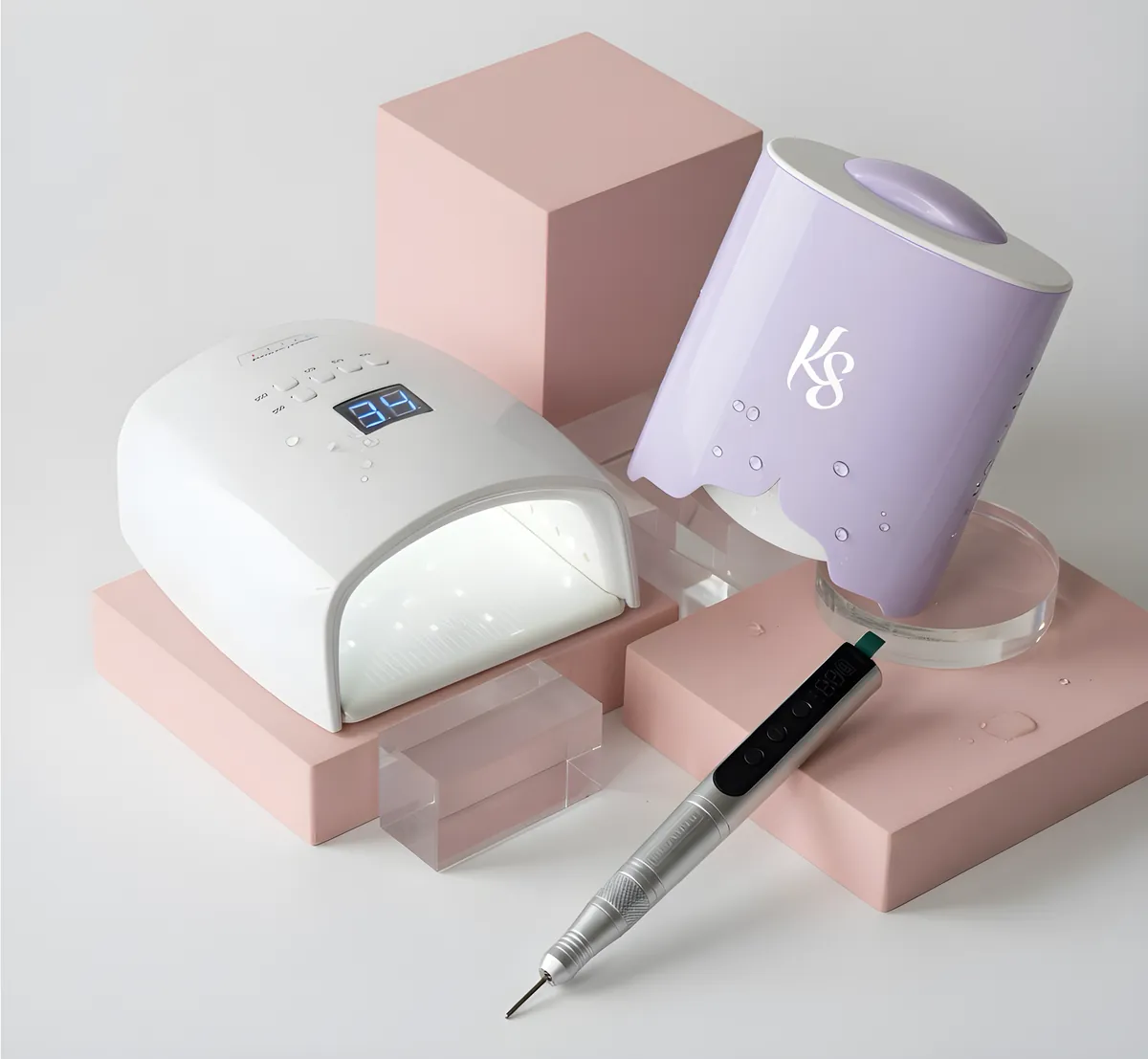
The best nail drill for a beginner has exact speed control (not just low, medium and high), runs smoothly at low speed, has forward and reverse, and feels light in the hand. A very high top speed matters far less than control. Pair it with fine bits and a dust collector before you pay for extra power.
What matters most in a first e-file
Nail techs call the machine an e-file. People searching online call it a nail drill. They mean the same tool, and it has nothing to do with a hardware drill. Young Nails, a professional nail brand, puts it plainly: drills are for hanging cabinets, and you want an e-file for detailed nail work. A hardware rotary tool has no fine speed control, no safe low speed and no handpiece made for the hand, so leave it in the garage.
For a beginner, five things matter.
- Precise speed control. You want to see a number or a fine scale and dial in the exact RPM for the job. Young Nails stresses this: a good e-file gives exact speed adjustments, not just "low, medium, high." Natural-nail work sits around 3,000 to 5,000 RPM, gel polish removal around 8,000 to 10,000 RPM for beginners, and acrylic bulk removal 14,000 to 16,000 RPM. A machine that jumps from slow to too fast with one click makes learning harder.
- Smooth, quiet running at low speed. Low-speed vibration travels up your hand and shows up as uneven filing. Hold the handpiece in your hand before you buy if you can, and run it at the lowest setting.
- Forward and reverse. Right-handed and left-handed bits cut in opposite directions. A reverse switch lets you use the right bit for your hand.
- A light handpiece with a flexible cord. You will hold it for an hour at a time. Weight and a stiff cord cause fatigue, and fatigue causes mistakes.
- A chuck that grips the bit firmly. A bit that slips or wobbles chatters, burns and can cut skin.
Read our e-file RPM guide for the speed you should use on each task.
What does not matter yet
Marketing leans on big numbers. Here is what you can ignore as a new user.
- Top speed. A machine rated 35,000 or 40,000 RPM sounds powerful. In practice, working techs spend most of their day below 15,000 RPM. A high ceiling is harmless if the low end is smooth, and useless if it is not.
- Wattage claims. Watts describe motor power, not control. A beginner who uses too much power at the wrong angle thins a nail plate faster.
- A long list of included bits. A pile of 30 cheap bits is more confusing than six good ones. See our e-file bits guide for the starter set.
- Color and rhinestones. Fun, but irrelevant to how the handpiece feels.
Corded or cordless
This is mostly about where you work.
| Corded | Cordless (rechargeable) | |
|---|---|---|
| Best for | A fixed desk at home or a station in a salon | Mobile techs, students who practice on the couch, small spaces |
| Power | Runs as long as it is plugged in | Runs until the battery dies. Check the maker's stated run time |
| Handpiece feel | Often a separate control box and a lighter handpiece on a cord | The motor and battery are in the handpiece, so the hand carries more weight |
| Things to check | Cord flexibility and length | Run time, charging time, and whether it can run while charging |
If you plan to do clients, a corded setup with a separate control box is the common choice at a fixed station. If you only do your own nails or you move around, a cordless unit makes life easier.
Machines we carry, and what to read on each
We stock several e-file lines. We have not run a controlled comparison, so we will not rank them. Here is what each line's product title tells you, and what to check on the page before you buy.
- The Studio e-file machines and cordless e-file (35k RPM). Corded desk machines in several colors, a cordless version listed at 35,000 RPM, and a handpiece sold on its own if you only need a replacement.
- Kupa ManiPro. A professional-style control box with a separate handpiece (KP-60 or KP-65 models are listed). A control box lets you read and set the speed independently of the handpiece.
- Medicool Pro Power. Listed in 20K and 35K versions. The number is the maximum speed in thousands of RPM.
- Portable and rechargeable units from Kiara Sky (Beyond Pro), Mia Secret (Pro-Speed) and NAD (listed at 40k RPM and 65 watts). Good for mobile use and practice.
Whichever you pick, check the maker's spec sheet for the minimum speed (lower is better for learning), forward and reverse, handpiece weight and warranty. Browse the full e-file drill collection.
The first bits to buy with it
Start with a small kit, not a giant set.
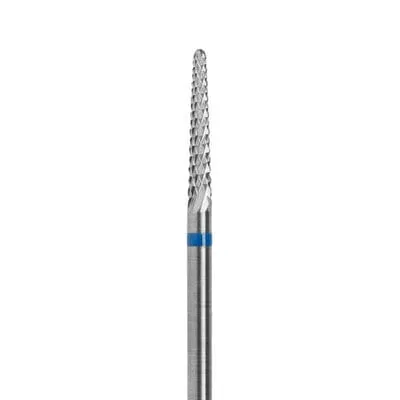
- A fine 5-in-1 bit for general shaping and removal.
- A safety (smooth-top) bit for work near the cuticle and sidewalls, in left- or right-handed to match you.
- A diamond or ceramic cuticle bit for natural-nail prep.
- Mandrel and sanding bands in a fine grit for prep. Bands are disposable and need no cleaning.
- A bit holder to keep clean bits separate from used ones.
Our bits and bands collection has all of these. Keep the speed low and the pressure light on every one.
Practice first, and know the rules
Practice on something that cannot be hurt. Acrylic tips on a practice hand, a silicone training mat or practice fingers let you learn angle and pressure without touching a person. We stock practice hands, fingers and training mats for exactly this.
If you plan to work on other people for money in Florida, you need to be registered. The Florida Department of Business and Professional Regulation says a nail specialist registration needs at least 180 hours of nail specialty education at a Florida school of cosmetology. A licensed cosmetologist does not need a separate nail registration. Florida salons must also keep each salon "well ventilated" and provide nail extension services in a separate, adequately ventilated area (Rule 61G5-20.002). See how to become a nail tech in Florida.
Wherever you work, plan for dust. NIOSH, the federal workplace safety institute, recommends local exhaust ventilation at the table, gloves and an N95 respirator for nail technicians. A small dust collector is part of a first setup, not an upgrade. We explain why in our nail dust collector guide.
Beginner e-file checklist
- Shows or lets you set an exact speed, ideally down to 3,000 to 5,000 RPM.
- Runs smoothly and quietly at the lowest setting.
- Has forward and reverse.
- Handpiece feels light and the cord moves freely.
- The bit seats firmly with no wobble.
- Comes with a clear warranty and a way to get a replacement handpiece.
- You have fine bits, a bit holder, a disinfectant setup and dust control ready.
Common mistakes when buying a first e-file
- Buying on top speed. A 40,000 RPM label looks impressive, but you will use 3,000 to 16,000 RPM for most of what Young Nails describes for natural nails, gel removal and acrylic shaping. What counts is how well the machine holds a low speed.
- Buying the cheapest unit with no way to replace the handpiece. The handpiece is the part that wears out. A model with a separate, replaceable handpiece (we also sell a handpiece on its own) is easier to keep going.
- Ignoring the bit chuck. If bits do not seat firmly, nothing else matters.
- Skipping the practice phase. Technique takes weeks of practice on tips and training hands before it is safe on a person.
- Using the wrong bits. A coarse carbide bit on a natural nail causes damage in seconds. See the bits guide.
- Skipping safety gear. Dust, gloves and an N95 respirator are part of the setup.
A first-week practice plan
These steps use only practice material and speeds from Young Nails' published ranges.
- Day 1: feel the machine. With no bit, run it at its lowest setting and increase one step at a time. Notice the vibration. Try forward and reverse.
- Day 2: hold and angle. Put in a sanding band on a mandrel. Rest your hand on the table and practice light, sweeping strokes on a practice tip at 3,000 to 5,000 RPM.
- Day 3: gel removal. On a practice tip with cured gel polish, use a safety bit at 8,000 to 10,000 RPM and remove the color in light passes.
- Day 4: shape acrylic. On an acrylic tip, use a carbide barrel at 14,000 RPM, keeping the bit flat and moving.
- Day 5: cuticle area. On a practice hand, use a diamond cuticle bit with the lightest touch, away from live skin.
- Day 6 and 7: full routine. Run through prep, removal and shaping on a practice hand, set a timer and check for heat by touching the practice nail after each step.
Our practice hands, practice fingers and training mats are for exactly this. Only move to a real person once your hand is steady and you can keep the bit flat without thinking about it.
Shop what's in this guide
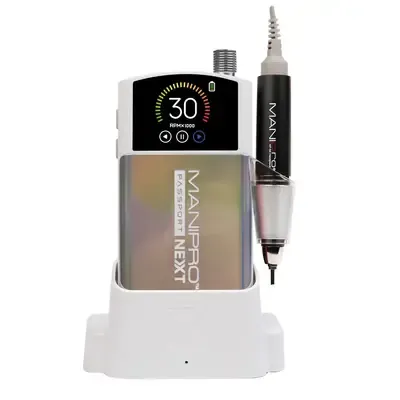
ManiPro Next - White/Unicorn
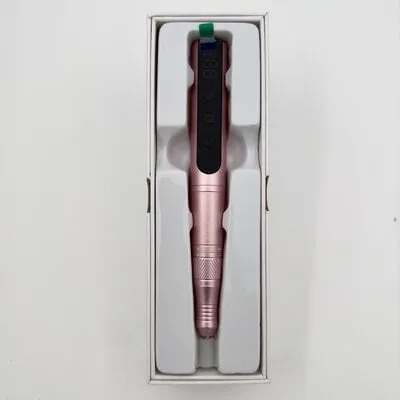
Cordless e-File Nail Drill - 35k RPM - Pink
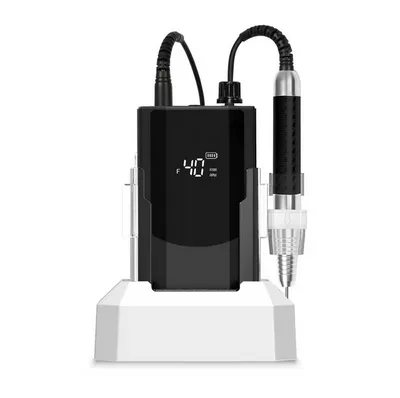
NAD - Portable Nail Drill - 40k RPM - 65 watts - Black
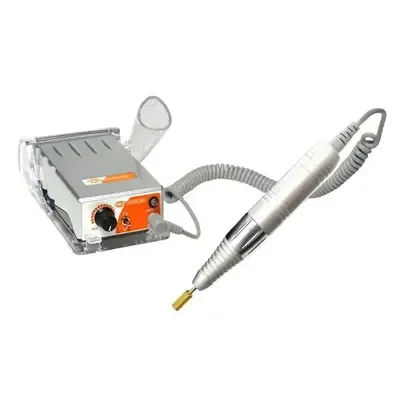
Pro Power 20K (30k) E-File Drill - Silver
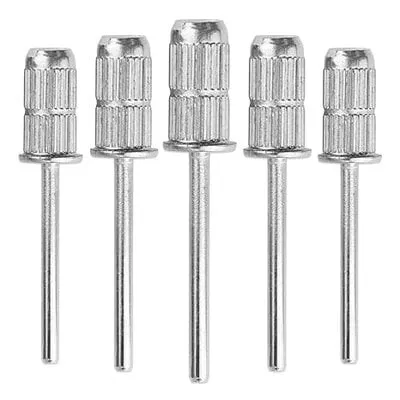
Bit - Mandrel - Silver - 3/32
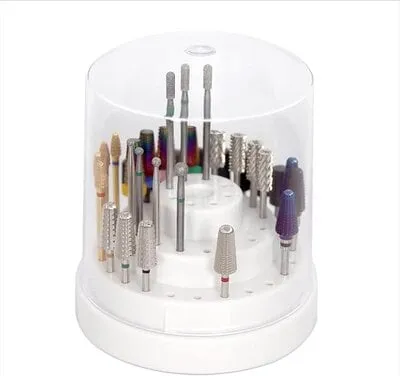
Carbide Nail Drill Bit Holder - 48 Holes - Small - White
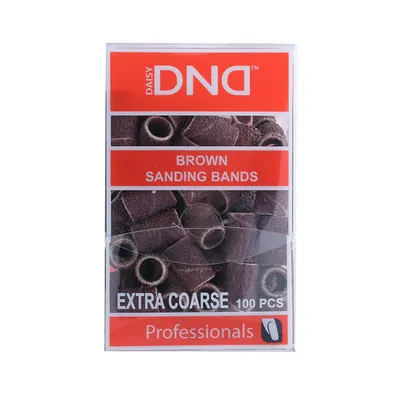
Brown Sanding Bands - Extra Coarse - 100 pcs