Nail Dust Collectors: Why They Matter and How to Choose One
What a nail dust collector does, why local exhaust at the table beats room ventilation, how to set it up, and how to pick, clean and replace filters.
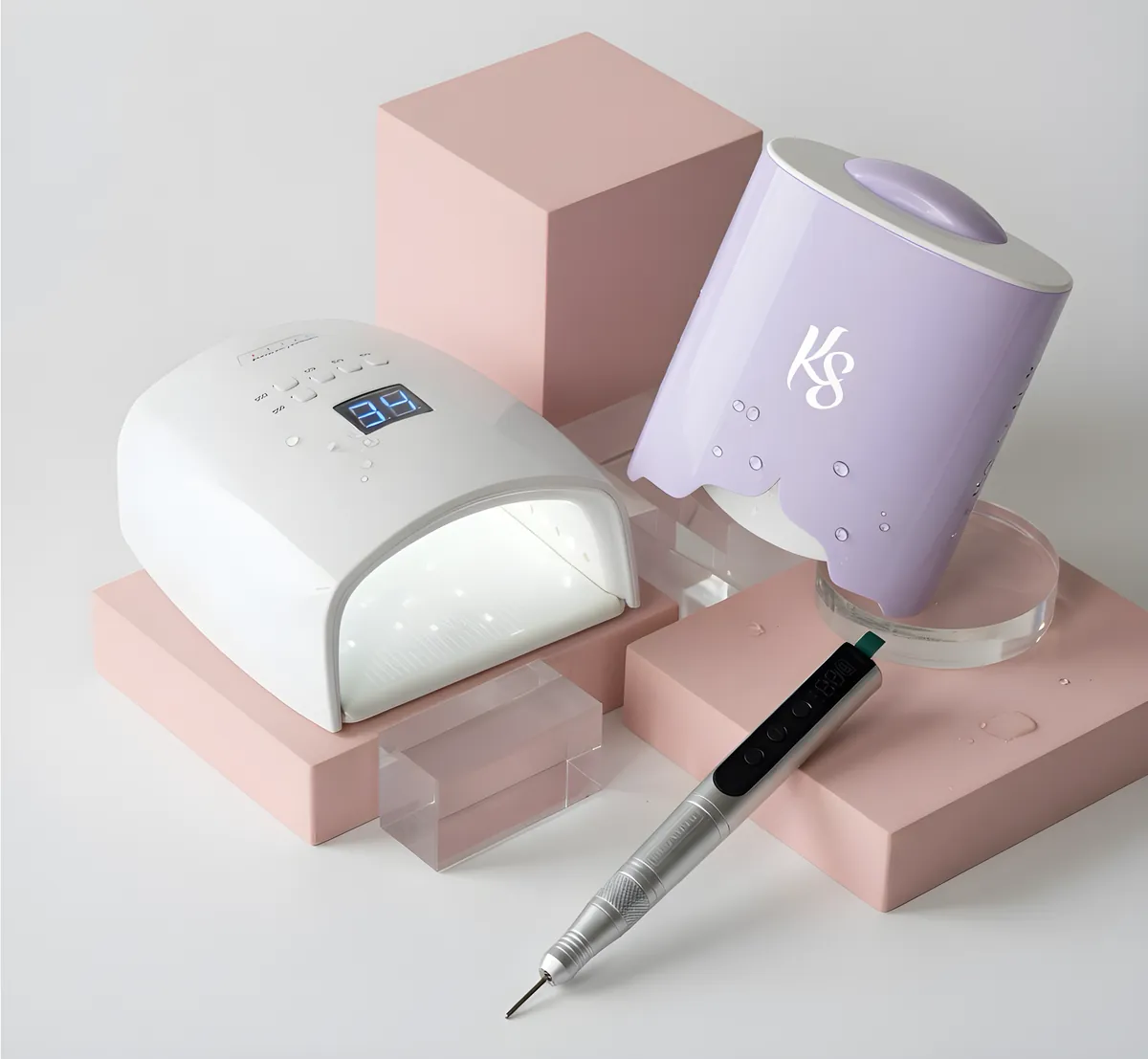
A nail dust collector pulls dust from filing and e-file work into a filter right at the table, before you and your client breathe it. NIOSH recommends local exhaust ventilation at nail stations (portable units that filter air or vent it outdoors, or downdraft tables), plus gloves and an N95 respirator. Place the intake within a few inches of the work and replace filters on schedule.
What a nail dust collector does
A nail dust collector is a small fan and filter unit that sits on the table, usually under or beside the client's hand. Dust created by filing, e-filing or sanding is pulled down through a grille or a hand rest into a bag or filter. Cleaner air at the table means less dust on your hands, your tools, the client's skin and, most important, in your lungs.
Collectors come in a few types:
- Table-top or hand-rest units: a flat fan unit with a vented hand rest. They are the most common type and fit a manicure table.
- Downdraft tables: the table itself has built-in suction. Seen in salons that want a fixed setup.
- Portable source-capture units with flexible arms: useful at pedicure chairs and for lash or acrylic stations.
We carry table-top collectors from NAD, Kiara Sky (Beyond Pro), L8 and other makers in the dust collectors collection, along with disposable filters.
Why dust control matters
Nail products and the dust they make are not harmless. The CDC's National Institute for Occupational Safety and Health (NIOSH) says nail technicians can breathe in, absorb through the skin or swallow chemicals in nail products. It lists acetone, dibutyl phthalate, ethyl acetate, formaldehyde, methacrylate compounds, toluene and triphenyl phosphate. Possible effects include skin rash or contact dermatitis, eye, nose and throat irritation, asthma, neurological effects, reproductive problems and cancer.
NIOSH's page is about workplace chemicals in general. It does not give separate rules for e-file dust, so use the controls below as the best-supported steps, and ask your doctor about any symptoms. NIOSH recommends this stack of controls:
- General ventilation of the room.
- Local exhaust ventilation at the workstation, either portable units that filter the air or exhaust it outdoors, or downdraft ventilated tables.
- Gloves and an N95 filtering facepiece respirator.
- Keeping chemical containers closed.
- No eating or drinking in the work area.
NIOSH states that good ventilation can reduce the level of chemicals in the air, and that ventilation and gloves can help reduce chemical exposures. A dust collector is one of the standard ways to add local exhaust at a manicure table.
What Florida expects of salons
Florida's salon sanitation rule (61G5-20.002, F.A.C.) requires each salon to be kept well ventilated, with walls, ceilings, furniture and equipment kept clean and free from dust. It also says that salons offering nail extension or sculpting services must provide them in a separate area that is adequately ventilated for the safe dispersion of all fumes. The rule does not name a particular brand or type of collector, so how you meet it is your decision. A collector at each station, a ventilated nail area and regular cleaning of surfaces all help you show you take it seriously.
Check the current rule with the Florida Department of Business and Professional Regulation. The version we read was effective 11/9/2017.
How to choose a collector
| Check this | Why |
|---|---|
| Airflow and motor power (watts, CFM if listed) | Higher airflow captures dust from farther away. Look for the spec on the product page. Our range includes 30W, 80W and 85W units, and the number is a rough guide to motor strength, not a guarantee of capture |
| Intake size and position | A large grille close to where the nail is filed captures more than a small opening far away |
| Filter type and cost | Disposable bag-style filters are convenient and replaceable. Check that replacements are easy to buy. Kiara Sky disposable filters come in packs of 70 |
| Noise | A unit that is too loud gets switched off. Pick one you will leave on |
| Brushless motor | Brushless motors are often marketed for longer life and lower noise. We stock a brushless motor collector in the 85W class |
| Size and footprint | It must fit your table without crowding the client's elbow or your supplies |
| Cleaning access | You will empty and wipe it often. Removable parts make that easy |
Which setup fits your space
| Where you work | Good fit | Why |
|---|---|---|
| Home studio or mobile | A compact table-top unit with a hand rest | Small, easy to move, runs from a wall outlet |
| Single-station salon | A table-top unit at each manicure table | Captures dust where each tech works |
| Busy multi-tech salon | A stronger unit at each station, or downdraft tables | More dust and more hours of use call for higher airflow and easy filter changes |
| Student practice area | A basic unit | Builds the habit of capturing dust at the source from day one |
The same rule applies to every one of them: the unit has to sit close to the work. A powerful collector across the room captures less than a modest one under the client's hand.
Set it up so it actually captures the dust
A collector is only as good as its placement.
- Put the intake as close as possible. Suction drops fast with distance. Rest the client's fingers over or directly beside the grille, so the dust is created inside the airflow.
- Work above the intake, not away from it. If the dust is flying sideways off the nail, aim the e-file toward the vent.
- Turn it on before you start filing. Dust in the air cannot be recaptured.
- Keep the surface clear. Piles of tools around the vent block airflow.
- Check the exhaust. NIOSH lists portable units that filter or exhaust outdoors. If your unit blows filtered air back into the room, make sure the filter is intact and clean.
- Keep the room ventilated. A collector captures some dust, but fumes from liquids need room airflow too.
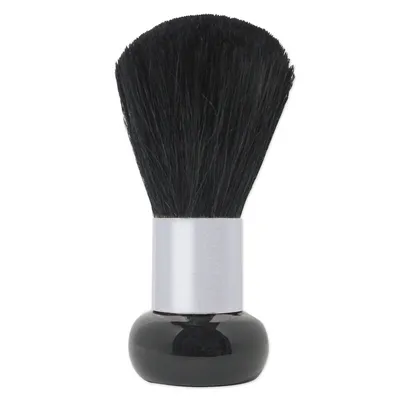
Use a dust brush to clear the rest from the nails before you apply product. Our dust brushes come in many sizes. Wipe tables with a damp towel instead of blowing dust away.
Cleaning and replacing filters
- Empty or replace the filter as the maker instructs, and sooner if airflow drops or the unit gets louder. A clogged filter forces the motor to work harder and captures less.
- Wear gloves and a mask when you change it. You are handling concentrated dust.
- Wipe the grille and hand rest between clients. They touch skin. Use a cleaner that is safe for the surface.
- Don't blow the filter out with compressed air. It puts the dust back in the room.
- Replace the whole unit when the motor weakens or the hand rest cracks.
Keep spare filters at your station so a full filter doesn't tempt you to run without one.
The real cost: filters and time
The price on the box is only part of the cost. A collector is a filter machine, so you will buy filters for as long as you use it. Before you buy:
- Find out what the replacement filters are called, and whether you can buy them in packs. We sell Kiara Sky disposable filters in packs of 70.
- Check that the filter fits your unit. Filters are not always interchangeable between brands.
- Estimate how often you will change it based on your volume. A salon that files all day will change filters more often than a tech who does a few sets a week.
- Decide who empties it and when. If nobody owns the job, the filter fills and the unit stops working well.
It is cheaper to build the filter into your supply order than to run the unit with a full filter.
The other half: respirator, gloves and habits
NIOSH recommends gloves and an N95 filtering facepiece respirator. An N95 is a disposable respirator that, when fitted properly, filters at least 95 percent of airborne particles. A flimsy dust mask or a surgical mask will not seal to the face the same way. Check that yours is labeled N95 and sits flat against your face with no gaps.
Other habits that help:
- Keep product containers closed when not in use.
- Use pressure-sensitive dispenser bottles with small openings, as NIOSH suggests, to reduce vapors.
- Don't eat or drink at the table.
- Wash your hands and arms at the end of the shift.
- Take breaks, adjust your chair and vary your posture. NIOSH notes that filing is a repetitive motion linked to musculoskeletal disorders.
Learn which bits make the least dust in our e-file bits guide (Young Nails notes that its X-cut carbide cuts acrylic with minimal dust), and see best nail drill for beginners for a first setup.
Troubleshooting
| Problem | Likely cause | Fix |
|---|---|---|
| Weak suction | Full or clogged filter, blocked grille | Replace the filter, clear the grille |
| Dust escapes around the unit | Intake too far from the work | Move the hand closer to the vent, aim the e-file toward it |
| Unit is very loud | Clogged filter or loose parts | Replace the filter and check the housing |
| Dust returns to the room air | Damaged filter, or exhaust blown back without proper filtering | Replace the filter. Seat it correctly |
| Motor smells hot | Overheating from a clogged filter | Turn it off, replace the filter and let it cool |
Shop what's in this guide
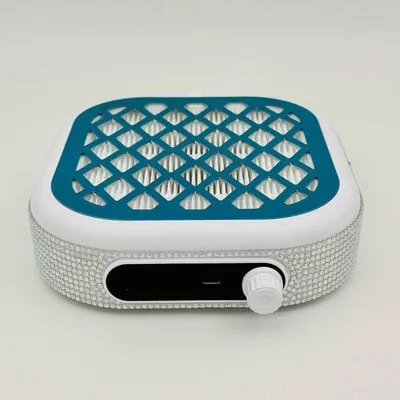
NAD - Nail Dust Collector - 30W - White AB Rhinestone
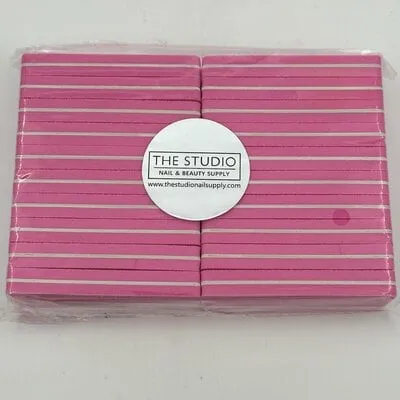
Small File Buffer - 100/180 - Pink - 20 ct
 Sale
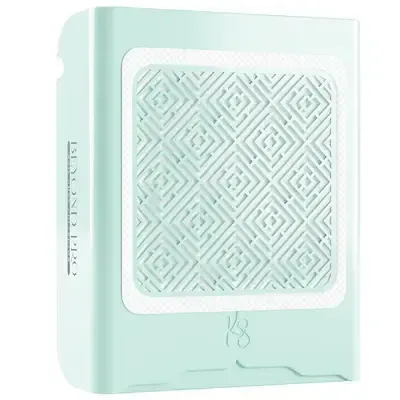
Beyond Pro Nail Dust Collector - Teal
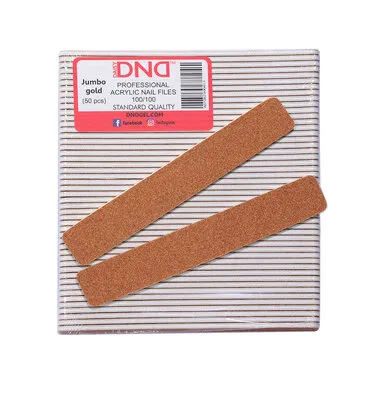
Nail Files - Rectangle - 100/100 - Jumbo Gold - 50 count
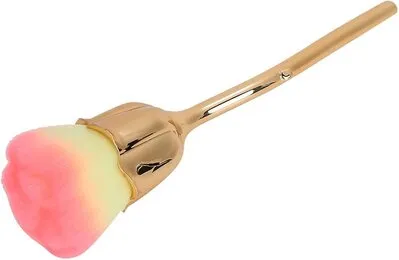
Rose Dust Brush - Orange/ Yellow
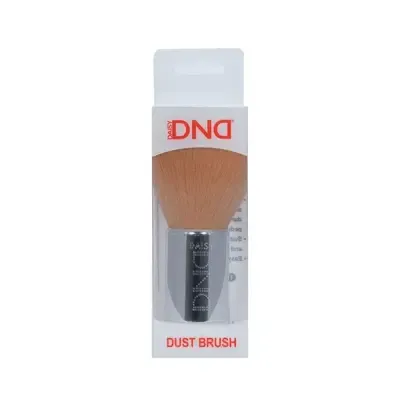
Dust Brush - XL - White
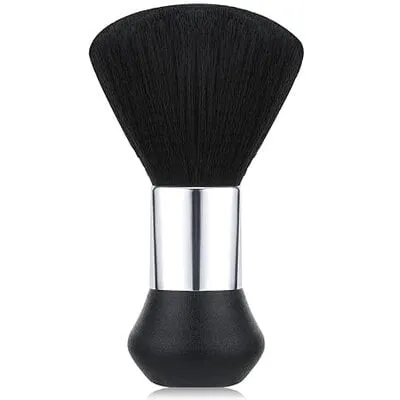
Dust Brush - Medium - Black