Are UV and LED Nail Lamps Safe? What the 2023 Study Really Found
What the 2023 Nature Communications study on UV nail lamps did and did not show, what dermatologists advise, and practical ways to cut exposure.
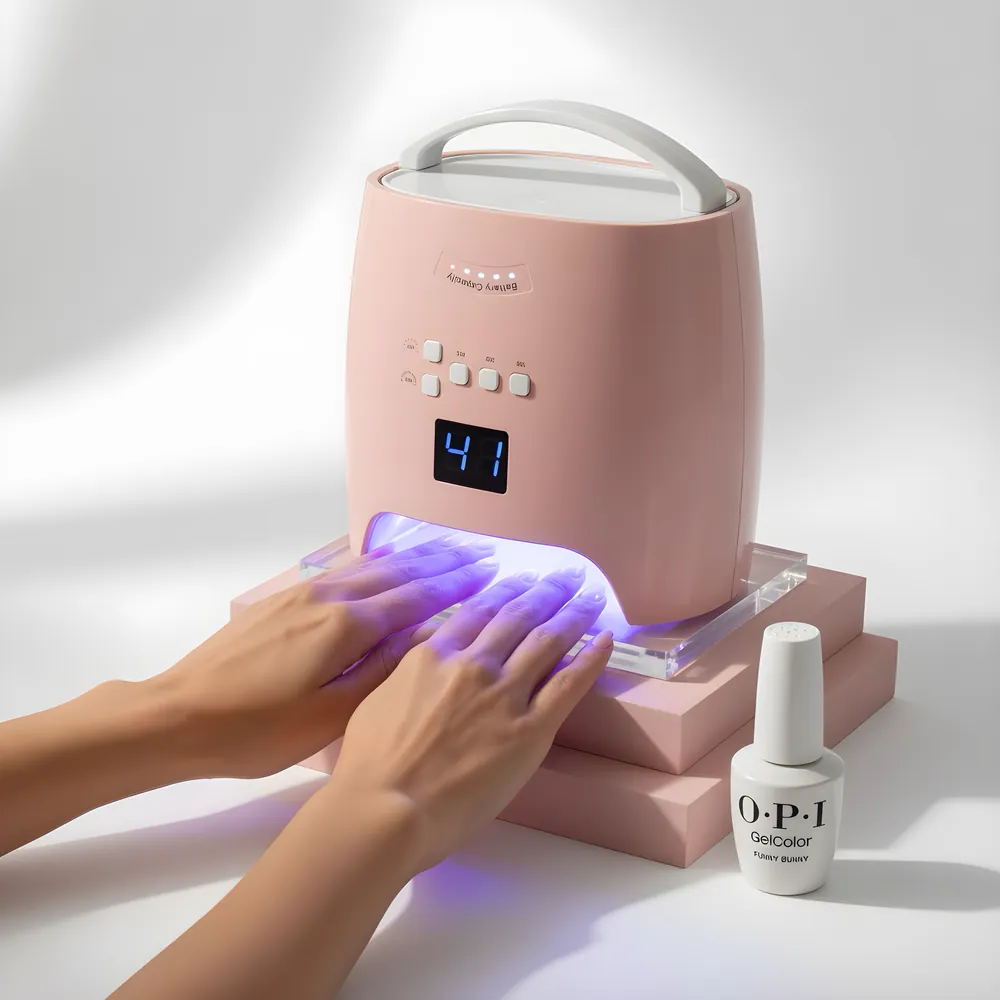
The honest answer is that nobody knows the exact skin cancer risk from gel lamps yet. A 2023 lab study found that UV nail lamp light damaged DNA and killed cells in cultured cells, but its authors say it does not directly prove higher cancer risk in people. The American Academy of Dermatology advises sunscreen on the hands or fingerless dark gloves, and limiting gel manicures.
What the 2023 study actually did
The paper everyone quotes is "DNA damage and somatic mutations in mammalian cells after irradiation with a nail polish dryer", published in Nature Communications on 17 January 2023 by researchers at UC San Diego and the University of Pittsburgh.
Here is the setup, in plain terms:
- They used a 54 W dryer with six bulbs, rated at 365 to 395 nm (the UVA range). Measured output was about 7.5 mW/cm2, which the authors describe as the low end of commonly used dryers.
- They shone it on cells in dishes: mouse embryonic cells, human foreskin cells and human skin keratinocytes. Not on people.
- One 20-minute exposure delivered about 9 J/cm2 of UVA.
That 20-minute figure is worth pausing on. A single gel manicure does not typically put your hand under the lamp for 20 minutes in one go. The study used long exposures so the effects were measurable. In real life, exposure builds up in short bursts: every layer, every manicure, every few weeks, and for a tech or a frequent client it adds up over years.
What it found
| Measure | Result |
|---|---|
| Cell death, one 20-minute exposure | 20 to 30% of cells died |
| Cell death, three 20-minute exposures on consecutive days | 65 to 70% died |
| DNA damage marker | Rose sharply (roughly 137- to 398-fold depending on cell type and exposure pattern) |
| Oxidative damage to DNA (8-oxo-dG) | Up 5- to 20-fold |
| Mutations | Higher in irradiated cells, mostly of a pattern linked to reactive oxygen species |
The mutation pattern the authors found is called SBS18/36. They then looked at 144 skin cancers in a public database and found that these signatures made up only about 2.3% of their mutations overall, though they were linked to roughly 12% of annotated driver mutations in the melanomas analysed (20 of 169). So the signal is there, but it is not the main driver of skin cancer genomes.
What it does not prove
This is where most headlines went wrong. The authors themselves state that the study "does not provide direct evidence for an increased cancer risk in human beings". They list limits that matter:
- The cell models lack the skin's outer dead layer (the cornified layer), which can change how much UVA gets through.
- Cells grown in a dish can pick up background mutations that real skin would not.
- Cell-line mutation accumulation does not directly show skin carcinogenesis in people.
- The experiments were not randomised or blinded.
On the other side of the ledger, the authors also say that, combined with earlier case reports of hand cancers in frequent gel manicure users, the evidence suggests dryer radiation may raise the risk, and they call for large studies of people. UC San Diego's news release makes the same point: the UV spectrum used by these lamps (340 to 395 nm) has not been studied as thoroughly as the broader spectrum used in tanning beds.
Bottom line: the risk is unproven, not disproven. A careful approach costs little and is easy to explain to clients.
A worked example: how much light is a normal manicure?
The study gives enough numbers to do a rough comparison. Irradiance times time gives dose. At the study lamp's output of about 7.5 mW/cm2, a 20-minute (1,200 second) exposure works out to 7.5 x 1,200 = 9,000 mJ, or about 9 J/cm2, which matches the paper.
| Scenario (illustrative, assuming the same lamp output) | Cure time | Approximate dose |
|---|---|---|
| One 60-second cure | 1 minute | About 0.45 J/cm2 |
| A set with four 60-second cures (base, two color coats, top) | 4 minutes | About 1.8 J/cm2 |
| The study's single exposure | 20 minutes | About 9 J/cm2 |
| The study's three-day exposure | 3 x 20 minutes | About 27 J/cm2 |
This is arithmetic, not a risk estimate. Your own lamp may be stronger or weaker, and cure times differ by gel, so read the label. What the table shows is why the study used long exposures, and why the real-world concern is about repeated, long-term use rather than one visit.
What dermatologists advise
The American Academy of Dermatology (AAD) says that gel polish is cured under UV light and that repeated gel manicures can raise the risk of skin cancer and premature skin aging on the hands. Its practical advice:
- Apply a broad-spectrum, water-resistant sunscreen with SPF 30 or higher to your hands before the manicure.
- Or wear dark, opaque gloves with the fingertips cut off, put on before the polish is applied.
- Limit gel manicures to special occasions.
- Take a nail polish break of one to two weeks or longer between manicures.
- See a board-certified dermatologist if you notice unusual changes in your nails or a nail problem that does not go away.
The AAD also says gel manicures can cause brittle nails, peeling and cracking, and that picking at chipped polish causes damage. Our guide to recovering thin, peeling nails after gel covers the nail side.
Does LED mean safer than UV?
You will see lamps sold as "LED", "UV" and "UV/LED". Every one of them produces light in the UVA or near-UVA range to trigger the gel's photoinitiators. The study's lamp was rated at 365 to 395 nm, and a typical UV/LED gel lamp is in the same neighbourhood. We did not find a study that compares exposure from different lamp types in people, so we cannot tell you that one type is safer.
What you can compare is on the spec sheet: wavelength range and power. The Studio sells gel lamps from DND, Kiara Sky, iGel, Cre8tion, Gelish and others. Choose a lamp that matches the gels you use, because a mismatch can leave gel under-cured. That has its own risk: the British Association of Dermatologists warns that using the wrong UV lamp may stop gel polish from curing properly and that insufficient curing can raise allergy risk. Read more in our HEMA allergy guide.
So do not shorten cure times to cut exposure. Follow the maker's cure time for each layer and use a lamp that fits the product.
Practical steps for techs and clients
For clients
- Put on SPF 30+ broad-spectrum, water-resistant sunscreen about the time you leave home, and tell your tech if you want to reapply between steps (ask your tech to keep sunscreen off the nail plate and cuticle area before prep, because oils and lotions on the nail get in the way of adhesion).
- Bring your own fingerless dark gloves if you prefer them. Cut the fingertips off before you start.
- Keep gel services for when you want them, and give your nails breaks.
For techs
- Know your clients' lamp time. Count layers per set and cure seconds per layer, then multiply by how often a regular client visits. A client who gets a fresh set every two to three weeks, year after year, has far more total exposure than someone who gets one for a wedding.
- Use each product's stated cure time and the lamp it was made for. Do not add extra "safety" cures and do not shorten them.
- Offer clients sunscreen or fingerless glove options. It is the dermatologists' own advice and it builds trust.
- If you do your own nails or test colors on your own hands often, you are in the same group as a frequent client. Protect your hands the same way and ask a dermatologist how often to have your skin checked.
What to look for when you buy a lamp
- Wavelength range on the spec sheet. The gel maker's instructions usually state which lamp type the gel needs. Match them.
- Power in watts and cure times. More watts does not automatically mean a shorter cure for every gel. Check the label of each product.
- Even light across all five fingers. Dark spots lead to under-cured gel at the edges.
- Timer settings. Presets that match typical cure times make it easy to be consistent between clients.
- A thumb setting or removable base. It helps the thumb get a full cure, since the thumb sits at a different angle.
Compare the lamps in the gel lamps category, including DND and Kiara Sky models, with the products you use every day in mind.
What to tell a worried client
Clients ask about this more every year. A calm, accurate answer works better than a sales line or a scare. Something like:
"A 2023 lab study found that the light from gel lamps damaged cells in a dish. It did not test people, and the researchers say it does not prove a higher cancer risk. Dermatologists suggest sunscreen on your hands or fingerless gloves, and not getting gel too often. I can set that up for you today."
Then do what you said. Keep a bottle of broad-spectrum SPF 30+ sunscreen at your station or a few pairs of fingerless gloves ready. Do not claim your lamp is "safe" or "UV-free" unless the maker's spec sheet supports it. If a client has a skin condition, a history of skin cancer, or takes medicine that makes skin sensitive to light, tell them to ask their doctor before getting gel nails.
Shop what's in this guide
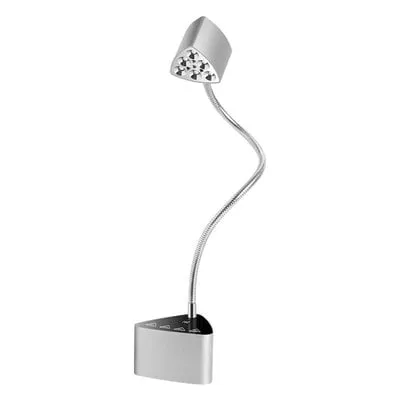
NAD - Flash Cure UV/ LED Mini Desktop Lamp
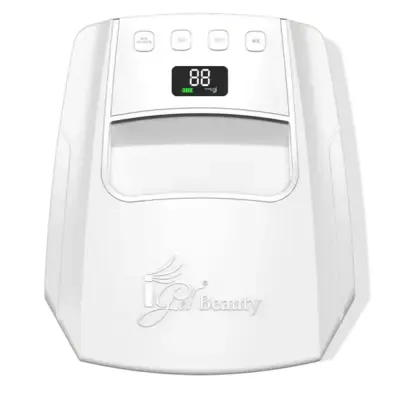
Hybrid Pro 3 - Wireless UV/LED Lamp - White
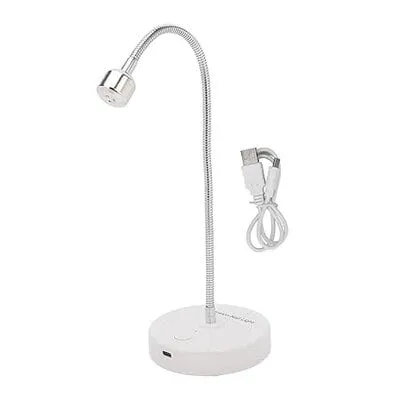
Flash Cure Light - White
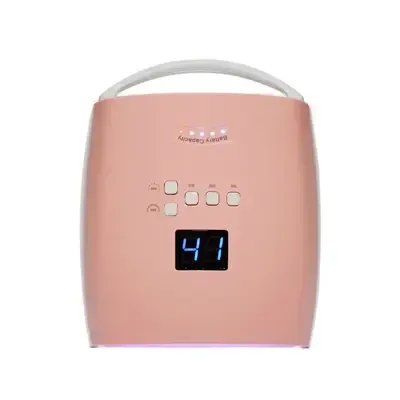 Sale
Gel Lamp - 48W Cordless UV/LED - Pink
Beyond Pro - Rechargeable LED Gel Lamp - Vol II - Lavender
Gel Lamp - LED/UV - Black Cordless
Soft Practice Hand - Tabletop w/ Long Counter Clamp - 10185
Questions we get at the counter
Do UV nail lamps cause skin cancer?
Should I wear sunscreen for gel nails?
Are LED nail lamps safer than UV lamps?
How long should I cure gel polish?
How often can I get gel nails safely?
Are gel lamps safe during pregnancy?
Sources
- Zhivagui et al., DNA damage and somatic mutations in mammalian cells after irradiation with a nail polish dryer, Nature Communications (2023)
- UC San Diego, UV-emitting nail polish dryers damage DNA and cause mutations in cells
- American Academy of Dermatology, Gel manicures
- British Association of Dermatologists, artificial nail allergy warning (2018)