EMA vs MMA Monomer: What the FDA Says and How to Choose a Safe Acrylic Liquid
EMA vs MMA nail liquid: what the FDA says about MMA, allergy facts, how to pick a safe monomer, and what odorless monomer does and does not change.
Use EMA (ethyl methacrylate) acrylic liquid and avoid MMA monomer. The FDA removed pure MMA products from the market in the early 1970s after reports of nail damage, deformity and dermatitis, and though its current page says no regulation specifically bans it. Whichever liquid you use, keep it off skin and ventilate the table.
EMA and MMA: the short version
Both are methacrylate liquids that harden acrylic powder into a nail. They differ in what the FDA and dermatologists say about them. Ethyl methacrylate (EMA) is what responsible nail liquid is built on. Methyl methacrylate (MMA) in liquid form is the one the FDA acted against in the 1970s.
| EMA (ethyl methacrylate) | MMA (methyl methacrylate monomer) | |
|---|---|---|
| What the FDA says | Used in some acrylic nails. The Cosmetic Ingredient Review panel found it safe in 2002 when used with directions to avoid skin contact. | FDA removed pure MMA products in the early 1970s after complaints of nail damage, deformity and contact dermatitis. The FDA also states that no regulation specifically prohibits it. |
| Allergy risk | A sensitizer. Avoid skin contact. | A sensitizer. It is also a standard patch-test allergen for dermatologists. |
| Where you see it | Labeled nail liquids from known brands. | Unlabeled, very cheap or decanted liquids. |
| What to do | Use it with ventilation, gloves and no skin contact. | Avoid. Do not buy liquid that will not tell you what is in it. |
The FDA fact page was last updated on 10/15/2024. It also says the traces of monomer that stay in a finished nail could cause redness, swelling and pain in the nail bed of people who have become sensitized. That is why the rule with either liquid is the same: keep it off the skin.
What the FDA actually said (and what people get wrong)
You will see claims online that MMA is "banned by the FDA." The FDA page itself is more precise. It says the agency removed products containing pure MMA from the market in the early 1970s through court proceedings, including a preliminary injunction against one firm, several seizures and voluntary recalls. It then states directly that "no regulation specifically prohibits the use of methyl methacrylate monomer in cosmetic products," and that MMA is still used occasionally in some artificial nail products.
Some reference sources, including DermNet, describe an FDA ban in 1974. Where sources disagree, the FDA's own current wording is the one to rely on. The practical conclusion is the same either way: there is no good reason to use MMA liquid in a nail product, and the agency has taken enforcement action against it before.
Also worth separating: the powder. Many acrylic powders are made from polymers that include methacrylate units. That is a different thing from a liquid MMA monomer. Katie Barnes Academy notes that powders can be copolymers that combine ethyl (soft) and poly-methyl (hard) methacrylate units. The concern in this article is the liquid, because the liquid is what touches skin and gives off vapor.
Laws about MMA differ by state and country, and enforcement is inconsistent. Do not assume a product is compliant because it is sold. Read the label, ask the maker for the ingredient list, and keep the safety data sheet for every liquid you use.
Why the liquid matters for your skin and your nails
Methacrylate liquids are what dermatologists call sensitizers. DermNet lists liquid methacrylate esters such as ethyl methacrylate as strong sensitisers that can cause irritant and allergic contact dermatitis, and says a reaction can appear on the eyelids, behind the ears, around the mouth and on the sides of the neck, not just the fingers. It also notes rare but serious reactions: tingling and prickling that can last, and nail loss.
The British Association of Dermatologists patch-tested 4,931 patients in an audit and found 2.4% allergic to at least one (meth)acrylate. Occupational exposure, mostly among nail beauticians, accounted for a third of the cases. The BAD says sensitisation happens when uncured product touches skin, and that wearing gloves alone is not enough because methacrylates pass through many glove types. The only reliable protection is not getting the liquid on skin.
This is why bead control and clean placement are safety skills as well as quality skills. A wet, running bead floods the skin and cuticle, and so does an overloaded brush. See acrylic bead consistency for how to avoid it.
If you get a rash on your eyelids, neck or face and you work with acrylic, see a dermatologist and ask about a patch test.
How to choose a safe liquid
You cannot smell EMA from MMA reliably, and you should not try. Use the label and the maker instead. This checklist works for any liquid:
- It has a brand, a lot number and an ingredient or safety data sheet. A bottle with nothing but a sticker on it is a red flag.
- It states EMA, or "no MMA". If it does not say what it is, ask the supplier in writing.
- It is made for the powder you use. Mixing systems changes the way a bead behaves, which can also change lifting risk.
- It is bought from a seller you trust, not a mystery listing at a price far below the other brands.
- It is stored closed and fresh, in the original bottle or a labeled dispenser.
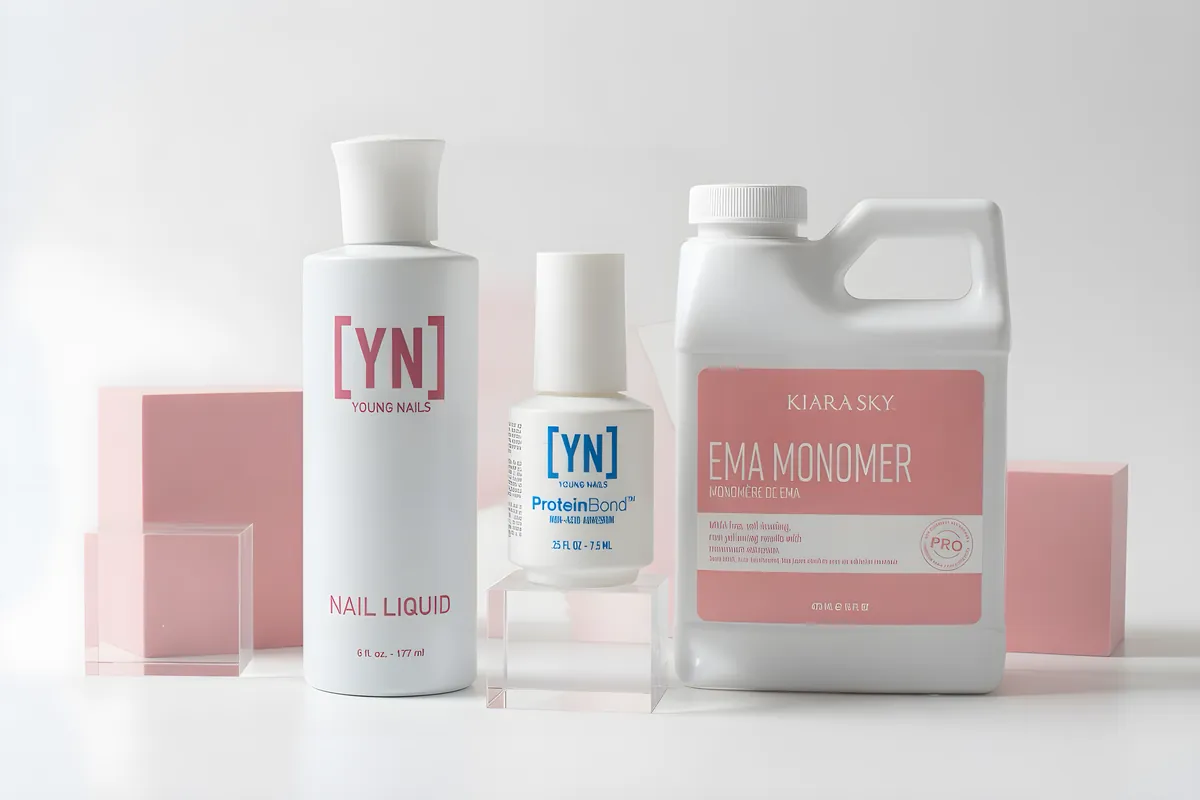
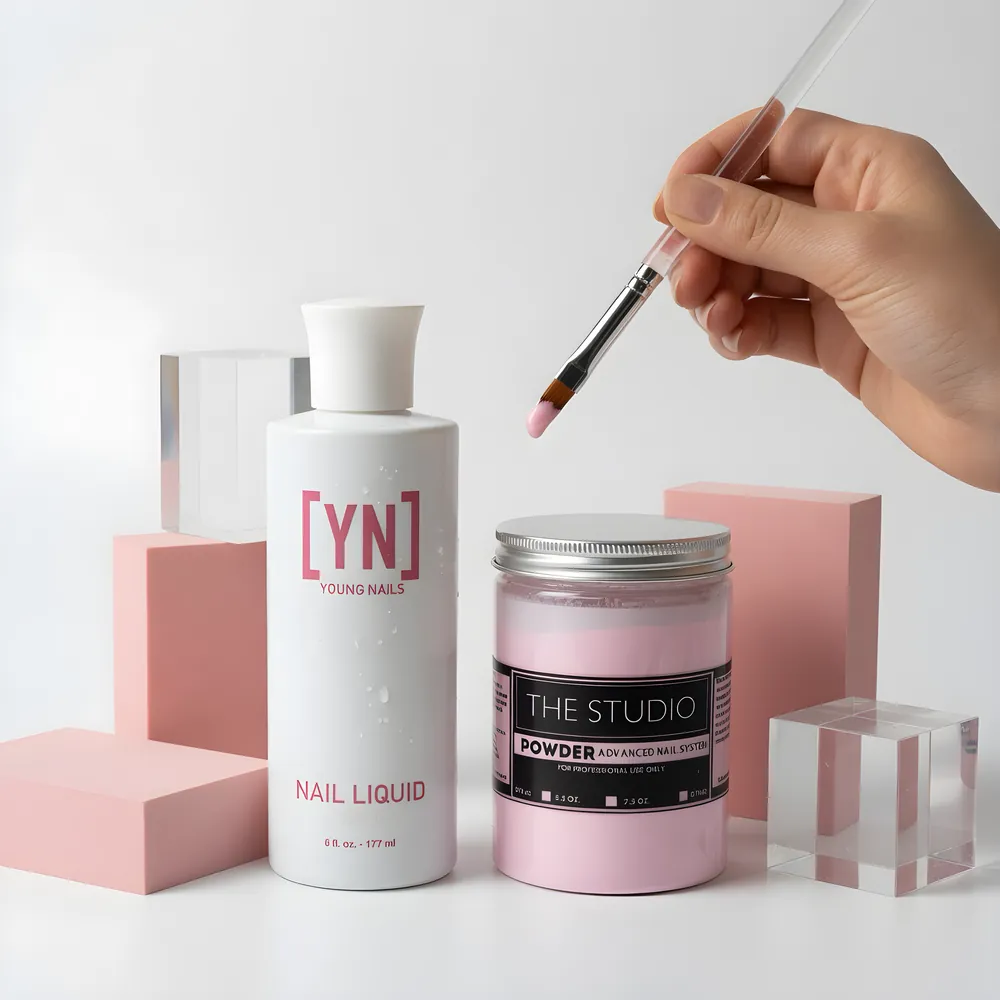
Among the liquids The Studio stocks, the monomer category includes Kiara Sky EMA Monomer, NotPolish Liquid Monomer EMA, and The Studio Liquid Monomer labeled No MMA, along with Mia Secret, Young Nails and others. Read each label for what it says about ingredients and use.
Signs of a reaction, and what to do
Acrylic allergy can be slow and misleading. DermNet describes intense swelling and redness within a few hours of contact in some people, and a rash one to two days later in others. The skin may be red and swollen with blisters, or dry and bumpy. Because the rash often appears away from the nails, many people blame a new face cream or earrings instead.
Nail symptoms to watch for include redness and swelling around the nail fold, the nail lifting from the bed, and a tingling or prickling feeling in the fingertips that does not go away. DermNet notes that tingling and nail loss are rare but serious.
- Stop the exposure. Remove the product and avoid more acrylic or gel until a doctor says otherwise.
- See a dermatologist. Diagnosis is by patch test, and tests for MMA monomer and HEMA are common. Treatment depends on the reaction and may involve prescription creams.
- Tell your supplier and your clients' next provider. If you are a tech, a confirmed allergy changes how you work. Ask a dermatologist what is safe for you to handle.
- Do not self-diagnose. Gel polish, primers and acrylic all contain related chemicals, so a reaction to one can come from another.
This article is general information, not medical advice. See a doctor for any serious reaction.
Odorless monomer: pros, cons and what it does not change
"Odorless monomer" is one of the most searched terms in this niche, and it is easy to see why. Strong liquid smell gives some people headaches and makes a salon unpleasant. Low-odor or odorless liquids use different formulations to reduce what you smell. The Studio carries CND Odorless Sculpting Liquid in the monomer range.
| Pros | Cons and limits |
|---|---|
| A more pleasant room for you and clients, especially in a small or closed space. | No smell does not mean no exposure. Vapor and skin contact still exist. NIOSH still recommends local exhaust and keeping containers closed. |
| May help people who find the smell of regular liquid hard to tolerate. | Your nose adapts to smell. If the smell fades, that is not proof of lower vapor. |
| A good choice for a first liquid if smell was the reason you quit. | It may handle differently from a regular liquid in your system (working time, bead feel). Check the maker's instructions. |
Scented liquids are the opposite choice: some of the monomers in the catalog, such as American Nails fruit scents and fragrance-labeled No-MMA liquids, add fragrance. That is a matter of preference, but it also adds another ingredient for anyone sensitive to scents, so ask clients first.
Ventilation and handling, for either liquid
Whatever liquid you use, set up the table to protect your lungs and skin.
- Local exhaust at the table. NIOSH says salons can use portable units that filter air or exhaust it outdoors, or downdraft tables, plus general room ventilation.
- Separate ventilated area (Florida). Rule 61G5-20.002 requires nail extension services to be in a separate area that is adequately ventilated for the safe dispersion of all fumes.
- Containers closed whenever you are not dipping. Pour small amounts into a covered dappen dish.
- Gloves and an N95 when NIOSH recommends them for your task.
- Wipe up spills at once and discard towels in a closed bin.
- Do not reuse liquid that has had powder or brush debris in it.
A dust collector deals with filing dust, which is separate from the liquid but part of the same air quality problem.
Shop what's in this guide
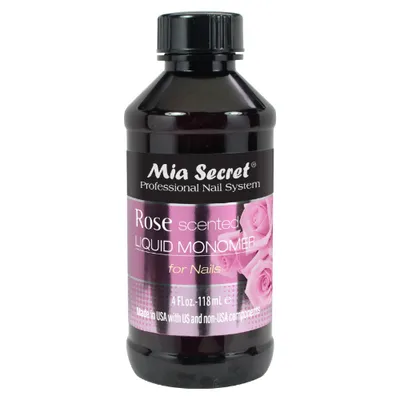
Liquid Monomer - Rose - 4 oz
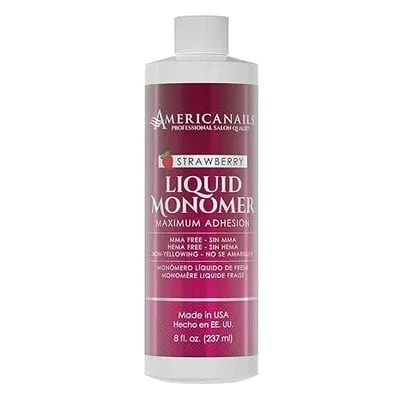
American Nails - Liquid Monomer - Strawberry - 8 oz
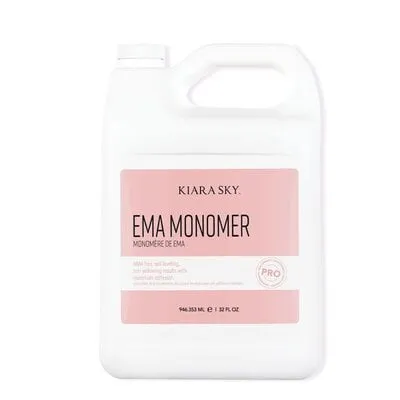
EMA Monomer - 32 oz
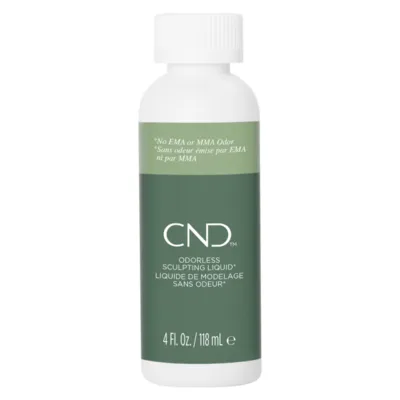
Odorless Sculpting Liquid (4 fl oz)
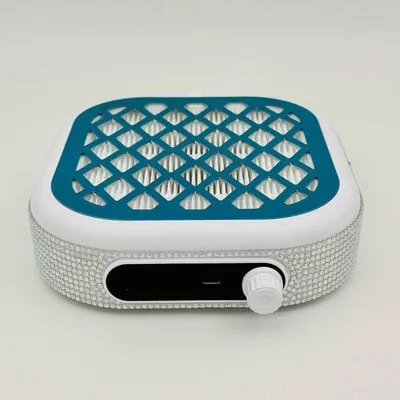
NAD - Nail Dust Collector - 30W - White AB Rhinestone
Small File Buffer - 100/180 - Pink - 20 ct
 Sale
Beyond Pro Nail Dust Collector - Teal
Nail Files - Rectangle - 100/100 - Jumbo Gold - 50 count
Questions we get at the counter
Is MMA monomer banned by the FDA?
How do I know if my monomer is EMA or MMA?
Is EMA safe?
Is odorless monomer safer?
Can I be allergic to acrylic liquid?
Does the powder contain MMA?
Sources
- FDA, Nail Care Products (content current as of 10/15/2024)
- DermNet, Nail cosmetics allergy
- British Association of Dermatologists, artificial nail allergy warning (2018)
- CDC/NIOSH, Nail Technicians: Workplace Safety and Health
- Florida Administrative Code Rule 61G5-20.002, Salon Requirements (Cornell LII)