Best lash trays for beginners: curl, thickness and length explained
How to read a lash tray label (C, CC, D, 0.07, 0.15, mix 10-15), which trays beginners can start with, and a starter decision table by technique.
Read a lash tray label as curl, thickness and length: a label such as CC, 0.15, mix 10-15 means a strong curl, a 0.15 mm classic-weight fiber and a mix of lengths from 10 to 15 mm. Beginners commonly start with one classic tray in a C or CC curl and a mixed-length option, then add fine 0.05 to 0.07 volume trays once classic placement is steady. Always confirm your first tray choices with your trainer, because the right weight depends on your clients' natural lashes.
How to read a lash tray label
Every extension tray tells you the same three things. Once you can decode them, 168 trays in a catalog stop looking intimidating.
Take a real example from our range: Elan Lash Cashmere Mink 0.15 CC Curl MIX 10-15mm.
| Part of the label | What it tells you |
|---|---|
| Cashmere Mink | The product line or fiber finish chosen by the brand |
| 0.15 | Thickness (diameter) in millimeters |
| CC Curl | The curve of the lash |
| MIX 10-15mm | A tray that contains several lengths from 10 to 15 mm instead of just one |
Other tray labels, like The Studio's PreVolume trays, also list the fan size right in the name. For example, a tray named 7D .07 C 14mm tells you the fan is 7D, the fiber is 0.07, the curl is C and the length is 14 mm.
Curl: J, B, C, CC, D, L and the hybrids
Curl is how much the extension curves. Curacoro lays out the common curls like this:
- J: the most natural, but not very curled. Used only in specific cases.
- B: a simple curl with a bit more lift than J.
- C: the most popular, because it creates an open-eye effect without being too drastic.
- CC: more curled than C but less than D.
- D: more lift and more visible lash lines, with more drama.
- L: an \"L\" shape with a flat base and more lift at the lash line.
- LC and LD: a straight base like an L, curving like a C or a D.
Lash Affair adds that J is almost straight with a slight bend at the tip, C is the most popular choice with visible but natural-looking lift, D is the very dramatic curler-look curve, and L has a flat base with a sharp upward curve at the tip, designed for hooded eyes and monolids.
A curl that is stronger than the natural lash's direction can look harsh and may sit awkwardly. Lash Affair's eye-shape guidance varies the recommended curl by eye shape. Use it as a starting point and decide with your client during consultation.
For a first tray, C or CC is the usual practical choice because both look good on most clients and are forgiving to place.
Diameter: what 0.03 to 0.20 really means
Diameter is the thickness of one extension in millimeters. It controls weight, darkness and how much stress the natural lash carries. Lash Affair gives these ranges:
| Thickness | Typical use |
|---|---|
| 0.03 to 0.05 mm | Mega volume fans (10D to 16D and up) |
| 0.05 to 0.07 mm | Standard volume fans (2D to 6D) |
| 0.10 to 0.13 mm | Classic extensions for natural-looking sets, called the sweet spot |
| 0.15 to 0.18 mm | Classic for bold, mascara-like definition |
| 0.20 mm | Maximum for classic. Heavy. Only for very strong natural lashes |
The key safety point is the same source's warning: thicker fibers add weight per extension and stress the natural lash, so a responsible artist matches the diameter to the client's natural lash strength. A thicker tray is not a stronger set. It can be a faster way to lose natural lashes.
That is also why the 0.15 trays are a common starting point for classic practice but not a safe default for every client. Your trainer should tell you which thicknesses are appropriate for each client type.
Length and why mixed trays help
Length is listed in millimeters. A single-length tray gives you only one size. A mixed tray, such as MIX 10-15mm or MIX 11-15mm, contains several lengths in one tray, so you can map a set across the lash line with one purchase.
For a beginner, a mixed-length tray is cheaper and simpler than buying separate trays for each length. It also teaches you to read the lash line and choose a length for each position. Keep in mind that extension length should be chosen for each client and each natural lash. Ask your trainer for the length limits they teach, because the lash line is not uniform and long extensions add leverage on the natural lash.
Elan's range includes mixed trays in 10 to 15 mm and 16 to 20 mm, plus bottom lash mini trays in 6 to 10 mm for lower lashes in B and J curls.
Starter tray decision table
This is general guidance, not a prescription. Follow your instructor on thickness and curl, because they know your training, your clients and your local rules.
| You are learning | Common starting point | In our range |
|---|---|---|
| Classic (one extension per natural lash) | C or CC curl, classic thickness, mixed lengths | Elan Cashmere Mink 0.15 CC Curl, MIX 10-15mm |
| Handmade volume | C or CC curl, fine 0.05 to 0.07 fibers, mixed lengths | Elan Cashmere Mink 0.05 or 0.07 in C or CC, mixed lengths |
| Premade volume fans | Fans in a 0.05 or 0.07 weight and a curl you can place consistently | The Studio PreVolume trays, for example 7D .07 C or 10D .05 C and D |
| Trying a new curl cheaply | A smaller tester tray in one or two curls | Elan Mini Tester Tray in 0.03 or 0.05 L Curl, Mix 11-15mm |
| Lower lashes | Fine, soft curl, short mixed lengths | Elan Bottom Lashes Mini Tray, B or J curl, Mix 6-10mm |
Elan's Cashmere Mink line offers 0.15 in CC and D curls, 0.07 and 0.05 in several curls, and 0.03 for mega volume. If you want to see the range, browse Elan or the full lash trays collection.
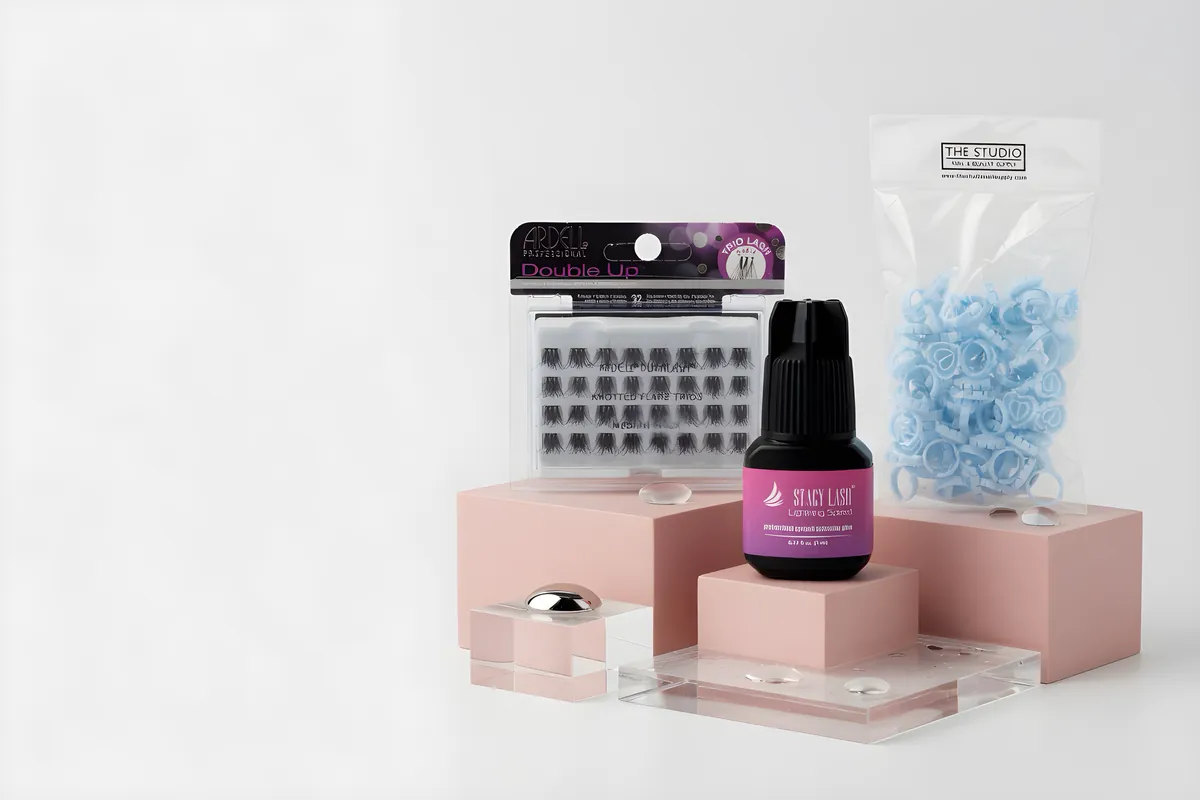
Ardell trays in this category hold individual lash clusters such as knotted flares and trios. These are a different product from salon extension trays. Check the product page for how the maker says to apply them before you buy them for a lash extension service.
How many trays should a beginner buy?
Fewer than you think. Every curl and thickness you add is one more thing to practice, and trays are not the only supplies you need. A sensible first order looks like this:
- One classic tray in a mixed length and one curl you are learning on.
- One fine volume tray (0.05 or 0.07) in the same curl once your classic placement is steady.
- One tester tray of a second curl so you can see how it changes the look.
Buy the next curl only when you can place the first one cleanly. You will progress faster by mastering one curl than by switching between four. Use classic vs volume vs hybrid to decide which direction you are heading first.
Common tray-buying mistakes
| Mistake | Why it hurts | Do this instead |
|---|---|---|
| Buying every curl at once | You spread your practice thin and never get consistent with any one curl | Master C or CC first, then add a second curl |
| Choosing the thickest fiber because it looks darker | Weight stresses the natural lash, and Lash Affair says a responsible artist matches diameter to lash strength | Start lighter and ask your trainer when to go heavier |
| Using volume-weight fibers for classic work | Fine fibers are meant for fans and look different as singles | Match the tray to the technique printed on the label |
| Ignoring length range | A tray without the lengths you need leaves gaps in the set | Pick a mixed tray that covers the lengths your trainer teaches |
| Assuming all trays are the same product type | Individual cluster lashes and extension trays are not interchangeable | Read the product page and the maker's instructions |
A quick note on fiber material
Lash Affair describes synthetic PBT fiber as the modern industry standard, lightweight and good at holding its curl. Brand names such as mink, silk or velvet are marketing names for finishes and lines, and you should read the manufacturer's description on each product page instead of assuming what a name means. What matters most for a beginner is the curl, the diameter and the length range, since those determine how the set behaves on your clients.
Keep trays closed and stored flat in a clean, dry place so the curl holds its shape, and never touch the fibers with oily fingers.
What to buy alongside your first trays
Trays are only part of a working station. Plan for these at the same time:
- Two pairs of tweezers. One isolation, one pick-up. See lash tweezers types and the full lash tools and tweezers range.
- Adhesive. Browse lash glue, including Stacy Lash glues from fast-drying to sensitive.
- Prep and aftercare. Lash shampoo and primer, because oil and residue on natural lashes weaken retention.
- Practice eyes and a palette. The Studio sells practice silicon eyes and lash palettes under lash essentials.
If you are moving to volume, how to make lash fans walks through the pinch and roll method.
Tray hygiene and client safety
Trays sit on your station next to a client's eyes, so treat them like any other eye-area product. The FDA's eye cosmetics guidance says to wash hands before applying and to make sure anything you place near the eyes is clean. In practice that means washing your hands before you touch a tray, pulling lashes with clean tweezers and moving fibers onto a clean palette rather than working directly over the client's face.
Do not reuse extensions that have touched a client's lash line or glue. Pull a fresh fiber for each placement, and discard what you have not used if it has been contaminated. The FDA also encourages anyone who has a bad reaction to an eye cosmetic to contact a healthcare provider first and to report it to the agency, so tell clients to do both and stop the service if they feel burning or swelling.
When you are picking your first trays, buy from a catalog that lists curl, thickness and length plainly on every product. That makes reorders simple and removes guesswork from your inventory.
Shop what's in this guide
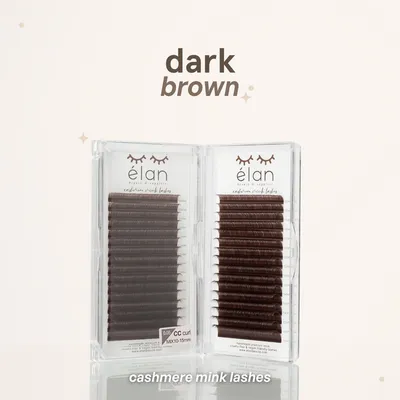
Lash - Cashmere Mink - Dark Brown - 0.05 - CC Curl - MIX (10-15)
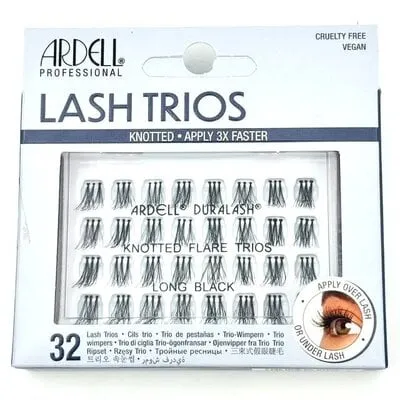
Lash Trios - Knotted Flare Trios - Long Black
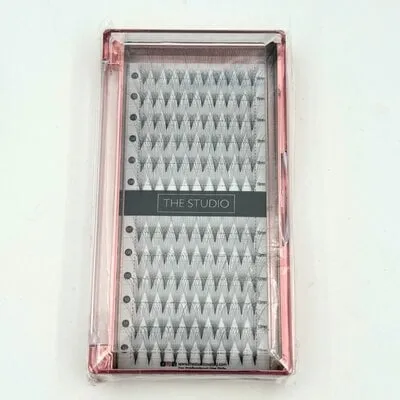
Lash - PreVolume - 10D - .05 - C - 20mm
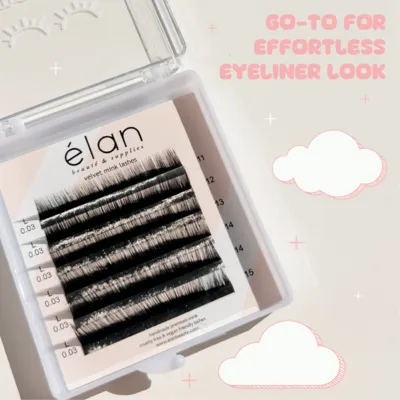
Lash - Mini Tester Tray - 0.03 - L Curl - Mix 11-15mm
Lash Wash Bottle - Purple - 250 mL
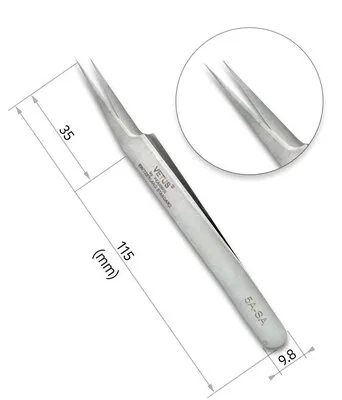
Tweezers Fine Tip - 5ASA
Fiber Tip Tweezer - Pink - 4