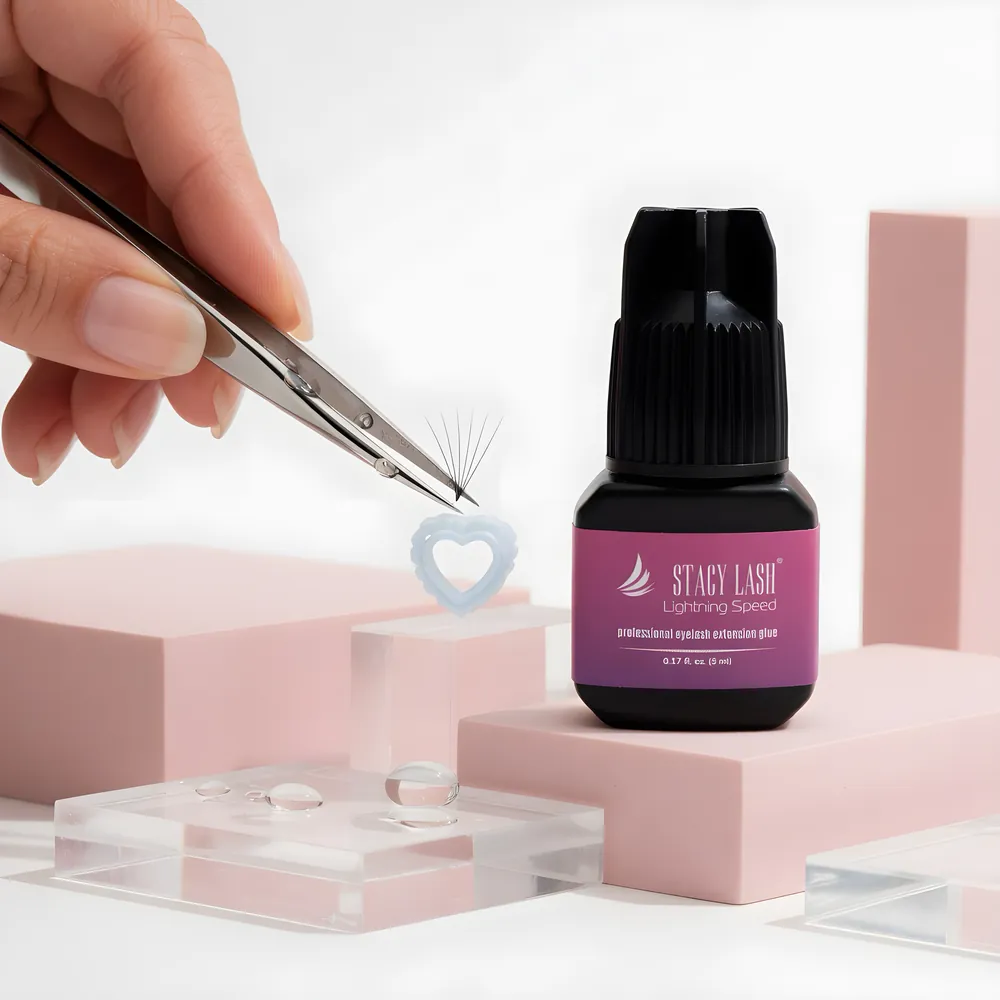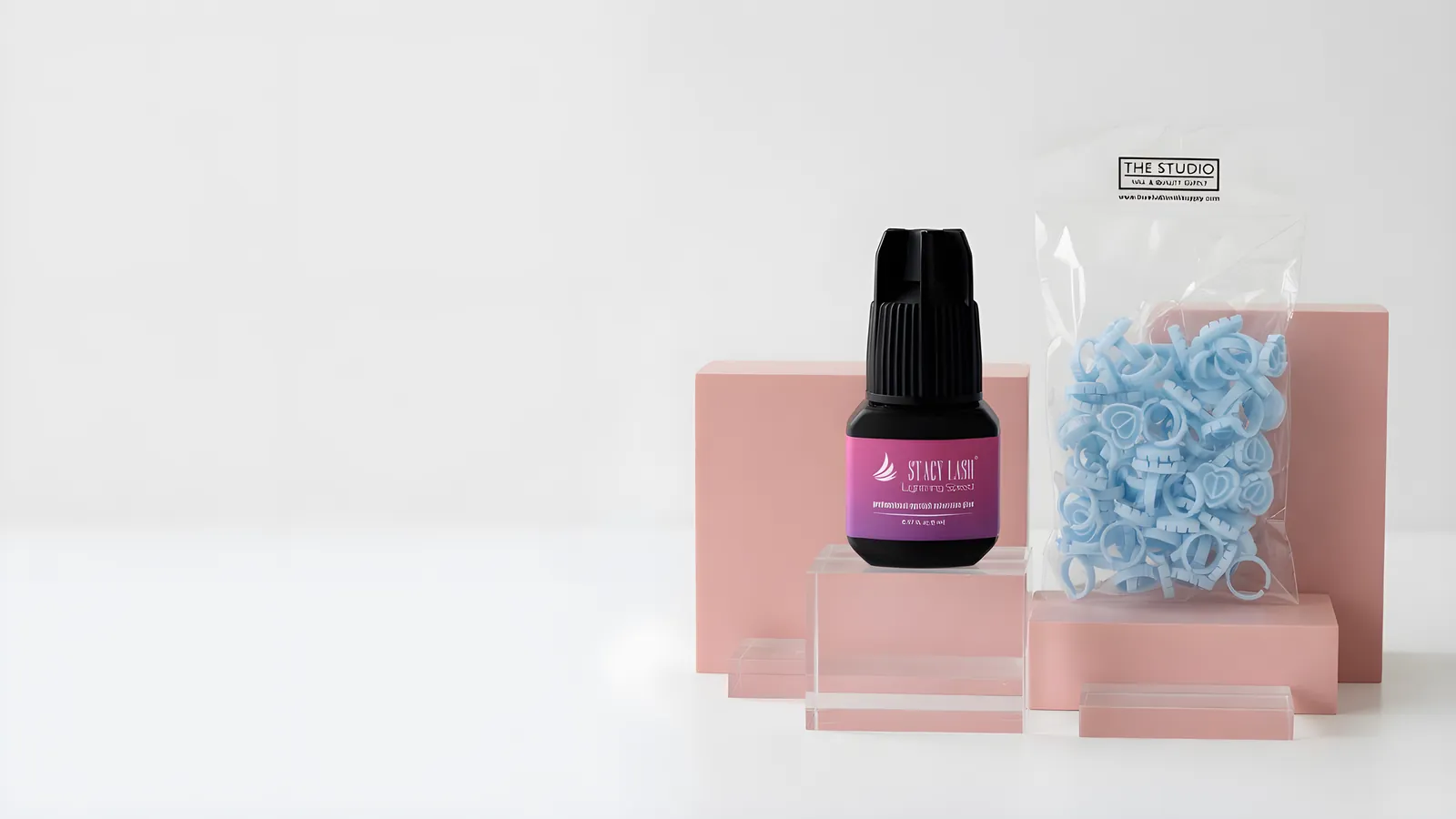
How Long Does Lash Glue Last After Opening? Storage and Handling
How long opened lash glue lasts, the Stacy Lash 2-month label, storage rules, glue rings and pins, and signs it is time to replace the bottle.
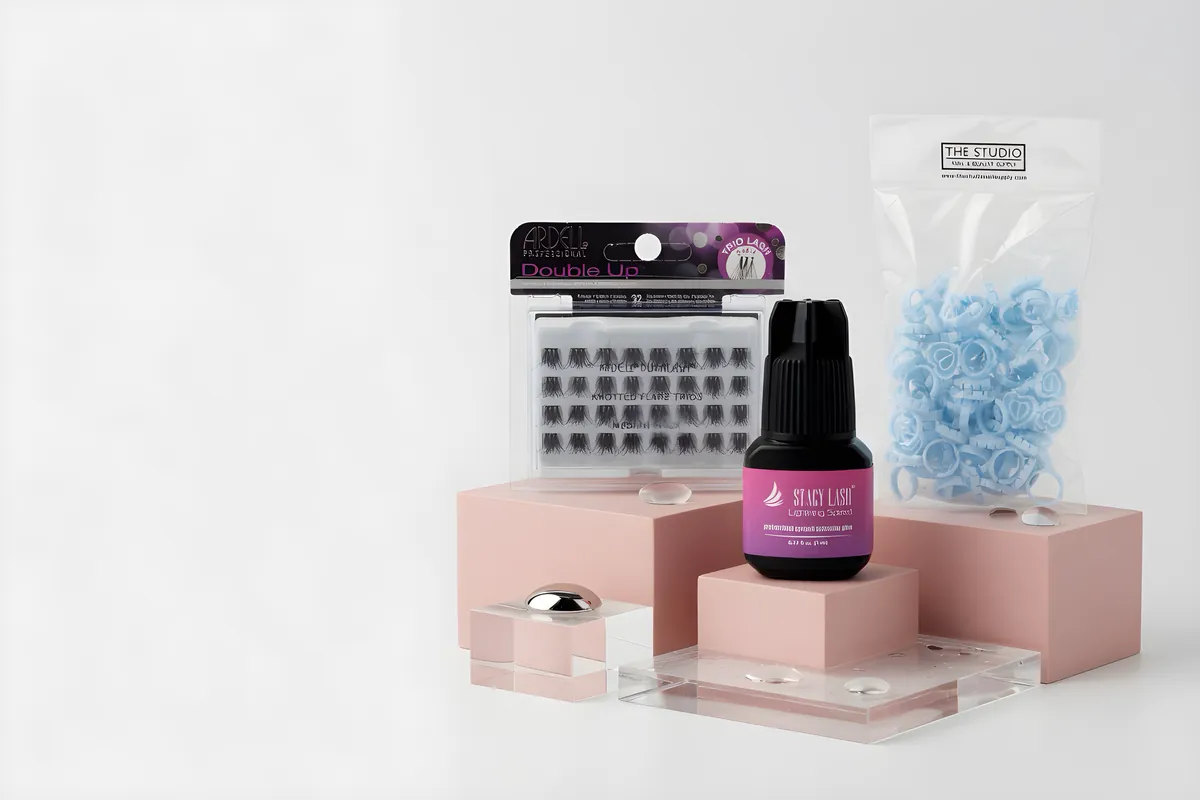
Follow the date on the label. Stacy Lash glues are marked "best before 2 months after opening," so write the opened date on the bottle and replace it about two months later. Store it capped, cool, dark and dry, never in the freezer, and wipe the nozzle after each use. For other brands, use the maker's own date.
The date to follow is the one on the label
For the Stacy Lash glues we carry, the label says "Best before 2 months after opening." That line is printed on the Lightning Speed, Extra Strong and Sensitive product pages, so for Stacy Lash it is a clear rule: write the day you open the bottle on it, and plan to replace it about two months later.
For any other brand, including The Studio Korea Lash Glue and Elan products, follow the maker's own date. Opened-life numbers are set by each manufacturer for its own formula, so we do not guess at one for the whole category. If a bottle has no stated opened date, ask the maker, and treat the bottle more cautiously than one with a clear date.
The reason behind the date matters more than the number, so the next sections explain it. Once you know what is happening inside the bottle, the storage rules make sense and are easy to follow.
Why an opened bottle of lash glue goes bad
Lash glue is a cyanoacrylate adhesive. It cures by reacting with moisture in the air. That is useful on the lash, and a problem in the bottle. Every time you open the cap, a little air enters. Every drop left on the nozzle begins to cure.
The Stacy Lash adhesive guide says plainly that glue works "till it's fresh," that glue does expire, and that spoiled glue will not do its job right. Its rules are to keep excessive moisture or air out of the bottle and to clean the bottle after each use. The company also packs its glue in silica gel packaging and includes a red glue needle with the Lightning Speed bottle, which its product page says helps preserve freshness after opening.
In practice, an aging bottle shows up on your client, not in the bottle. Sets that held for weeks begin to fall out sooner, the glue behaves unlike it did a few weeks ago, or lashes stay tacky. Room humidity can cause the same symptoms, so check your reading too (see our humidity guide) before you throw out the bottle.
Storage rules that protect the bottle
| Do | Do not |
|---|---|
| Store in a cool, dark, dry place, away from direct sunlight (Stacy Lash label and guide) | Leave the bottle on a sunny window ledge or next to a heat source |
| Keep the cap tight (label) | Leave the bottle open on the station between clients |
| Use a lash glue storage container, if you have one (guide) | Toss the bottle loose into a drawer with oils or wet products |
| Wipe the nozzle with a lint-free tissue after use (guide) | Cap the bottle with glue crusted on the nozzle |
| If you use a fridge, let the bottle return to room temperature for 1 hour before use (label) | Open a cold bottle straight away in a warm room |
| Date the bottle the day you open it | Guess how old it is |
Stacy Lash says not to store glue in the freezer. A fridge is allowed by the label, a freezer is not.
The one-hour wait for a fridge bottle is not in the guide's list of rules, but it is on the label, and it follows from the chemistry: a cold bottle in a warm room can attract moisture to the nozzle. If you live and work in a humid climate, a sealed box with a fresh silica gel packet is a good way to keep the bottle dry between uses. The maker's own packaging uses silica gel for the same reason.
If you work mobile. The label asks for a cool, dark, dry place, which a hot car in Florida is not. Carry the bottles in a closed case, keep them out of direct sun, and bring them inside with you. After a long day in a warm car, give the bottle time to settle in the room before you open it.
If you keep several bottles. Write the opened date on each one with a marker or a label, and use the oldest open bottle first. Keep unopened bottles together in your storage container, and move only one into daily use at a time. A bottle you opened, used twice and forgot about for six weeks is the one that causes the mystery retention problem, so the dates on the bottles do the remembering for you. A bottle of Sensitive glue is worth keeping sealed in reserve for the client who needs it, as the Stacy Lash guide suggests.
Daily handling: the 6-step routine
- Check the room. Confirm the humidity and temperature before you open the bottle. See the drying time guide for the numbers the maker lists.
- Open the bottle only when you need it. The longer the cap is off, the more air gets in.
- Put a fresh drop on a glue ring or pin. Do not dip the lash or fan straight into the bottle. Work from the small drop on the ring.
- Close the bottle right away. Cap it tightly before you start placing extensions.
- Wipe the nozzle. Use a lint-free tissue, as the Stacy Lash guide recommends, then recap.
- Return the bottle to its storage spot in the cool, dark, dry place, not on the station.
Some glue bottles have a cap that is hard to open once glue builds around the thread. A cap opener tool saves you from twisting it with your fingers and shaking glue onto your hand or the client. We carry a Glue Bottle Cap Opener in black and magenta.
Glue rings, pins and holders: what they are for
The ring or pin holds the drop you are working from, so the bottle stays closed. Here is what we sell for that job:
- The Studio Lash Glue Rings in pink and white, 50 count.
- The Studio Lash Glue Heart Rings in blue, pink, hot pink and white, 50 count.
- The Studio Heart Glue Pins, 50 count.
- FantaSea U Band Lash and Glue Holder (FSC714).
- Glue Bottle Cap Opener in black and magenta.
All of these are in our lash essentials category. The ring goes on your hand, and the drop is within reach, which saves you from tapping the bottle over and over.
Use a fresh drop for each client. The drop on the ring is open to the air, so it is already curing. Once it skins over, it will not grab the way fresh glue does, and the retention suffers. That is reasoning from how the glue cures, not a number from a study, so use your own judgement and replace the drop whenever it looks thickened or tacky instead of wet. A pack of 50 means you are never tempted to reuse one.
When to replace a bottle: symptom, cause, fix
| What you see | Likely cause | Fix |
|---|---|---|
| You are past the maker's date | Moisture and air have been getting in since the first opening | Replace it, even if it looks fine. The date exists for a reason. |
| Retention suddenly drops with no other change | Aging glue, or a change in the room | Check the room reading, then the opened date. If both are fine, test a new bottle on a practice eye. |
| Glue stays sticky or sets slower than it used to | Old bottle, or a room that is too dry | Check humidity against the glue's range. Replace the bottle if the room is right. |
| Glue sets much faster than usual | Humid room, or moisture in the bottle | Check the humidity reading first. If the room is in range, replace the bottle. |
| Crust or residue around the nozzle | Not wiped after use | Wipe it clean with a lint-free tissue. If the opening is blocked or the cap is stuck, replace. |
Keep a spare bottle on the shelf. The Stacy Lash guide recommends having a spare of your main glue in case the first one spoils, so a bad bottle never cancels an appointment. You can see the full lineup in our lash glue category, including the Stacy Lash range.
Labels, safety and who this glue is for
Eyelash extension glue is a professional product. Health Canada's 2023 to 2024 inspection of cyanoacrylate lash adhesives reviewed 87 products, and labelling was the top reason products were found non-compliant (40 cases). In Canada, lash adhesive must be sold for professional use only and carry the warnings "For application by trained professionals only" and "Ensure the eye is protected and immobilized during application," alongside the standard "BONDS SKIN INSTANTLY. AVOID CONTACT WITH EYES, MOUTH AND SKIN" warning. We are in Florida, and those are Canadian rules, but they are a good model for what to look for on any label you buy.
In the United States, the FDA treats false eyelashes, eyelash extensions and their adhesives as cosmetics and advises checking the adhesive's ingredients before use, since the eyelids are delicate. The FDA also encourages anyone with a bad reaction to eye cosmetics to contact a healthcare provider and report it.
The Stacy Lash label says that if glue gets in the eyes or on the skin, flush with water for 15 minutes. If a client has pain, ongoing redness or vision changes, send them to a doctor. See our lash glue allergy and irritation guide for what to watch for.
Keep the glue away from clients and children, store it capped, and never use it as a household adhesive. It is made for the lash, in trained hands.
Shop what's in this guide
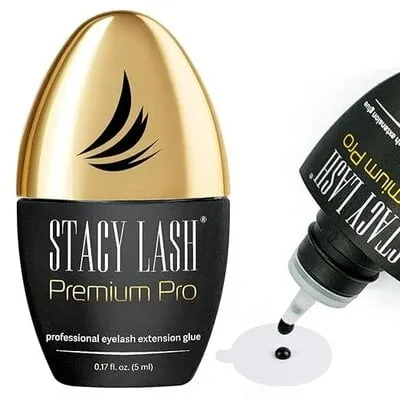
Eyelash Glue - Premium Pro - 5ml
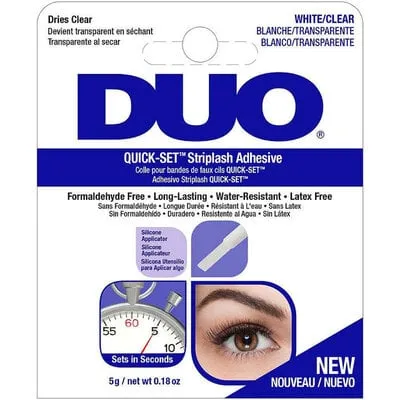
Quick-set Striplash Adhesive - White/Clear
Eyelash Sealant - Unscented - 15ml
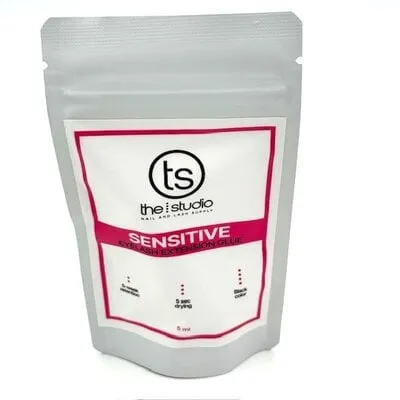
Korea Lash Glue - Sensitive - 5 ml
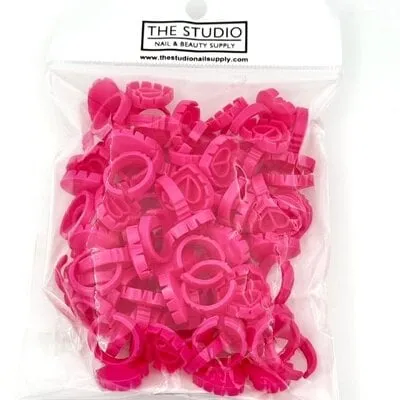
Lash Glue Heart Rings - Hot Pink - 50 ct
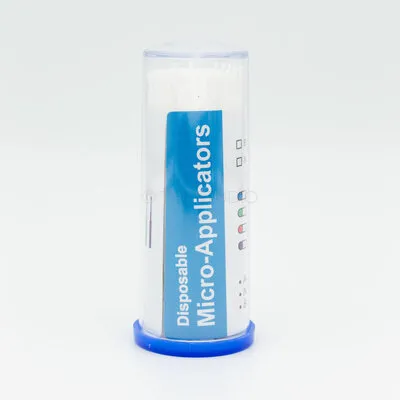
Disposable Micro Applicators - White - 100 ct
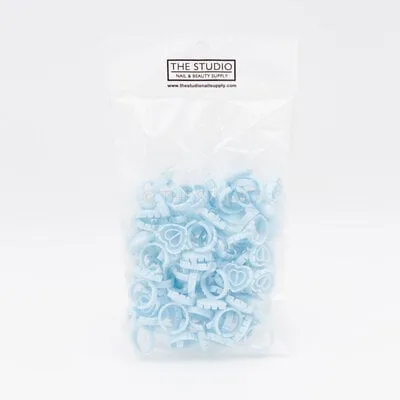
Lash Glue Heart Rings - Blue - 50 ct
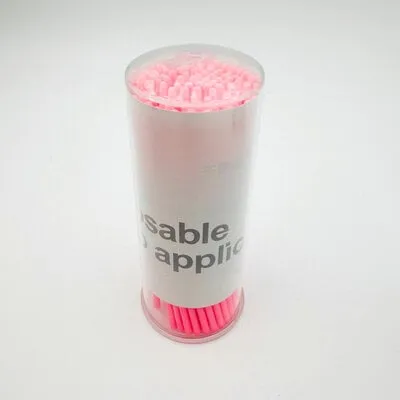
Disposable Micro Applicators - Pink - 100 ct
Questions we get at the counter
How long does lash extension glue last after opening?
Can I keep lash glue in the fridge?
Does unopened lash glue expire?
Why does my lash glue get thick or stop working?
How should I clean the bottle nozzle?
Should I use a fresh drop of glue for every client?
Sources
- How to master lash adhesives, Stacy Lash
- Stacy Lash Lightning Speed eyelash extension glue 5 ml, product page
- Stacy Lash Sensitive eyelash extension glue 10 ml, product page
- ChemLinked, Canada publishes inspection results of eyelash extension adhesives
- Eye Cosmetic Safety, U.S. Food and Drug Administration